Pulse & Plate

Best Sleep Tracker Bands

Wristbands and arm bands that track your night without a watch on your wrist - the new screenless sleep bands and the screened budget trackers compared on nights per charge, where they sit on the body, and whether the sleep data costs a subscription.

By Stephen V.Last updated How we research

A sleep tracker band is the answer to a specific complaint: you do not want to sleep in a watch, and you do not want a ring. The category has changed shape in the last eighteen months. Alongside the familiar screened budget trackers, Garmin, Google, Amazfit and Polar have each shipped a screenless band built for overnight wear, and WHOOP - which popularized the format - moved to a 14-day battery. None of them has a display to light the room, all of them run a week or more per charge, and the useful differences are elsewhere: where the band sits on your body, what the night report actually contains, and whether you have to pay monthly to read it.

The Garmin Index Sleep Monitor is the top pick because it is the only band here designed for nothing but sleep: it goes on the upper arm, tracks stages, HRV, breathing and Pulse Ox for up to seven nights, and puts all of it in the free Garmin Connect app. The Google Fitbit Air is the screenless pick for most people because it works with an iPhone or an Android phone and weighs 12 grams with the band. The Amazfit Helio Strap is the longest-running band without a membership, the Polar Loop is the one to buy if you already train with Polar, and WHOOP remains the choice for people who want coaching and accept that they are buying a subscription rather than a device. Two screened bands close the list for buyers who still want a clock on the wrist.

How this is funded: we earn a commission if you buy through our links, at no extra cost to you. It never changes which product we recommend, and we’ll tell you when we’d skip one. Full disclosure.

Picks at a glance

Ranked on published specs, footprint and buyer fit. Select a row to jump to the full write-up. We have not tested these ourselves — here is exactly what we do instead.

#ProductBest forPrice
1
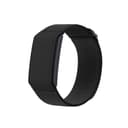
Garmin Index Sleep Monitor

Garmin Index Sleep Monitor

The only band here built for nothing but sleep: a soft upper-arm strap with no screen, a week of nights per charge with Pulse Ox on, and every metric in the free Garmin Connect app.

Best dedicated sleep band
$139.99 · View on Amazon

$169.9918% off

Price as of September 20, 2026. #ad How we’re funded

2
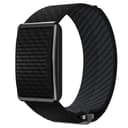
Fitbit Air (Google Fitbit Air)

Fitbit Air (Google Fitbit Air)

Google's first screenless Fitbit: a 12-gram pebble on a textile band that tracks stages, HRV, SpO2 and heart rhythm for a week per charge, and works with an iPhone as well as Android.

Best screenless for most people
$99.99 · View on Amazon

Price as of September 20, 2026. #ad How we’re funded

3
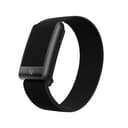
Amazfit Helio Strap

Amazfit Helio Strap

The longest-running screenless band here without a membership: ten days per charge, sleep stages with naps and breathing quality, and a nylon strap that moves to the upper arm for training.

Best battery without a subscription
$99.00 · View on Amazon

Price as of September 20, 2026. #ad How we’re funded

4
Polar Loop (2025)

Polar Loop (2025)

Polar's screen-free band brings its Nightly Recharge and Sleep Plus Stages analysis to a subscription-free wearable with eight days of battery - the strongest recovery reporting here that does not bill you monthly.

Best for training recovery
$199.99 · View on Amazon

Price as of September 20, 2026. #ad How we’re funded

5
WHOOP One (WHOOP 5.0, 12-month membership)

WHOOP One (WHOOP 5.0, 12-month membership)

The original screenless recovery band, now with 14-plus days of battery - but WHOOP sells a membership, not a device, so the price on the button is a year of service with the hardware included.

Best if you want coaching
$199.00 · View on Amazon

Price as of September 20, 2026. #ad How we’re funded

6
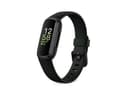
Fitbit Inspire 3

Fitbit Inspire 3

A no-frills everyday tracker with excellent battery life, but it leans on your phone for GPS and on Premium for the best data.

Best budget band with a screen
7
Samsung Galaxy Fit3

Samsung Galaxy Fit3

A big-screen band with close to a fortnight of battery and nothing behind a paywall — as long as you carry an Android phone, because it will not pair with an iPhone.

Best for Android phones
$43.50 · View on Amazon

$46.005% off

Price as of September 20, 2026. #ad How we’re funded

The seven bands on the numbers that decide a night

Battery figures are each maker's own claim, not a measurement of ours. 'Subscription for sleep data' is the row to read first: two of the seven put the detail you are buying the band for behind a paid tier, and one is sold as a membership outright. Where a maker publishes no figure the cell says so.

SpecGarmin Index Sleep MonitorFitbit Air (Google Fitbit Air)Amazfit Helio StrapPolar Loop (2025)WHOOP One (WHOOP 5.0, 12-month membership)Fitbit Inspire 3Samsung Galaxy Fit3
ScreenNoneNoneNoneNoneNoneColor AMOLED1.6 in AMOLED
Worn onUpper arm, night onlyWristWrist or upper armWristWrist (or WHOOP garments)WristWrist
Battery per charge (maker claim)Up to 7 nights, Pulse Ox onUp to 7 daysUp to 10 days8 days14+ daysUp to 10 daysUp to 13 days
Subscription for the sleep dataNoneNone for stages, HRV, SpO2; Health Coach needs PremiumNoneNoneRequired - sold as a 12-month membershipFitbit Premium for the advanced insightsNone
What the night report includesStages, HRV status, breathing variations, skin temp, Pulse Ox, sleep score, Body BatteryStages and duration, resting HR, HRV, SpO2, skin temp variation, Afib alertsStages incl. REM, naps, breathing quality, sleep score, sleep HRVSleep Plus Stages, Nightly Recharge (HR, HRV, breathing), SleepWiseSleep Performance score, stages, HRV-based RecoveryStages, SpO2Stages, snore detection (via phone), SpO2 overnight
Water rating5 ATM50 m5 ATMWR30Not published5 ATM5 ATM, IP68
PhoneGarmin Connect appAndroid 11+ or iOS 16.4+iOS 15+ or Android 7+Polar Flow appWHOOP appFitbit appAndroid only

Every figure above is one the maker publishes, read on the dated visit linked under each write-up below. “Not published” means the maker does not state it — we do not fill the gap with an estimate.

The picks in full

#1Best dedicated sleep band

Garmin Index Sleep Monitor

The only band here built for nothing but sleep: a soft upper-arm strap with no screen, a week of nights per charge with Pulse Ox on, and every metric in the free Garmin Connect app.

Strengths

  • Worn on the upper arm, so nothing sits on the wrist overnight and there is no screen to light the room
  • Sleep stages, HRV status, breathing variations, skin temperature and Pulse Ox, plus Body Battery, with no subscription
  • Up to 7 nights per charge with Pulse Ox on, and the band goes in the washing machine once the module is removed

Trade-offs

  • Night-only by design: no daytime steps or workouts, so it is a second device rather than a replacement for a watch
  • Two band sizes (S-M and L-XL) and Garmin sizes by arm circumference, so check before ordering
  • Garmin does not publish a weight for it
Worn onUpper arm (soft band, removable module)
ScreenNone
Battery lifeUp to 7 nights, with SpO2 on (Garmin)
Night reportSleep stages, HRV status, breathing variations, skin temperature, Pulse Ox, sleep score, Body Battery
Smart wake alarmYes - vibrates in a lighter stage inside a chosen window (Garmin)
SubscriptionNone - Garmin Connect is free
Water rating5 ATM (Garmin owner's manual)
Band sizesS-M 12.8 in long, L-XL 17.8 in long (manual)
WeightNot published

Worth knowing. Garmin's press release describes it as working on its own with the Garmin Connect app, and combining its data with a compatible Garmin watch's daytime data - so it is the one pick here designed to be a second device rather than the only one.

Specs read from the product listing, on September 20, 2026. “Not published” means the maker does not state that figure.

#2Best screenless for most people

Fitbit Air (Google Fitbit Air)

Google's first screenless Fitbit: a 12-gram pebble on a textile band that tracks stages, HRV, SpO2 and heart rhythm for a week per charge, and works with an iPhone as well as Android.

Strengths

  • Sleep stages and duration, HRV, resting heart rate, SpO2 and Afib heart-rhythm alerts in the free Google Health app
  • Up to 7 days per charge, and Google states five minutes on the charger buys a day
  • 5.2 g housing, 12 g with the band, and water resistant to 50 m

Trade-offs

  • Needs a Google Account and the Google Health app; the Health Coach sits behind a Google Health Premium subscription
  • Launched May 2026, so there is no long-term track record yet
  • No screen and no built-in GPS: it is a sleep and recovery band, not a workout tracker
Worn onWrist (textile band, one size 130-210 mm)
ScreenNone
Battery lifeUp to 7 days; 0-100% in 90 min; 1 day from a 5-min charge (Google)
Night reportSleep stages and duration, HR, resting HR, HRV, SpO2, skin temperature variation, Afib alerts
SensorsOptical HR, 3-axis accelerometer + gyroscope, red/infrared SpO2, device temperature sensor
SubscriptionCore data free; Google Health Coach requires Google Health Premium (3-month trial included)
Water ratingWater resistant up to 50 m
PhoneAndroid 11+ or iOS 16.4+
Weight5.2 g without band, 12 g with band

Worth knowing. Google's own launch post describes it as designed to be worn all night and alternated with a Pixel Watch by day - the same two-device pattern Garmin uses, from the other side of the phone divide.

Specs read from the product listing, on September 20, 2026. “Not published” means the maker does not state that figure.

#3Best battery without a subscription

Amazfit Helio Strap

The longest-running screenless band here without a membership: ten days per charge, sleep stages with naps and breathing quality, and a nylon strap that moves to the upper arm for training.

Strengths

  • Up to 10 days per charge, with charging under an hour (Amazfit)
  • Sleep stages including REM, daytime naps, sleep breathing quality, a sleep score and overnight HRV, all free in Zepp
  • 5 ATM water resistance and a BioCharge energy score that folds sleep, naps, exertion and stress together

Trade-offs

  • Zepp is a smaller ecosystem than Fitbit, Garmin or Polar, so long-term support is a bet on Amazfit
  • No screen and no built-in GPS: outdoor routes need the phone
  • Amazfit's regional pages disagree on the weight (the US page says 20 g), so treat that figure as approximate
Worn onWrist (145-205 mm) or upper arm with the arm band
ScreenNone
Battery lifeUp to 10 days typical use, 232 mAh; charges in under 1 hour (Amazfit)
Night reportSleep stages incl. REM, naps, sleep schedule, sleep breathing quality, sleep score, sleep HRV
SensorsBioTracker 6.0 PPG (5PD + 2LED), accelerometer, gyroscope, temperature
SubscriptionNone - Zepp app is free
Water rating5 ATM
PhoneiOS 15+ or Android 7+; syncs to Apple Health, Google Fit, Strava
Weight20 g (US product page)

Worth knowing. Amazfit positions the upper-arm option as the training position because the sensor sits closer to the heart and reads more consistently mid-workout - the same reasoning behind an arm-worn heart rate monitor.

Specs read from the product listing, on September 20, 2026. “Not published” means the maker does not state that figure.

#4Best for training recovery

Polar Loop (2025)

Polar's screen-free band brings its Nightly Recharge and Sleep Plus Stages analysis to a subscription-free wearable with eight days of battery - the strongest recovery reporting here that does not bill you monthly.

Strengths

  • Sleep Plus Stages, Nightly Recharge and SleepWise alertness prediction, all in the free Polar Flow app
  • 8 days per charge and four weeks of onboard memory if you leave the phone behind
  • Two wristband sizes ship in the box (S/M 135-190 mm and M/L 160-230 mm)

Trade-offs

  • The most expensive screenless band here and it cannot broadcast heart rate to a bike computer or gym machine
  • Water rating is WR30 (Polar: bathing and swimming), lower than the 5 ATM bands
  • At 29 g with the band it is the heaviest wristband on this page
Worn onWrist (two bands included: 135-190 mm and 160-230 mm)
ScreenNone
Battery life8 days, 170 mAh (Polar)
Night reportSleep Plus Stages (light, deep, REM), Nightly Recharge (HR, HRV, breathing), SleepWise
SensorsPrecision Prime optical HR (Gen 3.5), accelerometer
SubscriptionNone - Polar Flow is free
Water ratingWR30 (bathing and swimming)
PhonePolar Flow app; syncs to Apple Health, Google Health, Strava, TrainingPeaks
Weight29 g with wristband (1 oz)

Worth knowing. Polar's stated reason for a screen-free band is 'zero distractions' - the argument for a band you wear to bed is that nothing on it can wake you.

Specs read from the product listing, on September 20, 2026. “Not published” means the maker does not state that figure.

#5Best if you want coaching

WHOOP One (WHOOP 5.0, 12-month membership)

The original screenless recovery band, now with 14-plus days of battery - but WHOOP sells a membership, not a device, so the price on the button is a year of service with the hardware included.

Strengths

  • WHOOP claims 14+ days per charge, the longest on this page
  • Sensors sample 26 times per second, and the reworked Sleep Performance score arrived with the 5.0 (WHOOP press release)
  • The One membership ships the WHOOP 5.0 device, a CoreKnit band and a charger

Trade-offs

  • Membership-only: the listing is a 12-month membership that renews, so the true cost is annual, not one-off
  • Healthspan, the Health Monitor and the Stress Monitor are held back for the pricier Peak tier, and the ECG Heart Screener for Life
  • WHOOP does not publish a water rating or weight on the sources we read
Worn onWrist (knit band); WHOOP also sells garments that hold the module
ScreenNone
Battery life14+ days (WHOOP)
Night reportSleep Performance score, sleep stages, HRV-based Recovery, Strain
SensorsSampling 26 times per second (WHOOP); sensor list not itemized
SubscriptionRequired - sold as a 12-month WHOOP One membership with the 5.0 device included
Higher tiersPeak adds Healthspan, Health Monitor, Stress Monitor; Life adds the WHOOP MG with FDA-cleared ECG
Water ratingNot published
WeightNot published

Worth knowing. WHOOP's model is closer to a service contract than a gadget purchase: the hardware is the free part and the analysis is what you pay for, which is why the comparison that matters is against a free-app band over three years, not against the sticker price.

Specs read from the product listing, on September 20, 2026. “Not published” means the maker does not state that figure.

#6Best budget band with a screen

Fitbit Inspire 3

A no-frills everyday tracker with excellent battery life, but it leans on your phone for GPS and on Premium for the best data.

Strengths

  • Up to 10-day battery life
  • Color AMOLED touchscreen and SpO2 at a low price
  • Lightweight and comfortable for all-day and overnight wear

Trade-offs

  • No built-in GPS — needs your phone for mapped routes
  • Best sleep and health insights require Fitbit Premium
Battery lifeUp to 10 days
GPSConnected GPS (uses phone)
Heart rate24/7 optical HR
Blood oxygenSpO2 monitoring
Water resistance50m (5 ATM)
SubscriptionFitbit Premium for advanced insights (6-mo trial included)

Specs read from the product listing, on July 19, 2026. “Not published” means the maker does not state that figure.

#7Best for Android phones

Samsung Galaxy Fit3

A big-screen band with close to a fortnight of battery and nothing behind a paywall — as long as you carry an Android phone, because it will not pair with an iPhone.

Strengths

  • Up to 13-day battery on a budget
  • Large 1.6-inch AMOLED display
  • Sleep stages, snore detection, hourly stress and 100+ exercise modes, all free in Samsung Health

Trade-offs

  • No built-in GPS — needs your phone for routes
  • Android only — it will not pair with an iPhone
  • No ECG, and blood oxygen is a spot or overnight reading rather than continuous
Battery lifeUp to 13 days (208 mAh)
GPSConnected GPS (uses phone)
Heart rate24/7 optical HR
Blood oxygenSpO2 spot check and overnight
Display1.6 in AMOLED touchscreen (256 x 402)
Water resistance5 ATM, IP68
SubscriptionNone — Samsung Health is free

Specs read from the product listing, on August 21, 2026. “Not published” means the maker does not state that figure.

How we ranked sleep tracker bands

A sleep band has one job: be on your body, generating data, every night, without you noticing it. So the criteria are ordered by how much they affect that.

1. Whether the sleep data costs extra

This is the row in the table to read first, because it is the one buyers most often discover after the purchase. Garmin, Amazfit, Polar and Samsung include the full night report with the hardware. Google publishes that the Fitbit Air’s stages, HRV, SpO2 and heart-rhythm alerts are free in the Google Health app, and that its Health Coach requires a Google Health Premium subscription. Fitbit’s Inspire 3 keeps its advanced sleep insights behind Fitbit Premium. WHOOP does not sell a band at all: the Amazon listing is a twelve-month WHOOP One membership with the WHOOP 5.0 device included, and it renews. Over three years that difference is the whole price of another band, which is why we treat it as a spec rather than a footnote.

2. Nights per charge, on the maker’s own claim

Every figure in the battery row is what the manufacturer publishes; we own none of these and have measured nothing. The useful threshold is a week: a band that needs charging every two or three days will be on the charger at bedtime often enough to leave holes in the record. All seven clear it. WHOOP’s 14-plus days is the longest claim, the Fit3’s thirteen and the Helio Strap’s ten are next, and the Garmin Index quotes seven nights with Pulse Ox running continuously - the setting that shortens every other band’s life.

3. Where it sits on the body

Two bands here can leave the wrist. The Garmin Index is upper-arm only, by design: a soft strap you would not wear to a meeting but do not notice in bed. The Amazfit Helio Strap ships as a wristband and moves to the upper arm with an optional arm band, which Amazfit positions as the training position because the sensor sits closer to the heart. The other five are wristbands. If a watch on your wrist is the reason you stopped tracking sleep, that is the row to decide on.

4. What the night report contains

Every band reports stages and duration. The differences are in the second-order signals. Garmin adds breathing variations and skin temperature to HRV status and Pulse Ox. Google adds heart-rhythm monitoring with Afib alerts, which no other band here offers without a membership. Amazfit is the only one that scores daytime naps and sleep breathing quality separately. Polar folds heart rate, HRV and breathing into its Nightly Recharge score and then predicts daytime alertness with SleepWise. Samsung’s snore detection is the odd one out: it uses your phone’s microphone, not the band.

5. Phone compatibility

Only one band here locks you out by platform: the Galaxy Fit3 will not pair with an iPhone. Everything else runs on both, though Google requires a Google Account and Android 11 or iOS 16.4 as a floor, and Amazfit quotes iOS 15 or Android 7.

Screenless or screened?

Five of the seven have no display. That is not a cost-cutting decision; it is the point. A screen is the thing that lights up at 3 a.m., the thing that needs a bigger battery, and the thing that makes a band look like a watch you have to keep checking. Polar states its reason for going screen-free as “zero distractions”. If you want a clock, notifications and a step count you can glance at, the Inspire 3 and the Galaxy Fit3 do that job and still track sleep; the trade is that they are trackers first and sleep bands second. If you already own a smartwatch or a running watch, a screenless band is the one that complements it rather than duplicating it - which is exactly how Garmin and Google each describe their band, as the night-time half of a two-device pair.

Band, ring or mat?

A band is the middle option. It is cheaper than a smart ring, does not need a sizing kit, and survives a barbell; a ring is smaller and lighter still and most people forget it faster. An under-mattress mat puts nothing on your body at all but cannot follow you to a hotel. Our best sleep trackers roundup covers all three form factors head to head; this page is only the bands, ranked against each other. If you are weighing a band against a wrist tracker with GPS and workout modes, the fitness tracker roundup is the right comparison.

Who should skip a sleep band

If you already wear a watch overnight without complaint and it lasts a week, you have a sleep band; nothing here will report a materially different night. If you want one device for workouts, GPS and notifications, buy the watch and skip the band. And if the number you care about is heart rate during hard intervals, none of these is the tool - a chest strap is, and the Polar Loop specifically cannot even broadcast heart rate to a bike computer or gym machine.

What the data is good for - and what it is not

Consumer sleep tracking is useful for patterns: how consistent your bedtime is, how alcohol or a late meal shifts your resting heart rate, whether your sleep duration is trending down across a hard month. It is much weaker as a precise account of any single night, because every band here infers sleep stages from movement, heart rate and breathing rather than measuring brain activity. Cleveland Clinic makes this point about wearable sleep tracking and a clinical review of sleep apps reaches the same conclusion: directional, not clinical. Treat any breathing, SpO2 or heart-rhythm flag as a prompt to talk to a doctor, not as a result.
Wellness guidance, not medical advice. Pulse & Plate is written by a fitness enthusiast, not a doctor. Wearable heart-rate, SpO2, ECG and sleep readings are for general wellness, not diagnosis. For a heart concern, a symptom, or before starting a new exercise program, talk to a qualified professional.

Frequently asked questions

What is the best sleep tracker band?

The Garmin Index Sleep Monitor, because it is the only band designed for nothing but sleep: an upper-arm strap with no screen, up to seven nights per charge with Pulse Ox on, and stages, HRV status, breathing variations and skin temperature all in the free Garmin Connect app. For a wristband that works on either phone platform, the Google Fitbit Air is the screenless pick for most people.

Do sleep tracker bands need a subscription?

It depends on the band, and it is the first thing to check. Garmin, Amazfit, Polar and Samsung include the full sleep report with the hardware. Google keeps the Fitbit Air's stages, HRV and SpO2 free but puts its Health Coach behind Google Health Premium; Fitbit's Inspire 3 puts its advanced insights behind Fitbit Premium. WHOOP is sold only as a membership, with the device included.

Is an arm band better than a wristband for sleep tracking?

For comfort, often yes - nothing sits on the wrist, and the upper arm moves less during the night. Garmin built the Index Sleep Monitor for the upper arm only, and Amazfit's Helio Strap can move there with an arm band. The trade is that an arm band is night-only in Garmin's case, so you still need something else for daytime steps and workouts.

Which sleep tracker band lasts longest on a charge?

By each maker's own claim: WHOOP quotes 14-plus days, the Samsung Galaxy Fit3 up to 13, the Amazfit Helio Strap and Fitbit Inspire 3 up to 10, the Polar Loop 8, and the Google Fitbit Air and Garmin Index up to 7. Garmin's figure is with Pulse Ox running all night, which is the setting that shortens other bands' battery. We have measured none of these ourselves.

Which sleep tracker band works with an iPhone?

All of them except the Samsung Galaxy Fit3, which is Android only. Google states the Fitbit Air needs iOS 16.4 or later, and Amazfit states the Helio Strap needs iOS 15 or later. Garmin, Polar and WHOOP publish no platform restriction for their apps on the pages we read.

Can a sleep tracker band detect sleep apnea?

No band here is a diagnostic device. Several report breathing variations or overnight blood oxygen, and the Google Fitbit Air adds heart-rhythm monitoring with Afib alerts, but these are wellness prompts. Sleep apnea is diagnosed in a sleep study, so treat a flag as a reason to talk to a doctor rather than as a result.

Why buy a screenless band instead of a cheap fitness tracker?

Because the screen is usually the reason people stop wearing a tracker to bed: it lights up, it needs a bigger battery, and it looks like a watch. A screenless band is built to be forgotten. If you want a clock and notifications on your wrist, the Fitbit Inspire 3 and Galaxy Fit3 are the two screened bands here that still track sleep well.

Is WHOOP worth it compared with a free-app band?

Only if you will use the coaching. WHOOP sells a membership rather than a device, so the true cost is annual and renews; the Amazfit Helio Strap and Polar Loop report sleep stages, HRV and recovery with no ongoing fee. WHOOP's advantages are the longest battery claim on this page and the deepest strain-and-recovery coaching; its higher tiers add Healthspan and, on the WHOOP MG, an FDA-cleared ECG.

Sources

  • Garmin — Rest easy with the Index Sleep Monitor smart sleep band (press release, June 18, 2025)Upper-arm sleep band tracking sleep stages, HRV status, breathing variations, skin temperature and Pulse Ox; up to 7 nights of battery with Pulse Ox on; smart wake alarm; two sizes; works on its own with the Garmin Connect app and combines data with a compatible Garmin watch; no subscription mentioned (accessed September 20, 2026)
  • Garmin — Index Sleep Monitor Owner's Manual: SpecificationsBattery life 'up to 7 nights, with SpO2'; water rating 5 ATM; band dimensions S/M 12.8 in and L/XL 17.8 in; no weight is listed (accessed September 20, 2026)
  • Google — Introducing the new Google Fitbit Air (The Keyword, May 7, 2026)Screenless tracker announced May 7, 2026 and shipping May 26, 2026; 24/7 heart rate, heart-rhythm monitoring with Afib alerts, SpO2, resting heart rate, HRV, sleep stages and duration; up to a week of battery and a day of power from a five-minute charge; Google Health app features are free and Google Health Coach requires a Google Health Premium subscription (three-month trial included); Android 11+ or iOS 16.4+ (accessed September 20, 2026)
  • Google Store — Google Fitbit Air tech specsBattery life up to 7 days, 0-100% in 90 minutes, 1 day from a 5-minute charge; 5.2 g without band and 12 g with band; 34.9 x 17 x 8.3 mm; water resistant up to 50 meters; optical heart rate, 3-axis accelerometer + gyroscope, red and infrared SpO2 sensors, device temperature sensor; Bluetooth 5.0; Google Account and Google Health app required (accessed September 20, 2026)
  • Amazfit (US) — Helio Strap product pageScreenless band, 'no required subscription' for the Zepp app; up to 10 days of battery from a 232 mAh cell and charging under an hour; 5 ATM; sleep stages including REM, daytime naps, sleep breathing quality and a sleep score; BioTracker 6.0 PPG sensor; wrist 145-205 mm or upper-arm wear; iOS 15+ or Android 7+; weight stated as 20 g on the US page (accessed September 20, 2026)
  • Polar (US) — Polar Loop product page'Screen-free, subscription-free fitness band'; 8-day battery from a 170 mAh cell and four weeks of onboard memory; Sleep Plus Stages, Nightly Recharge and SleepWise in the free Polar Flow app; WR30 water rating described as suitable for bathing and swimming; 29 g with wristband; two bands in the box (135-190 mm and 160-230 mm); Bluetooth LE only and cannot broadcast as an external heart rate sensor (accessed September 20, 2026)
  • WHOOP — WHOOP Unveils WHOOP 5.0 and WHOOP MG (press release, May 8, 2025, via Fitt Insider)14+ day battery life, a seven percent smaller form factor, sensors sampling 26 times per second, a reworked Sleep Performance score, Healthspan, and an FDA-cleared ECG Heart Screener on the WHOOP MG; membership tiers One, Peak and Life. Read from the Fitt Insider mirror because whoop.com and businesswire.com both returned 403 to our fetcher (accessed September 20, 2026)
  • WHOOP — WHOOP One membership planAs indexed by search on the day of reading (the page itself returned 403 to our fetcher): the One membership ships a WHOOP 5.0 device with 14+ day battery, a CoreKnit band and a Basic Charger, and is WHOOP's entry tier; Peak adds Healthspan, the Health Monitor and the Stress Monitor; Life adds the WHOOP MG (accessed September 20, 2026)
  • Cleveland Clinic — Do Sleep Trackers Help You Achieve Better Sleep?Cleveland Clinic on the real limits of consumer sleep tracking (accessed July 19, 2026)
  • Apps and fitness trackers that measure sleep: Are they useful? (Cleveland Clinic Journal of Medicine)Clinical review of consumer sleep-tracking validity (accessed July 19, 2026)

Keep reading