WHOOP vs Oura Ring
Two screenless recovery trackers, two completely different purchases. What each one gates behind its membership, what each costs across three years, and the wear position that decides it.
These are the two best-known screenless recovery trackers, and comparing their prices is the single easiest way to get this decision wrong. They are not the same kind of purchase. With Oura you buy a ring and then pay a membership to get the full app — Oura publishes that without an active membership the app shows only the three daily scores and basic settings. With WHOOP you buy a membership and the hardware comes with it: the listing is a 12-month WHOOP One membership that ships a WHOOP 5.0 device, a CoreKnit band and a charger, and it renews.
So the button on an Oura page is a device price with a recurring cost attached, and the button on a WHOOP page is a year of service with a device attached. Any head-to-head that puts those two numbers side by side and declares a winner is comparing different things. The only honest comparison is total cost across the years you intend to wear it, which is why that is the first section below.
After the money, the decision is mostly about where you want to wear it and which question you want answered. A ring is invisible under a shirt cuff, survives 100 m of water, and is the better overnight sensor for most people. A band on your wrist — or, in WHOOP’s case, in a garment it also sells — is the better bet if you lift, because nothing is sitting between your finger and a barbell.
How this is funded: we earn a commission if you buy through our links, at no extra cost to you. It never changes which product we recommend, and we’ll tell you when we’d skip one. Full disclosure.
| Feature | Oura | WHOOP |
|---|---|---|
| What the listing actually sells | A ring; the membership is separate | A 12-month membership with the WHOOP 5.0 included |
| Published battery life | Typically 6-9 days; about 80 min to charge | 14+ days (WHOOP) |
| Worn on | Finger (sizes 6-13) | Wrist on a knit band; WHOOP also sells garments that hold the module |
| Screen | None | None |
| Subscription | Oura Membership required for full insights | Required - the membership IS the product |
| What you lose without paying | Oura publishes: only the three daily scores and basic settings | Not applicable - there is no device-only purchase |
| Night report | Sleep stages, readiness, HR/HRV, SpO2, skin-temperature trends | Sleep Performance score, sleep stages, HRV-based Recovery, Strain |
| Higher tiers | One membership tier | Peak adds Healthspan, Health Monitor, Stress Monitor; Life adds the WHOOP MG with an FDA-cleared ECG |
| Sensors | Red, green and infrared LEDs plus a digital temperature sensor | Sampling 26 times per second; sensor list not itemised |
| Water rating | 100 m - sauna and water sports, not diving | Not published |
| Published size or weight | 2.28 mm thick, 6.09 mm wide | Not published |
| Apple Health | iOS only, needs an active membership on Gen3 or later (Oura) | Not published on the sources we read |
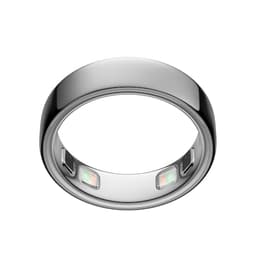
Oura
Oura Ring 5
Buy this if: Sleep and recovery are the reason you are buying, you want nothing on your wrist overnight, and you will accept a membership on top of the hardware.
Strengths
- Finger sensor and a 2.28 mm profile - the least intrusive overnight wear here
- 100 m water resistance, which Oura describes as suitable for sauna and water sports
- Typically 6-9 days per charge and about 80 minutes to refill
- One membership tier rather than three, so there is no feature ladder to decode
Trade-offs
- The membership is required for the full app - without it Oura publishes that you see only the three daily scores and basic settings
- Hardware cost is up front and separate from the recurring cost
- Ring sizing is its own step, and a sizing kit first is close to mandatory
- Apple Health export is iOS only and Oura states it needs an active membership on Gen3 or later
Price as of October 22, 2026. #ad How we’re funded
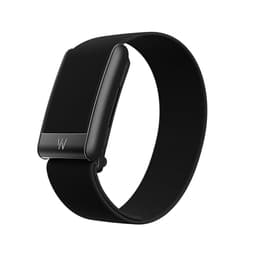
WHOOP
WHOOP One (WHOOP 5.0, 12-month membership)
Buy this if: You train with intent, you want strain and recovery scored daily, and you would rather pay a flat annual fee than buy hardware up front.
Strengths
- WHOOP claims 14+ days per charge, the longest of the two
- Sensors sample 26 times per second, and the 5.0 brought a reworked Sleep Performance score
- The device, a CoreKnit band and a charger are included in the One membership
- Wrist or garment wear, so there is nothing on your hands under a barbell
Trade-offs
- Membership-only: the listing is a 12-month membership that renews, so the real cost is annual and ongoing
- Healthspan, the Health Monitor and the Stress Monitor sit on the pricier Peak tier, and the ECG Heart Screener on Life
- WHOOP does not publish a water rating or a weight on the sources we read
- Stop paying and you stop having a tracker - there is no device-only mode to fall back to
Price as of October 22, 2026. #ad How we’re funded
Do the three-year maths before anything else
This is the part almost every comparison of these two skips, and it is the part that decides it. Both devices cost money every year you own them, so the question is not “which is cheaper” but “which is cheaper over the period I will actually wear one”.
Do it like this. For Oura: the ring price, plus the membership multiplied by the number of months you expect to keep it. For WHOOP: the annual membership multiplied by the number of years, with no separate hardware line because the device is included. Both current prices are on the buttons above, pulled live from the retailer with the date they were read, so you can run the sum with today’s numbers rather than a figure someone typed into an article in 2024.
Two things fall out of that arithmetic reliably. First, over a shorthorizon — a year, say — the device-included model looks good, because you have not bought any hardware. Second, over a long horizon the calculation turns on whether you keep paying, and that is where the asymmetry matters: an Oura ring whose membership lapses is a ring that still shows you three daily scores, while a WHOOP whose membership lapses is not a tracker at all. If you are the kind of buyer who uses a gadget hard for eight months and then puts it in a drawer, that asymmetry is worth more than any sensor spec on this page.
The thing nobody tells you: wear position is a real spec
A ring and a wrist band are not two styles of the same product. They sit in different places on your body and they fail in different situations.
A ring is the better overnight sensor for most people. It is smaller, it does not catch on bedding, and there is no screen to light the room. The Ring 5 is 2.28 mm thick and 6.09 mm wide — Oura’s own figures, and 40% smaller than the Ring 4. Its 100 m water rating means showers and swimming are not events.
A ring is the worse training sensor if you lift. Anything on your fingers is between your hand and a barbell, a kettlebell handle or a pull-up bar. Titanium does not deform, which is good for the ring and not necessarily good for the finger inside it, and plenty of lifters simply take a ring off to train — at which point the device is not measuring the session you most wanted measured.
WHOOP’s answer to this is the reason it sells garments as well as bands: the module can live in a sleeve or a top rather than on your wrist. That is a genuine advantage for anyone whose sport involves gripping something, and it is why our sleep tracker bands roundup treats wear position as a ranking axis rather than a styling note.
What each one is actually good at
Oura answers “how did I sleep, and am I ready?” The Readiness and Sleep scores are the product, built from HR, HRV, SpO2 and skin-temperature trends. There is one membership tier, so there is no feature ladder to work out before you buy.
WHOOP answers “how hard did I go, and can I go hard again?” Strain against Recovery is the whole model, and the 5.0 brought a reworked Sleep Performance score alongside sensors WHOOP says sample 26 times a second. But check the tier before you buy: Healthspan, the Health Monitor and the Stress Monitor are on the Peak tier, and the FDA-cleared ECG Heart Screener is on Life. The entry membership is the cheapest WHOOP and the least complete one.
Neither is a sleep laboratory, and neither claims to be. Both infer sleep stages from movement and cardiac signals rather than measuring brain activity, which is a real limit rather than a quibble — we go through exactly what that means in how accurate are sleep trackers. Nothing either device reports is a diagnosis, and a repeated alert belongs with a doctor rather than with a forum.
The subscription-free third option
If the real objection is the monthly fee rather than the form factor, you do not have to choose between these two at all. The RingConn Gen 2publishes 10–12 days per charge, a charging case stated to extend that past 150 days, 100 m water resistance and a plain “Subscription: none”. The Amazfit Helio Strap is a screenless band at up to 10 days with no required membership, and the Polar Loop brings Sleep Plus Stages and Nightly Recharge in the free Polar Flow app.
We are not going to pretend those match Oura’s or WHOOP’s analysis feature for feature — they do not, and the gap is mostly in the coaching layer rather than in the raw metrics. But if what you want is sleep stages, HRV and a morning readiness number, several devices now publish exactly that with nothing behind a paywall, and over three years the difference is not small. Start with best smart rings without a subscription and best sleep trackers without a subscription.
Wellness guidance, not medical advice. Pulse & Plate is written by a fitness enthusiast, not a doctor. Wearable heart-rate, SpO2, ECG and sleep readings are for general wellness, not diagnosis. For a heart concern, a symptom, or before starting a new exercise program, talk to a qualified professional.
Frequently asked questions
Is WHOOP or Oura better?
They answer different questions. Oura is the better sleep device: a finger sensor rather than a wrist one, 2.28 mm thick, 100 m water resistance and 6-9 days per charge. WHOOP is the better training device: Strain against Recovery is its core model, it claims 14-plus days of battery, and nothing sits on your fingers under a barbell. If sleep is the point, buy Oura. If training load is the point, buy WHOOP.
Does WHOOP require a subscription?
Yes - more than that, the subscription IS the product. The listing is a 12-month WHOOP One membership that ships a WHOOP 5.0, a CoreKnit band and a charger, and it renews. There is no device-only purchase, so if you stop paying you stop having a tracker. WHOOP also tiers its features: Healthspan, the Health Monitor and the Stress Monitor sit on the pricier Peak tier, and the FDA-cleared ECG Heart Screener on Life.
What happens to an Oura Ring if you cancel the membership?
You keep a working ring with a much thinner app. Oura publishes that without an active membership the app shows only the three daily scores and basic settings. That is the key asymmetry against WHOOP, where a lapsed membership leaves you with nothing - and it matters most if you are the sort of buyer who uses a gadget hard for a few months and then loses interest.
Which is cheaper, WHOOP or Oura?
It depends entirely on how long you keep it, and the two buttons are not comparable as printed: Oura's is a device price with a recurring membership on top, WHOOP's is a year of service with the device included. Work out the ring price plus the membership for the months you plan to keep it, against the annual WHOOP membership times the years. Over one year the device-included model usually looks better; over several, the answer depends on whether you keep paying.
Can you wear an Oura Ring while lifting weights?
Physically yes, practically it is the main argument against a ring. Anything on your fingers is between your hand and a barbell, a kettlebell handle or a pull-up bar, and titanium does not deform. Many lifters take the ring off to train - at which point the device is not measuring the session they most wanted measured. WHOOP's answer is the garments it sells alongside the band, which move the module off the wrist entirely.
Is there a smart ring as good as Oura without a subscription?
There are rings that publish a plain 'Subscription: none' and deliver the core metrics - sleep stages, HR, HRV, SpO2. The RingConn Gen 2 publishes 10-12 days per charge, a charging case stated to extend that past 150 days and 100 m water resistance; the Amazfit Helio Ring adds a dedicated EDA stress sensor that most rings estimate from heart rate alone. What you give up is the coaching and analysis layer rather than the raw measurements.
Do WHOOP and Oura measure sleep stages accurately?
Both infer stages from movement and cardiac signals rather than measuring brain activity, which is how every consumer sleep tracker works and is a real limit. Total sleep time, timing and night-to-night consistency are the trustworthy outputs; the light, deep and REM split is directional. Treat either device's stage breakdown as a trend to watch rather than a measurement to act on, and take any repeated health alert to a doctor.
Sources
- Oura — Membership — Without an active membership the app shows only the three daily scores and basic settings (accessed July 20, 2026)
- Oura — Apple Health Integration — Oura publishes that the Apple Health integration is iOS only and needs an active membership on Gen3 or later. It exports active energy, heart rate, mindful minutes, respiratory rate, sleep (duration, start and end times, and stages), steps, weight and workouts, and states that exported workouts 'will contribute to both the Move and Exercise rings' (accessed October 3, 2026)
- Apple App Store — Oura — Free app from Oura Health Oy; 'Requires iOS 16.0 or later.' (accessed October 3, 2026)
- WHOOP — WHOOP One membership plan — As indexed by search on the day of reading (the page itself returned 403 to our fetcher): the One membership ships a WHOOP 5.0 device with 14+ day battery, a CoreKnit band and a Basic Charger, and is WHOOP's entry tier; Peak adds Healthspan, the Health Monitor and the Stress Monitor; Life adds the WHOOP MG (accessed September 20, 2026)
- WHOOP — WHOOP Unveils WHOOP 5.0 and WHOOP MG (press release, May 8, 2025, via Fitt Insider) — 14+ day battery life, a seven percent smaller form factor, sensors sampling 26 times per second, a reworked Sleep Performance score, Healthspan, and an FDA-cleared ECG Heart Screener on the WHOOP MG; membership tiers One, Peak and Life. Read from the Fitt Insider mirror because whoop.com and businesswire.com both returned 403 to our fetcher (accessed September 20, 2026)
- Amazfit (US) — Helio Strap product page — Screenless band, 'no required subscription' for the Zepp app; up to 10 days of battery from a 232 mAh cell and charging under an hour; 5 ATM; sleep stages including REM, daytime naps, sleep breathing quality and a sleep score; BioTracker 6.0 PPG sensor; wrist 145-205 mm or upper-arm wear; iOS 15+ or Android 7+; weight stated as 20 g on the US page (accessed September 20, 2026)
- Polar (US) — Polar Loop product page — 'Screen-free, subscription-free fitness band'; 8-day battery from a 170 mAh cell and four weeks of onboard memory; Sleep Plus Stages, Nightly Recharge and SleepWise in the free Polar Flow app; WR30 water rating described as suitable for bathing and swimming; 29 g with wristband; two bands in the box (135-190 mm and 160-230 mm); Bluetooth LE only and cannot broadcast as an external heart rate sensor (accessed September 20, 2026)
- Cleveland Clinic — Do Sleep Trackers Help You Achieve Better Sleep? — Cleveland Clinic on the real limits of consumer sleep tracking (accessed July 19, 2026)
- Apps and fitness trackers that measure sleep: Are they useful? (Cleveland Clinic Journal of Medicine) — Clinical review of consumer sleep-tracking validity (accessed July 19, 2026)
Keep reading
Best Sleep Tracker Bands
The whole screenless band field, ranked on nights per charge and what the app gates.
See the picksOura Ring vs Samsung Galaxy Ring
The other Oura comparison that matters: a membership ring against a subscription-free one.
Read the comparisonBest Smart Rings Without a Subscription
Three rings publish 'Subscription: none' and mean it. What you keep and what you lose.
Read the roundupHow Accurate Are Sleep Trackers?
What a ring or a band measures overnight, what it infers, and which number to act on.
Read the guideSmart Ring vs Smartwatch
Before choosing between two rings, decide whether you want a ring at all.
Read the comparison