Pulse & Plate

Best Fitness Trackers Without a Subscription

Full sleep, heart rate and GPS with no monthly fee. The trackers that keep every core feature free, unlike some Fitbit insights behind a paywall.

By Stephen V.Last updated How we research

Plenty of trackers hand you the hardware, then park the insights you actually want behind a monthly fee. The clearest example is Fitbit: since Google took over, deeper coaching and analysis moved into Google Health Premium (the old Fitbit Premium), so some of what you’d expect from the app now costs extra. The trackers below are the opposite — they give you the core features, with sleep, heart rate and daily activity included, and no required subscription.

Our top pick overall is the Garmin vivosmart 5: a slim, subscription-free band that shows Body Battery, stress and blood oxygen in the free Garmin Connect app. Garmin has since added an optional paid tier, Connect+, but the company has said every existing feature and all your data in Garmin Connect stay free, so the base experience isn’t going anywhere. From there the list runs down by price and use: the Amazfit Band 7 for value, the Xiaomi Smart Band 8 as the cheapest way in, the Garmin Forerunner 165 for runners who want real built-in GPS, and the Amazfit GTR 4 if you’d rather wear a full-size watch. Every pick shows a live price.

How this is funded: we earn a commission if you buy through our links, at no extra cost to you. It never changes which product we recommend, and we’ll tell you when we’d skip one. Full disclosure.

Picks at a glance

Ranked on published specs, footprint and buyer fit. Select a row to jump to the full write-up. We have not tested these ourselves — here is exactly what we do instead.

#ProductBest forPrice
1
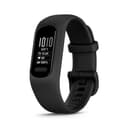
Garmin vivosmart 5

Garmin vivosmart 5

A simple, slim band with Garmin's trusted health metrics and no subscription, but the display is basic monochrome and GPS relies on your phone.

Best overall
$148.90 · View on Amazon

Price as of August 7, 2026. #ad How we’re funded

2
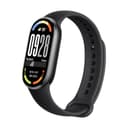
Amazfit Band 7

Amazfit Band 7

Outstanding battery and a big AMOLED for a rock-bottom price, but there's no onboard GPS and the app polish trails Fitbit and Garmin.

Best budget
3
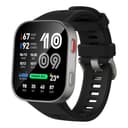
Xiaomi Smart Band 8

Xiaomi Smart Band 8

A stylish, feather-light band with great battery and a crisp AMOLED, but it has no onboard GPS and depends on your phone.

Cheapest
$51.75 · View on Amazon

Price as of August 7, 2026. #ad How we’re funded

4
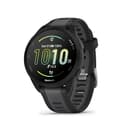
Garmin Forerunner 165

Garmin Forerunner 165

A focused running watch that finally brings an AMOLED screen and built-in GPS to Garmin's entry tier, with no subscription required.

Best for running
$214.99 · View on Amazon

$249.9914% off

Price as of August 7, 2026. #ad How we’re funded

5
Amazfit GTR 4

Amazfit GTR 4

Remarkable battery and dual-band GPS for a budget smartwatch, though the Zepp software and third-party app support trail the big names.

Best watch-style
$99.99 · View on Amazon

Price as of August 7, 2026. #ad How we’re funded

The picks in full

#1Best overall

Garmin vivosmart 5

A simple, slim band with Garmin's trusted health metrics and no subscription, but the display is basic monochrome and GPS relies on your phone.

Strengths

  • No subscription — full data in the free Garmin Connect app
  • Body Battery, stress and Pulse Ox (SpO2) tracking
  • Comfortable, lightweight and unobtrusive

Trade-offs

  • No built-in GPS — uses connected phone GPS
  • Basic black-and-white OLED display
Battery lifeUp to 7 days
GPSConnected GPS (uses phone)
Heart rateWrist-based HR + Pulse Ox (SpO2)
DisplayMonochrome OLED touchscreen
Water rating5 ATM
SubscriptionNone — Garmin Connect is free

Specs read from the product listing, on July 19, 2026. “Not published” means the maker does not state that figure.

#2Best budget

Amazfit Band 7

Outstanding battery and a big AMOLED for a rock-bottom price, but there's no onboard GPS and the app polish trails Fitbit and Garmin.

Strengths

  • Up to 18-day battery on a budget
  • Large 1.47-inch AMOLED display
  • SpO2, built-in Alexa and 120+ sport modes

Trade-offs

  • No built-in GPS — needs your phone for routes
  • Zepp app and ecosystem feel less refined than the big brands
Battery lifeUp to 18 days (typical use)
GPSConnected GPS (uses phone)
Heart rate24/7 BioTracker PPG HR
Blood oxygenSpO2 monitoring
Display1.47 in AMOLED touchscreen
Water resistance5 ATM

Specs read from the product listing, on July 19, 2026. “Not published” means the maker does not state that figure.

#3Cheapest

Xiaomi Smart Band 8

A stylish, feather-light band with great battery and a crisp AMOLED, but it has no onboard GPS and depends on your phone.

Strengths

  • Up to 16-day battery life
  • Bright 1.62-inch AMOLED with swappable straps and watch faces
  • Very affordable with SpO2 and 150+ workout modes

Trade-offs

  • No built-in GPS — relies on your phone
  • Companion app is less mature than Fitbit or Garmin
Battery lifeUp to 16 days (typical use)
GPSNo built-in GPS (connected via phone)
Heart rate24/7 optical HR
Blood oxygenSpO2 monitoring
Display1.62 in AMOLED touchscreen
Water resistance5 ATM

Specs read from the product listing, on July 19, 2026. “Not published” means the maker does not state that figure.

#4Best for running

Garmin Forerunner 165

A focused running watch that finally brings an AMOLED screen and built-in GPS to Garmin's entry tier, with no subscription required.

Strengths

  • Built-in GPS paired with a vivid AMOLED display
  • Strong running metrics and training plans, no subscription
  • Up to 11-day smartwatch battery

Trade-offs

  • Base model has no onboard music storage (needs the 165 Music edition)
  • Lacks the advanced multisport tools of pricier Forerunners
Battery lifeUp to 11 days smartwatch / up to 19 hrs GPS
GPSBuilt-in GPS (all-systems GNSS)
DisplayAMOLED touchscreen
Heart rateWrist HR + Pulse Ox (SpO2)
Water rating5 ATM
SubscriptionNone — Garmin Connect is free

Specs read from the product listing, on July 19, 2026. “Not published” means the maker does not state that figure.

#5Best watch-style

Amazfit GTR 4

Remarkable battery and dual-band GPS for a budget smartwatch, though the Zepp software and third-party app support trail the big names.

Strengths

  • Up to 14-day battery with built-in dual-band GPS
  • Large 1.43-inch AMOLED, no subscription
  • SpO2, built-in Alexa and 150+ sport modes

Trade-offs

  • Zepp ecosystem has limited third-party apps
  • No ECG and no contactless payments in the US
Battery lifeUp to 14 days (typical use)
GPSBuilt-in dual-band GPS (6 satellite systems)
Heart rateBioTracker HR + SpO2
Display1.43 in AMOLED
Water resistance5 ATM
SubscriptionNone (Alexa built-in)

Specs read from the product listing, on July 19, 2026. “Not published” means the maker does not state that figure.

How to choose a no-subscription tracker

“No subscription” sounds simple, but the fee usually sneaks in through the app, not the hardware. Here’s what to check before you buy, and how these picks stack up.

Confirm which features are actually free

Every tracker needs a companion app, and the app is where paywalls live. Garmin’s model is the friendliest: the free Garmin Connect app shows your full data, and the optional Connect+ tier adds extras without taking anything existing away. Fitbit is the cautionary case — a chunk of its coaching and analysis now sits inside Google Health Premium, the rebranded Fitbit Premium. Before buying any brand, open its app’s feature list and check that sleep stages, heart-rate zones and daily activity are free rather than trial features. If you’re cross-shopping Fitbit, our Fitbit vs Garmin comparison lays out exactly what each one locks behind a fee.

Decide whether you need built-in GPS

The cheapest bands here — the Amazfit Band 7 and Xiaomi Smart Band 8 — use your phone’s GPS rather than their own. That’s fine for step counting, but it means carrying your phone to map a run. If you run or ride without a phone, step up to a watch with real onboard GPS like the Garmin Forerunner 165 or the dual-band GPS in the Amazfit GTR 4. None of the picks need GPS to count steps, heart rate or sleep — that all comes from onboard sensors regardless.

Weigh battery life against the screen

This is where the budget bands shine: the Amazfit Band 7 runs up to 18 days, the Xiaomi Smart Band 8 up to 16, and the Amazfit GTR 4 up to 14 — far longer than any watch that charges nightly. Garmin’s vivosmart 5 lasts about seven days behind a plain monochrome screen, while the Forerunner 165 pairs a bright AMOLED display with up to 11 days. Longer battery usually buys you a simpler display or fewer smart features, so match it to how often you’re willing to charge.

How much to trust the numbers

Consumer trackers are good at trends and weak at absolutes. Independent testing of wrist-based optical heart-rate sensors shows accuracy varies with the activity, skin tone and how snug the band sits, and the clinical guidance is to pick a tracker for the handful of metrics you’ll actually use rather than the longest feature list. Treat the readings as a guide, not a lab result. For the wider field beyond subscription-free models, see our best fitness trackers roundup.
Frequently asked questions

Which fitness trackers work without a subscription?

All five picks here work fully without a monthly fee: the Garmin vivosmart 5, Garmin Forerunner 165, Amazfit Band 7, Xiaomi Smart Band 8 and Amazfit GTR 4. Garmin shows your complete data in the free Garmin Connect app, and the Amazfit and Xiaomi bands sync to their own free companion apps. The main tracker to watch is Fitbit, which moved some deeper insights into the paid Google Health Premium tier.

Does Garmin require a subscription?

No. Garmin Connect, the app behind every Garmin device, is free and shows all of your metrics. Garmin later added an optional paid tier called Connect+ with extra features, but the company confirmed that all existing features and your data in Garmin Connect remain free. You can use any Garmin tracker fully without ever paying a subscription.

Do I lose features on Fitbit without Premium?

Some, yes. Fitbit's basic tracking still works for free, but a range of deeper coaching, analytics and personalized insights now sits inside Google Health Premium, the rebranded Fitbit Premium. If you want everything the hardware collects without a recurring fee, a subscription-free brand like Garmin or Amazfit avoids that paywall entirely.

Do these trackers need built-in GPS to count steps and heart rate?

No. Steps, heart rate, sleep and calories all come from onboard sensors and work with no GPS at all. GPS only matters for mapping the exact route and pace of outdoor workouts. The Amazfit Band 7 and Xiaomi Smart Band 8 use your phone's GPS for that, while the Garmin Forerunner 165 and Amazfit GTR 4 have their own built-in GPS so you can leave the phone at home.

Sources

Keep reading