How to choose a sleep tracker
Every device here will tell you how long you slept and roughly how restless the night was. The differences are about form factor, cost and how much to trust the fine detail.
Ring, band, watch or mat?
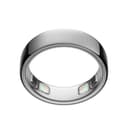
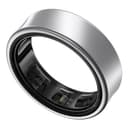
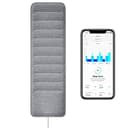
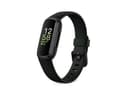
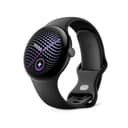
Form factor is the first decision. A ring (Oura Ring 5, Galaxy Ring) is the most comfortable for sleep and the least distracting. A mat (Withings) means wearing nothing at all, but it only tracks one person in one bed and skips daytime activity. A band or watch (Fitbit Inspire 3, Pixel Watch 5) does double duty for workouts but has to be worn and charged around your sleep schedule.
The subscription trade-off
Oura’s best insights require a paid membership; the Samsung Galaxy Ring and the Withings mat charge nothing beyond the hardware. Over a few years, a membership can cost more than the device, so decide up front whether the deeper analysis is worth a recurring fee.
Battery and charging around sleep
A tracker is useless overnight if it is on the charger. Rings last about a week; the Withings mat never needs charging because it stays plugged in; a full smartwatch is the tightest fit, though the Pixel Watch 5 is now rated up to 30 hours on the 41 mm and 40 hours on the 45 mm — enough to cover a night, if you top it up during the day rather than at bedtime.
How accurate is sleep tracking, honestly?
This is the part to be clear-eyed about. Consumer devices are good at estimating how long you slept, but sleep-stagebreakdowns — light, deep and REM — are estimates inferred from movement and heart rate. They are not the clinical measurement a sleep lab makes, and stage accuracy is limited on every device on this page. Use the trends to build better habits, not to self-diagnose. For heart-focused features, see our health-monitoring wearables; for all-day activity, the best fitness trackers.
Two narrower cuts of this field are worth reading if one of them matches your constraint. If you want a single device on your wrist for everything, best sleep tracking smartwatches ranks six watches on nights per charge first, because a watch on the charger at bedtime tracks nothing. And if the recurring cost is what is stopping you, best sleep trackers without a subscription covers only the devices whose makers charge nothing to read your own night — and states plainly what Oura, WHOOP and Google put behind a paywall.
Before you act on any of these numbers
Every device on this page measures some combination of movement, heart rate, blood oxygen and skin temperature, and then infers the rest — including the light, deep and REM split that gets the most attention. Knowing which half of your sleep screen is measurement and which half is a model changes what you do with it: how accurate are sleep trackers sets out the line, using each maker’s own published sensor list.