Why a strap beats a wrist sensor for training
The two technologies are measuring different things. A chest strap uses electrodes to detect the electrical activity that triggers each heartbeat — the same phenomenon an ECG records. A wrist sensor uses photoplethysmography: green light into the skin, and an inferred pulse from the changing reflection as blood volume rises and falls.
Optical sensing is genuinely good technology and gets better every generation, but it is vulnerable to things that have nothing to do with your heart: the band shifting, tendons moving under the sensor during a grip-heavy lift, cold hands reducing peripheral blood flow, tattoos, and rapid changes in effort that the smoothing algorithms lag behind. Published research on optical wrist sensing describes exactly this pattern — good agreement at steady effort, degraded agreement during high-intensity and variable activity. If your watch has ever shown 90 bpm in the middle of a sprint or pinned itself at 170 during a set of rows, you have seen it.
What to look for
Connectivity: ANT+, Bluetooth, or both
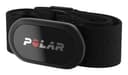
Bluetooth talks to phones and most modern watches, usually one device at a time unless the strap supports multiple channels. ANT+ talks to Garmin devices, bike computers and a lot of gym equipment, with no connection limit. Straps that broadcast both let you record on a watch while an app or a machine also reads live — which is the difference between a strap that fits your setup and one that fights it. The Polar H10 adds 5 kHz analog for pool use and older equipment.
Battery: coin cell or rechargeable
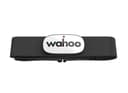
A coin cell is the low-effort option — Garmin rates the HRM-Dual up to 3.5 years — and you replace it yourself when it dies. A rechargeable strap like Wahoo’s TRACKR states 100+ hours of active use, which is months of normal training, but it does add a charging habit. Neither is wrong; pick based on whether you would rather change a battery once every few years or plug something in every few weeks.
Onboard memory
The H10 can record a session by itself and sync afterwards, which matters for swimming (Bluetooth does not travel through water) and for training without a phone. Most straps cannot, and their listings do not publish a memory figure — we mark that as not published rather than assuming it is absent.
The strap itself
Nearly every “my chest strap is unreliable” story is a strap problem, not a sensor problem: too loose, too dry, or too old. Electrodes need moisture to conduct, so wet the contacts before you put it on, and tighten it more than feels necessary. Straps are consumables and are sold separately — replacing a three-year-old strap often fixes a monitor people were about to throw away.
The arm band alternative
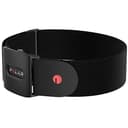
An optical armband is a genuine middle ground. It uses the same light-based sensing as a watch, but on the upper arm, where there is more muscle, less tendon movement and a better blood supply — so it holds up far better than a wrist reading under load without a band across your chest. It will still lag a chest strap on sharp interval transitions. For lifters and for anyone who has tried a strap and hated it, that trade is usually worth making, and the Verity Sense clips to swim goggles as well.
Do you actually need one?
Not everyone does. If you train by feel, walk for health, or use heart rate only as a rough daily trend, your watch is fine and this page is optional. A dedicated monitor earns its place when you are training in zones, doing intervals where the number drives the session, riding indoors with an app, or trying to work out why your watch and your effort disagree. Our chest strap vs wrist heart rate comparison sets out exactly where each one is trustworthy, and how accurate fitness trackers are covers the wider question of which numbers on your wrist deserve trust.
A wellness note
Everything here is exercise equipment, not medical equipment. These devices are excellent at telling you how hard you are working; they are not diagnostic tools, and a strange reading is not a diagnosis. If you have symptoms — chest pain, unexplained breathlessness, fainting, or a resting rate that is persistently very high or very low — that is a conversation with a doctor, not with a strap. If you want to train by heart rate zones, the American Heart Association publishes target ranges by age that are a reasonable starting frame.