How Accurate Are Sleep Trackers?
Accurate about some things and guessing about others, and the split is knowable. What your device measures overnight, what it infers from that, and which number on the sleep screen is worth acting on.
How this is funded: we earn a commission if you buy through our links, at no extra cost to you. It never changes which product we recommend, and we’ll tell you when we’d skip one. Full disclosure.
Three devices whose published sensor lists we quote below
Most sensors pointed at sleep
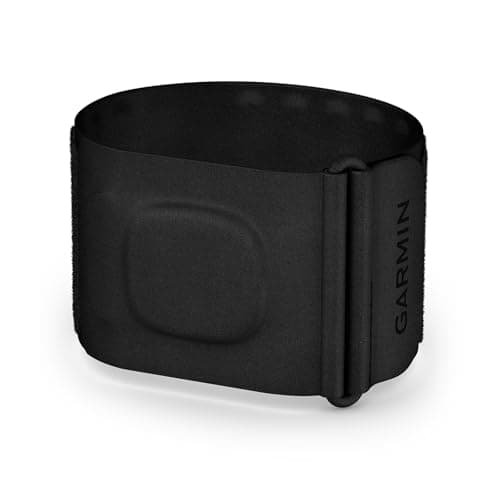
Garmin Index Sleep Monitor
Anyone who takes a watch off at night, and Garmin watch owners who want the overnight data without charging the watch at bedtime.
$169.60 · View on AmazonFull comparisonPrice as of October 22, 2026. #ad How we’re funded
Best ring for overnight data
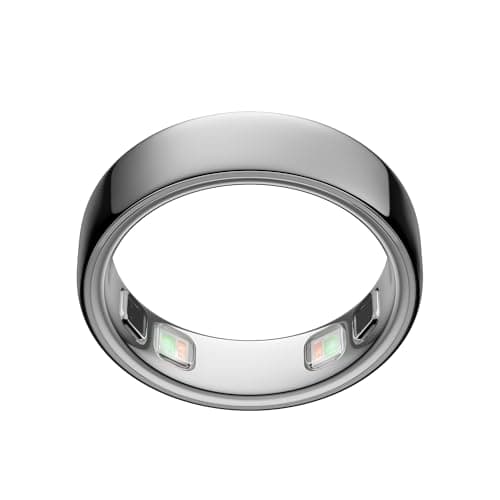
Oura Ring 5
Sleep and recovery obsessives who want screen-free 24/7 tracking
$399.00 · View on AmazonFull comparisonPrice as of October 22, 2026. #ad How we’re funded
Best with nothing worn
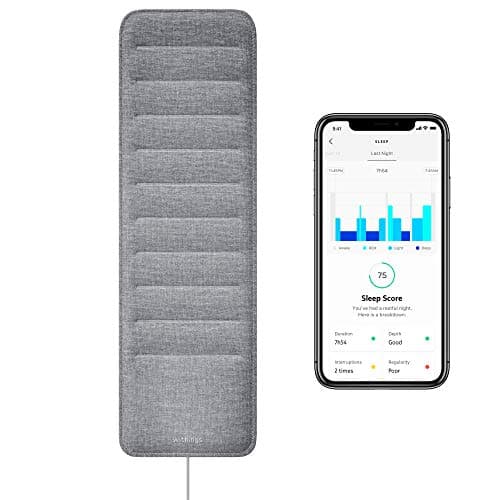
Withings Sleep Tracking Mat
People who dislike wearing anything to bed but still want sleep data
$199.95 · View on AmazonFull comparisonPrice as of October 22, 2026. #ad How we’re funded
Sleep trackers are accurate about what they measure and approximate about what they infer, and you can tell which is which. Total sleep time, the moment you fell asleep, the moment you woke and how much you moved are read more or less directly off sensors. The light, deep and REM breakdown is not measured at all — it is an algorithm’s reconstruction, because the thing a sleep laboratory actually scores stages from is brain activity, and no consumer device has an EEG sensor. Trust the totals and the week-on-week trend. Read the stage split as a rough shape.
That one distinction answers most of the complaints people have about these devices, and it is worth understanding properly rather than taking on trust, because once you can see where the line falls you stop being annoyed by the parts that are inevitable.
What a sleep tracker actually measures
Published sensor lists are the honest starting point, and they are short. Google’s own tech specs for the Fitbit Air list an optical heart-rate sensor, a three-axis accelerometer plus gyroscope, red and infrared SpO2 sensors and a device temperature sensor. Amazfit publishes a BioTracker 6.0 PPG sensor with accelerometer, gyroscope and temperature on the Helio Strap. Polar publishes a Precision Prime optical sensor plus an accelerometer on the Loop. Oura publishes red, green and infrared LEDs plus a digital temperature sensor on the Ring 5.
Read those lists together and the pattern is clear. Every sleep tracker on the market measures some combination of four things:
- Movement, from an accelerometer. The oldest and crudest signal, and still the backbone.
- Heart rate and heart-rate variability, from light reflected through skin. Cardiac rhythm genuinely does change across the night, which is what makes staging possible at all.
- Blood oxygen, from red and infrared light, on the devices that carry both LEDs. This is the signal behind breathing-disturbance reporting.
- Skin temperature, which drifts predictably through a night and across a cycle.
Nothing on that list is brain activity. Nothing on it is airflow at your nose or mouth, or chest-wall movement, or a video of you. Those are the things a polysomnogram adds, and they are the reason a sleep study is still a sleep study.
What it infers, and why makers’ numbers disagree
Everything on your sleep screen that sounds like a conclusion is a conclusion: the stage breakdown, the sleep score, the readiness or recovery number, the “restorative sleep” figure. Each one is a model’s output, built from the four measured signals above, and each maker’s model is its own.
The practical proof is something anyone with two devices can observe: wear a ring and a watch on the same night and the stage splits will not match. They are not both wrong — they are two different algorithms making a defensible estimate from similar inputs. A clinical review of consumer sleep apps and trackers reached the conclusion you would expect from that: these tools are useful for tracking patterns over time and are not substitutes for clinical assessment.
There is also a well-documented asymmetry in how they fail. Devices are better at detecting that you are asleep than at detecting that you are awake, because stillness is the main input. Lie awake without moving and a tracker will often score it as sleep. That is why the devices that add cardiac and breathing signals outperform a pure movement tracker, and why a loose watch band that slides around all night produces worse data than a snug ring.
The one thing a tracker does better than a sleep lab
It is worth being fair about what this technology is genuinely good for, because the “it is not a sleep study” criticism misses the actual advantage. A polysomnogram gives you one or two nights of excellent data in an unfamiliar bed with wires attached. A wearable gives you three hundred nights of approximate data in your own bed.
For the questions most people actually have — does alcohol wreck my sleep, is my bedtime drifting, did that late training session cost me, am I worse on Sundays — three hundred imperfect nights beat two perfect ones comfortably. Trends tolerate noise. A single night’s REM percentage does not.
This is also why a device you will actually wear beats a more accurate one you will not. A nightly-charge watch cannot be on your wrist at 3 a.m. if it is on the charger, which is the whole argument for the screenless bands in our sleep tracker bands roundup — Garmin publishes up to seven nights per charge with Pulse Ox on for the Index Sleep Monitor, and the fact that it is designed as a second device, worn at night while the watch charges, is the point rather than a limitation.
Which numbers to act on
Act on total sleep time. It is the closest thing to a measurement on the screen and it has the strongest relationship with how you feel.
Act on consistency. Bedtime and wake time are things your device records accurately and things you can change tonight. If the chart shows a two-hour spread across a week, that is the finding, and it is more actionable than any stage breakdown.
Watch, but do not chase, HRV and resting heart rate. Both are measured rather than inferred, and both are genuinely informative as a trend — several devices build their recovery scores on exactly this. A single bad morning means very little.
Discount the stage percentages. Not because they are useless, but because the precision implied by “17% REM” does not exist. If deep sleep shows as a thin band every night for a month, that is worth mentioning to a doctor. One bad night is noise.
Take breathing alerts seriously and literally. Where a device reports a sleep-apnea signal it is a prompt, not a result — RingConn’s own framing for the Gen 2 is that sleep apnea monitoring is a wellness signal and an AHI figure is a reason to see a doctor. Apple publishes sleep apnea notifications on the Series 9 and later, the Ultra 2 and later and the SE 3. If you snore heavily, wake unrefreshed, or someone has watched you stop breathing, that is a conversation with a clinician regardless of what any device says.
The risk nobody mentions in the marketing
There is a failure mode specific to sleep tracking that does not apply to step counting: the measurement can make the thing worse. Checking a score every morning and treating it as a grade produces anxiety about sleep in people who were sleeping adequately, and anxiety about sleep is itself a cause of poor sleep. Cleveland Clinic’s own write-up on sleep tracking makes the point that these devices are best used to spot patterns rather than to audit last night.
If that is happening to you, the correct use of the device is not a better device. It is to stop opening the app daily, look at it weekly, and act on the two numbers above. A tracker is a tool for noticing a trend, and the trend is visible at a weekly resolution.
None of this is medical advice, and no device on this site is a medical device unless its maker says so and names the clearance. For insomnia, heavy snoring, or daytime sleepiness that does not resolve, the answer is a clinician rather than a sensor.
Wellness guidance, not medical advice. Pulse & Plate is written by a fitness enthusiast, not a doctor. Wearable heart-rate, SpO2, ECG and sleep readings are for general wellness, not diagnosis. For a heart concern, a symptom, or before starting a new exercise program, talk to a qualified professional.
Frequently asked questions
How accurate are sleep trackers?
Accurate on the things they measure, approximate on the things they infer. Total sleep time, when you fell asleep, when you woke and how restless the night was come from sensors reading movement and cardiac signals directly - those are trustworthy. The light, deep and REM breakdown is inferred by an algorithm from those same signals, because no consumer device measures brain activity, which is what a sleep laboratory actually scores stages from. Trust the totals and the trends, read the stage split as directional.
Can a smartwatch tell what sleep stage you are in?
Not by measuring it. Sleep staging in a laboratory is scored from brain activity using EEG, and no wrist device, ring or band has an EEG sensor. What they have is an accelerometer, an optical heart-rate sensor and - on better devices - blood-oxygen and skin-temperature sensors, and the stages you see are an algorithm's best reconstruction from those inputs. Different makers' algorithms disagree with each other on the same night, which is the clearest evidence that this is inference rather than measurement.
Which number on the sleep screen should I actually use?
Total sleep time, and your bedtime consistency. Those are close to measured, they are the two things with the strongest link to how you feel, and they are the two you can change tonight. Ignore a single night's REM percentage - it is the most heavily processed number on the screen and the one most prone to swing on nothing. If your device gives a sleep score, use it the way you would use a weekly average, not as a grade.
Are sleep rings more accurate than watches?
A ring has a real positional advantage rather than a better sensor: the finger gives a cleaner optical signal than the wrist, and a ring stays put overnight where a loose watch band moves. Oura publishes red, green and infrared LEDs plus a digital temperature sensor on the Ring 5. But a ring still has no EEG sensor, so it is inferring stages from the same class of inputs as a watch. Better signal into the same kind of model is a real improvement, not a different category.
Can a sleep tracker detect sleep apnea?
Some devices now report a sleep-apnea or breathing-disturbance signal, and it is a prompt, not a diagnosis. RingConn's own framing for the Gen 2 is the one to copy: sleep apnea monitoring is a wellness signal, and an AHI number is a reason to see a doctor. Apple publishes sleep apnea notifications on the Series 9 and later, the Ultra 2 and later and the SE 3. If you snore heavily, wake unrefreshed or anyone has watched you stop breathing, see a doctor regardless of what a device says.
Why does my sleep tracker say I was awake when I was asleep?
Because stillness is the main thing it has to go on. Lying awake but motionless can read as sleep, and a restless but genuinely asleep stretch can read as wake. This is the known failure mode of movement-led sleep tracking and it is why devices that add heart rate, HRV and breathing signals do better than a bare accelerometer. It is also why the number to watch is the weekly pattern rather than any single night.
Do sleep trackers actually help you sleep better?
Indirectly, and with one real risk. The useful mechanism is boring: seeing that your bedtime drifts by two hours across a week is often enough to fix the bedtime, and consistency is the intervention with the best evidence behind it. The risk is the opposite - treating the score as a verdict and getting anxious about it, which is a recognised pattern. If the number is making you worse rather than better, the correct use of the device is to stop looking at it daily.
Sources
- Cleveland Clinic — Do Sleep Trackers Help You Achieve Better Sleep? — Cleveland Clinic on the real limits of consumer sleep tracking (accessed July 19, 2026)
- Apps and fitness trackers that measure sleep: Are they useful? (Cleveland Clinic Journal of Medicine) — Clinical review of consumer sleep-tracking validity (accessed July 19, 2026)
- Accuracy of Optical Heart Rate Sensing in Wearable Fitness Trackers (NIH/PMC) — Validation study of wrist optical HR accuracy across activities and ages (accessed July 19, 2026)
- Cleveland Clinic — Fitness Trackers: Benefits and What To Look For — Cleveland Clinic on tracker accuracy and choosing by the metrics you care about (accessed July 19, 2026)
- Garmin — Rest easy with the Index Sleep Monitor smart sleep band (press release, June 18, 2025) — Upper-arm sleep band tracking sleep stages, HRV status, breathing variations, skin temperature and Pulse Ox; up to 7 nights of battery with Pulse Ox on; smart wake alarm; two sizes; works on its own with the Garmin Connect app and combines data with a compatible Garmin watch; no subscription mentioned (accessed September 20, 2026)
- Garmin — Index Sleep Monitor Owner's Manual: Specifications — Battery life 'up to 7 nights, with SpO2'; water rating 5 ATM; band dimensions S/M 12.8 in and L/XL 17.8 in; no weight is listed (accessed September 20, 2026)
- Google Store — Google Fitbit Air tech specs — Battery life up to 7 days, 0-100% in 90 minutes, 1 day from a 5-minute charge; 5.2 g without band and 12 g with band; 34.9 x 17 x 8.3 mm; water resistant up to 50 meters; optical heart rate, 3-axis accelerometer + gyroscope, red and infrared SpO2 sensors, device temperature sensor; Bluetooth 5.0; Google Account and Google Health app required (accessed September 20, 2026)
- Amazfit (US) — Helio Strap product page — Screenless band, 'no required subscription' for the Zepp app; up to 10 days of battery from a 232 mAh cell and charging under an hour; 5 ATM; sleep stages including REM, daytime naps, sleep breathing quality and a sleep score; BioTracker 6.0 PPG sensor; wrist 145-205 mm or upper-arm wear; iOS 15+ or Android 7+; weight stated as 20 g on the US page (accessed September 20, 2026)
- Polar (US) — Polar Loop product page — 'Screen-free, subscription-free fitness band'; 8-day battery from a 170 mAh cell and four weeks of onboard memory; Sleep Plus Stages, Nightly Recharge and SleepWise in the free Polar Flow app; WR30 water rating described as suitable for bathing and swimming; 29 g with wristband; two bands in the box (135-190 mm and 160-230 mm); Bluetooth LE only and cannot broadcast as an external heart rate sensor (accessed September 20, 2026)
- Apple — Apple Watch Series 12 — Apple's own wording for the health features and their limits: hypertension notifications ('Series 12 can notify you if it identifies patterns of hypertension', not intended for people under 22, already diagnosed or pregnant); sleep apnea notifications (Series 9 and later, Ultra 2 and later, and SE 3); a nightly sleep score; a morning readiness score from recent activity, vitals and sleep; and the ECG app, which the footnotes limit to Series 4 and later and exclude on every SE model (accessed October 3, 2026)
Keep reading
Best Sleep Tracker Bands
The screenless band form factor, ranked on nights per charge and what each app gates.
See the picksBest Sleep Trackers
Rings, bands, watches and under-mattress pads, compared across every form factor.
See the picksWHOOP vs Oura Ring
The two subscription recovery trackers, and the three-year cost nobody calculates.
Read the comparisonHow Accurate Are Fitness Trackers?
The daytime version of this question: steps, heart rate and the calorie number to stop believing.
Read the guideBest Sleep Trackers Without a Subscription
Which makers charge nothing to read your own night, and what each paywall removes.
Read the roundup