Pulse & Plate

Best Sleep Trackers Without a Subscription

Six sleep trackers whose makers charge nothing to read your own night - ring, arm band, wrist band and an under-mattress mat - plus a plain account of the three that do charge, and what each paywall takes away.

By Stephen V.Last updated How we research

How this is funded: we earn a commission if you buy through our links, at no extra cost to you. It never changes which product we recommend, and we’ll tell you when we’d skip one. Full disclosure.

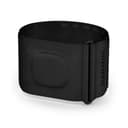
The best sleep tracker with no monthly fee is the Garmin Index Sleep Monitor. Garmin publishes up to seven nights per charge with Pulse Ox enabled, a night report containing sleep stages, HRV status, breathing variations, skin temperature, Pulse Ox, a sleep score and Body Battery — and it states plainly that all existing features and data in Garmin Connect remain free, with Connect+ as an optional extra tier. It is worn on the upper arm, has no screen, and does only this one thing. If you want your own night back without a recurring bill, that is the shortest route to it.

This page exists because the subscription question has quietly become the most expensive decision in the category. A tracker is a one-off purchase; a membership is a payment you make for as long as you want to keep seeing your own data, and in at least one case here the data stops being visible the moment you stop paying. We rank on one axis: what the free app shows you. Not what the sensors can measure — what the maker lets you read without a card on file.

It is also a deliberately different question from the one our other sleep pages ask. Best sleep trackers ranks the whole field on sensors and accuracy, best sleep tracker bands ranks the screenless band form factor, and best sleep tracking smartwatches ranks watches on nights per charge. Our no-subscription fitness tracker roundup asks the same money question about daytime training data. This page is sleep only, and spans every form factor — ring, arm band, wrist band and an under-mattress mat you never wear at all. As always, consumer sleep tracking estimates sleep rather than measuring it clinically, and we own and have tested none of these devices.

Picks at a glance

Ranked on published specs, footprint and buyer fit. Select a row to jump to the full write-up. We have not tested these ourselves — here is exactly what we do instead.

#ProductBest forPrice
1
Garmin Index Sleep Monitor

Garmin Index Sleep Monitor

The only band here built for nothing but sleep: a soft upper-arm strap with no screen, a week of nights per charge with Pulse Ox on, and every metric in the free Garmin Connect app.

Best overall
$169.60 · View on Amazon

Price as of October 13, 2026. #ad How we’re funded

2
RingConn Gen 2 Smart Ring

RingConn Gen 2 Smart Ring

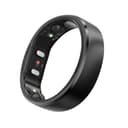
The subscription-free answer to Oura, with the longest battery of any ring here and a charging case that carries months of top-ups.

Best ring
$251.70 · View on Amazon

$299.0016% off

Price as of October 13, 2026. #ad How we’re funded

3
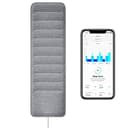
Withings Sleep Tracking Mat

Withings Sleep Tracking Mat

A set-and-forget pad that tracks sleep, heart rate and snoring without wearing anything, but it only works in one bed and skips daytime activity.

Best with nothing to wear
$199.95 · View on Amazon

Price as of October 13, 2026. #ad How we’re funded

4
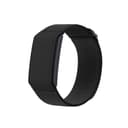
Amazfit Helio Strap

Amazfit Helio Strap

The longest-running screenless band here without a membership: ten days per charge, sleep stages with naps and breathing quality, and a nylon strap that moves to the upper arm for training.

Best screenless wrist band
$99.00 · View on Amazon

Price as of October 13, 2026. #ad How we’re funded

5
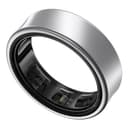
Samsung Galaxy Ring

Samsung Galaxy Ring

A comfortable, subscription-free smart ring with solid sleep tracking, but it's at its best paired with a Samsung Galaxy phone.

Best for Galaxy phones
$239.99 · View on Amazon

Price as of October 13, 2026. #ad How we’re funded

6
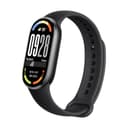
Xiaomi Smart Band 10

Xiaomi Smart Band 10

Three weeks of battery and a genuinely bright AMOLED for the price of a cheap pair of headphones — as long as you can live with Xiaomi's app and no onboard GPS.

Cheapest worth buying
$54.99 · View on Amazon

Price as of October 13, 2026. #ad How we’re funded

What you get for nothing per month

Every device here publishes no subscription for its sleep data. The rows that separate them are where it sits on your body, how often you have to charge it, and how much of a night report the free app actually draws.

SpecGarmin Index Sleep MonitorRingConn Gen 2 Smart RingWithings Sleep Tracking MatAmazfit Helio StrapSamsung Galaxy RingXiaomi Smart Band 10
SubscriptionNone - Garmin Connect is freeNoneNoneNone - Zepp app is freeNone (Samsung Health is free)None
Worn onUpper arm (soft band, removable module)FingerUnder the mattress (nothing worn)Wrist (145-205 mm) or upper armFingerWrist
Battery / powerUp to 7 nights with SpO2 on (Garmin)10-12 days; case 150+ daysUSB-powered - never chargedUp to 10 days typical; under 1 hr to chargeUp to 7 days (varies by size)Up to 21 days (Xiaomi)
ScreenNoneNoneNoneNoneNone1.72 in AMOLED
Sleep stagesYesYesYes (sleep cycles)Yes, including REM and napsYesYes, with sleep-quality analysis
Breathing / apnea signalBreathing variations + Pulse OxSleep apnea (AHI)Snore detectionSleep breathing qualitySpO2Not published
Water rating5 ATM (owner's manual)100 mNot applicable5 ATM10 ATM + IP68Not published
Also a day trackerNo - night onlyYesNo - bed onlyYesYesYes

Every figure above is one the maker publishes, read on the dated visit linked under each write-up below. “Not published” means the maker does not state it — we do not fill the gap with an estimate.

The picks in full

#1Best overall

Garmin Index Sleep Monitor

The only band here built for nothing but sleep: a soft upper-arm strap with no screen, a week of nights per charge with Pulse Ox on, and every metric in the free Garmin Connect app.

Strengths

  • Worn on the upper arm, so nothing sits on the wrist overnight and there is no screen to light the room
  • Sleep stages, HRV status, breathing variations, skin temperature and Pulse Ox, plus Body Battery, with no subscription
  • Up to 7 nights per charge with Pulse Ox on, and the band goes in the washing machine once the module is removed

Trade-offs

  • Night-only by design: no daytime steps or workouts, so it is a second device rather than a replacement for a watch
  • Two band sizes (S-M and L-XL) and Garmin sizes by arm circumference, so check before ordering
  • Garmin does not publish a weight for it
Worn onUpper arm (soft band, removable module)
ScreenNone
Battery lifeUp to 7 nights, with SpO2 on (Garmin)
Night reportSleep stages, HRV status, breathing variations, skin temperature, Pulse Ox, sleep score, Body Battery
Smart wake alarmYes - vibrates in a lighter stage inside a chosen window (Garmin)
SubscriptionNone - Garmin Connect is free
Water rating5 ATM (Garmin owner's manual)
Band sizesS-M 12.8 in long, L-XL 17.8 in long (manual)
WeightNot published

Worth knowing. Garmin's press release describes it as working on its own with the Garmin Connect app, and combining its data with a compatible Garmin watch's daytime data - so it is the one pick here designed to be a second device rather than the only one.

Specs read from the product listing, on September 20, 2026. “Not published” means the maker does not state that figure.

#2Best ring

RingConn Gen 2 Smart Ring

The subscription-free answer to Oura, with the longest battery of any ring here and a charging case that carries months of top-ups.

Strengths

  • 10-12 days per charge, and the case is stated to extend that past 150 days
  • No subscription - the full app feature set is included with the ring
  • 100 m water resistance at roughly 2 g on the finger

Trade-offs

  • RingConn uses its own sizing, so a sizing kit first is close to mandatory
  • Sleep apnea monitoring is a wellness signal, not a diagnosis - treat an AHI number as a prompt to see a doctor
Battery life10-12 days (varies by size); case 150+ days
TrackingSleep, sleep apnea (AHI), activity, stress, HR, HRV, SpO2
SubscriptionNone
Water resistance100 m
WeightAbout 2 g (varies by size)
SizingRingConn-specific; sizing kit recommended
Warranty12 months

Worth knowing. Ships with a charging case rather than a puck - that is what turns a 10-day ring into something you can leave the charger at home for.

Specs read from the product listing, on August 18, 2026. “Not published” means the maker does not state that figure.

#3Best with nothing to wear

Withings Sleep Tracking Mat

A set-and-forget pad that tracks sleep, heart rate and snoring without wearing anything, but it only works in one bed and skips daytime activity.

Strengths

  • Tracks sleep and heart rate with nothing on your body
  • No charging and no subscription — auto-syncs over Wi-Fi
  • Snore detection plus smart-home routines

Trade-offs

  • Bed-only — no daytime or activity tracking
  • Tied to one mattress, so it isn't portable
PowerUSB-powered (always plugged in, no charging)
PlacementUnder-mattress pad (nothing worn)
TracksSleep cycles, heart rate, snore detection
ConnectivityWi-Fi (auto-sync to Health Mate)
DisplayNone
SubscriptionNone

Worth knowing. Thin sensor pad slides under the mattress at chest height.

Specs read from the product listing, on July 19, 2026. “Not published” means the maker does not state that figure.

#4Best screenless wrist band

Amazfit Helio Strap

The longest-running screenless band here without a membership: ten days per charge, sleep stages with naps and breathing quality, and a nylon strap that moves to the upper arm for training.

Strengths

  • Up to 10 days per charge, with charging under an hour (Amazfit)
  • Sleep stages including REM, daytime naps, sleep breathing quality, a sleep score and overnight HRV, all free in Zepp
  • 5 ATM water resistance and a BioCharge energy score that folds sleep, naps, exertion and stress together

Trade-offs

  • Zepp is a smaller ecosystem than Fitbit, Garmin or Polar, so long-term support is a bet on Amazfit
  • No screen and no built-in GPS: outdoor routes need the phone
  • Amazfit's regional pages disagree on the weight (the US page says 20 g), so treat that figure as approximate
Worn onWrist (145-205 mm) or upper arm with the arm band
ScreenNone
Battery lifeUp to 10 days typical use, 232 mAh; charges in under 1 hour (Amazfit)
Night reportSleep stages incl. REM, naps, sleep schedule, sleep breathing quality, sleep score, sleep HRV
SensorsBioTracker 6.0 PPG (5PD + 2LED), accelerometer, gyroscope, temperature
SubscriptionNone - Zepp app is free
Water rating5 ATM
PhoneiOS 15+ or Android 7+; syncs to Apple Health, Google Fit, Strava
Weight20 g (US product page)

Worth knowing. Amazfit positions the upper-arm option as the training position because the sensor sits closer to the heart and reads more consistently mid-workout - the same reasoning behind an arm-worn heart rate monitor.

Specs read from the product listing, on September 20, 2026. “Not published” means the maker does not state that figure.

#5Best for Galaxy phones

Samsung Galaxy Ring

A comfortable, subscription-free smart ring with solid sleep tracking, but it's at its best paired with a Samsung Galaxy phone.

Strengths

  • No subscription — data lives in free Samsung Health
  • Up to 7-day battery in a light titanium build
  • HR, SpO2, skin temperature and sleep tracking

Trade-offs

  • Full features favor a paired Samsung Galaxy phone
  • No display and no built-in GPS
Battery lifeUp to 7 days (varies by size)
SensorsHR, SpO2 (blood oxygen), skin temperature, accelerometer
GPS / displayNone
Water resistance10 ATM + IP68
SubscriptionNone (Samsung Health is free)

Specs read from the product listing, on July 19, 2026. “Not published” means the maker does not state that figure.

#6Cheapest worth buying

Xiaomi Smart Band 10

Three weeks of battery and a genuinely bright AMOLED for the price of a cheap pair of headphones — as long as you can live with Xiaomi's app and no onboard GPS.

Strengths

  • Xiaomi states up to 21 days per charge, and about an hour to recharge fully
  • 1.72-inch AMOLED with 2 mm bezels, quoted at 1,500 nits in high-brightness mode
  • Electronic compass for swim direction, plus staged sleep analysis, at a budget price

Trade-offs

  • No built-in GPS on the listing — Xiaomi's GPS model in this family is the separate Band 10 Pro
  • The Xiaomi Fit app is metric-only; showing pounds and feet means bridging it through Google Fit
Battery lifeUp to 21 days (Xiaomi); about 1 hr to full charge
GPSNot published — the separate Band 10 Pro is the GPS model
Heart rateHeart rate monitoring (listed)
SleepSleep stages and sleep-quality analysis
Display1.72 in AMOLED, 1,500 nits high-brightness (Xiaomi)
SoftwareXiaomi HyperOS 2; Xiaomi Fit app (metric units only)
Water resistanceNot published

Specs read from the product listing, on September 22, 2026. “Not published” means the maker does not state that figure.

What the subscriptions in this category actually cost you

Three makers charge, and they charge in three different ways. Knowing which is which is the whole point of this page, so here it is plainly, from each company’s own wording.

Oura is the strictest. Oura’s own membership page states that without an active membership the app shows only the three daily scores and basic settings. That is not a reduced feature set — it is the detail behind your sleep, readiness and activity scores disappearing while the hardware on your finger keeps working. The Oura Ring 4 and Ring 5 are, on published sensors, the best sleep trackers we cover. They are also a subscription product with a ring attached, and anyone who has not priced the membership over three years has not priced the purchase.

WHOOP does not pretend otherwise: there is no hardware-only option. The WHOOP One listing is a 12-month membership that ships a WHOOP 5.0, which is exactly how our registry entry, its page copy and its FAQ describe it. If you want WHOOP, you are buying a subscription. That is a clear, honest model — it is simply not what this page is for.

Google (Fitbit) sits in the middle. Google rebranded Fitbit Premium as Google Health Premium, and the deeper coaching and some insights sit behind that paid tier while basic sleep tracking does not. In practice that means a Fitbit device gives you a sleep score and stages for free and reserves the interpretation for subscribers. Reasonable, but it is why no Fitbit is a pick on this page.

For contrast, Garmin states that all existing features and data in Garmin Connect remain free, positioning Connect+ as an addition rather than a gate, and Samsung, RingConn, Amazfit, Withings and Xiaomi all publish no subscription for their sleep data at all.

Pick the form factor before you pick the device

If you want the most night data and no fee: upper arm

The Garmin Index Sleep Monitor is the only device we cover built for nothing but sleep. It sits on the upper arm rather than the wrist, which is where a sensor gets the cleanest signal and where it is least likely to annoy you, and it has no screen. Garmin publishes up to seven nights per charge with Pulse Ox on, a 5 ATM water rating in the owner’s manual, two band sizes (S-M at 12.8 in and L-XL at 17.8 in), and a smart wake alarm that vibrates in a lighter sleep stage inside a window you choose.

The honest limitation is in the name: it is a night device. It does not track your day, it does not show you the time, and if you already wear a Garmin watch, its real pitch is that you can take the watch off at bedtime and still get the overnight data. Garmin publishes no weight for it, which we print as a gap rather than filling in.

If you want 24/7 tracking and no fee: a ring

The RingConn Gen 2 is the subscription-free answer to Oura and the reason this page can recommend a ring at all. RingConn publishes 10 to 12 days of battery depending on size, a charging case that holds 150-plus days of top-ups, a 100 m water rating, about 2 g of weight, a 12-month warranty, and a tracking set covering sleep, sleep apnea (AHI), activity, stress, heart rate, HRV and SpO2 — with the full app feature set included with the ring. For a traveller who hates carrying chargers, the case alone is an argument.

The Samsung Galaxy Ring is the other no-fee ring and the pick if you are already inside Samsung’s ecosystem: up to seven days of battery, 10 ATM plus IP68, heart rate, SpO2 and skin temperature, with the data living in free Samsung Health. It is at its best paired with a Galaxy phone, which is the constraint rather than a flaw. Both rings need sizing before purchase — RingConn recommends a sizing kit, and getting this wrong is the most common way a ring purchase goes bad. We go deeper on the whole category in best smart rings and compare the two leading rings in Oura Ring vs Galaxy Ring.

If you will not wear anything to bed: the mat

The Withings Sleep Tracking Mat is the outlier here and for a certain reader it is the only acceptable answer. It goes under the mattress, so there is nothing on your body at all. It is USB-powered, which means it never needs charging — a property no wearable on this page can match — it auto-syncs over Wi-Fi to the free Health Mate app, and it tracks sleep cycles, heart rate and snore detection with no subscription.

Two honest limits. It only knows about you when you are in that bed, so a night in a hotel is a night with no data; and because it senses through a mattress rather than from skin, it cannot offer the SpO2, skin-temperature and HRV detail the wearables here do. Withings’ own app listing names subscriptions — Withings+ and a paid cardiologist ECG review — but neither is needed to read your own data.

If you want a WHOOP-shaped band without the WHOOP bill

The Amazfit Helio Strap is the closest thing to a screenless WHOOP band that does not carry a membership. Amazfit publishes up to 10 days of typical use from a 232 mAh cell with a charge time under an hour, a 5 ATM water rating, wear on the wrist (145–205 mm) or on the upper arm with the arm band, and a night report covering sleep stages including REM, naps, sleep schedule, sleep breathing quality, a sleep score and sleep HRV. The Zepp app is free and syncs to Apple Health, Google Fit and Strava.

The Xiaomi Smart Band 10 is the budget option and is on this page because it is genuinely usable rather than merely cheap: Xiaomi publishes up to 21 days of battery, a 1.72 in AMOLED at 1,500 nits, and sleep stages with sleep-quality analysis, for roughly the price of a pair of cheap headphones. The caveats are real — no onboard GPS, no published water rating, and the Xiaomi Fit app is metric-only — but nothing is paywalled.

What none of these do

Every device here estimates sleep from movement, heart signals and, in the mat’s case, pressure. None of them measures sleep the way a clinical study does, and the clinical review we cite finds consumer devices reasonable at total sleep time and much weaker at staging it. The Cleveland Clinic is worth reading on the broader point, which is that watching your sleep data closely can itself make sleep worse.

Use them for trends. Bedtime consistency, total time asleep, and how your resting heart rate and HRV drift across a week are the outputs that justify the purchase. A single night’s stage breakdown is not worth a decision. And where a device reports something like an AHI figure or flags breathing irregularities, treat that as a prompt to speak to a clinician — we are a fitness publisher, these are wellness devices rather than diagnostic ones, and nothing on this page should be read as medical advice.

So which one?

Most night data, no fee: Garmin Index Sleep Monitor. One device for day and night, no fee: RingConn Gen 2, or the Samsung Galaxy Ring if you carry a Galaxy phone. Nothing on your body: the Withings Sleep Tracking Mat. A screenless band: the Amazfit Helio Strap. Spending as little as possible:the Xiaomi Smart Band 10. And if after all that you still want the Oura, buy it with the membership priced in over three years rather than as an afterthought — on sensors it earns its reputation, and our main sleep tracker roundup says so.
Wellness guidance, not medical advice. Pulse & Plate is written by a fitness enthusiast, not a doctor. Wearable heart-rate, SpO2, ECG and sleep readings are for general wellness, not diagnosis. For a heart concern, a symptom, or before starting a new exercise program, talk to a qualified professional.

Frequently asked questions

What is the best sleep tracker without a subscription?

The Garmin Index Sleep Monitor. Garmin publishes up to seven nights per charge with Pulse Ox on, a night report covering sleep stages, HRV status, breathing variations, skin temperature, Pulse Ox, a sleep score and Body Battery, and states that all existing features and data in Garmin Connect remain free. It is worn on the upper arm and has no screen. If you want one device for day and night instead, the RingConn Gen 2 publishes 10 to 12 days of battery with the full app included.

Does the Oura Ring require a subscription?

To be useful, yes. Oura's own membership page states that without an active membership the app shows only the three daily scores and basic settings - so the ring keeps measuring and you stop being able to read the detail. The hardware is excellent and on published sensors Oura leads the category; it is simply a recurring cost, and that is why no Oura ring is a pick on this page.

Can you buy WHOOP without a membership?

No. The WHOOP One listing is a 12-month membership that includes a WHOOP 5.0 device - WHOOP does not sell the hardware separately, and its own product and FAQ copy describes it that way. It is a clear model rather than a hidden one, but it means WHOOP is categorically out of scope for a no-subscription page.

Do Fitbit sleep features cost money?

Basic sleep tracking does not; the deeper interpretation does. Google rebranded Fitbit Premium as Google Health Premium, and the deeper coaching and some insights sit behind that paid tier. You get a sleep score and stages free and pay for the analysis around them, which is why we have not put a Fitbit on this page even though the underlying sleep tracking is among the most mature there is.

Is there a sleep tracker you do not have to wear?

The Withings Sleep Tracking Mat. It goes under the mattress, is USB-powered so it never needs charging, syncs over Wi-Fi to the free Health Mate app, and tracks sleep cycles, heart rate and snore detection with no subscription. The trade-offs are that it only works in that one bed, and that sensing through a mattress cannot give you the SpO2, skin temperature and HRV detail a wearable can.

Which no-subscription sleep tracker has the longest battery?

Among the wearables, the Xiaomi Smart Band 10 at up to 21 days, then the RingConn Gen 2 at 10 to 12 days with a charging case Ringconn says holds 150-plus days of top-ups, then the Amazfit Helio Strap at up to 10 days, the Garmin Index Sleep Monitor at up to seven nights and the Samsung Galaxy Ring at up to seven days. The Withings mat sidesteps the question - it is plugged in permanently.

Can a sleep tracker detect sleep apnea?

Some report signals associated with it - RingConn publishes sleep apnea (AHI) tracking, Garmin publishes breathing variations and Pulse Ox, Amazfit publishes sleep breathing quality, and the Withings mat does snore detection. None of that is a diagnosis and we cannot interpret it for you. If a device flags something, or if you snore heavily and wake unrefreshed, the next step is a clinician rather than another device.

Is a ring or a band better for sleep if neither charges a fee?

A ring is lighter and lasts longer; an arm or wrist band gets a cleaner signal and is cheaper. The deciding question is usually whether you want day tracking too: the Garmin Index is a night-only device and the Withings mat is a bed-only one, while the RingConn, Galaxy Ring, Helio Strap and Xiaomi band all track around the clock. Ring sizing is the one extra risk - RingConn recommends using a sizing kit first.

How is this different from your no-subscription fitness tracker page?

That page asks the money question about daytime training data - steps, workouts, heart rate zones, GPS - and is limited to wrist trackers. This one is about the night report specifically, and it spans every form factor including a ring, an upper-arm module and an under-mattress mat, none of which belong on a fitness tracker list. If you want one device for both jobs, read both.

Sources

Keep reading