How to choose a fitness smartwatch
Unlike a simple band, a smartwatch is a small computer on your wrist — which means your phone, your battery tolerance and your sensors matter more than the step count.
Your phone comes first
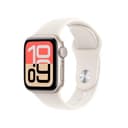
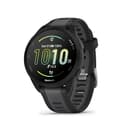
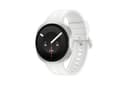
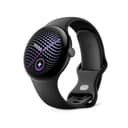
This is the single biggest filter. The Apple Watch SE 3 only works with an iPhone. The Pixel Watch 5 and Samsung Galaxy Watch9 are Android-first, and the Galaxy’s ECG needs a paired Samsung phone. Garmin’s Forerunner 165 is the neutral option that works well with either. Buy the watch that matches the phone in your pocket. On an iPhone the filter is stricter than most lists admit - Samsung and Google both state their current watches will not pair with one - so our fitness trackers for iPhone roundup ranks only what actually works, by the iOS version each app demands.
Battery: a day or a week?
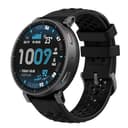
The Apple and Samsung watches here last roughly a day, so they charge nightly and can miss sleep tracking if you forget; the Pixel Watch 5 now stretches to 30 hours on the 41 mm and 40 hours on the 45 mm. Garmin goes one to two weeks, and Amazfit rates the Active Max at up to 25 days. If overnight data or fewer charges matter, weight your choice toward battery life.
Sensors and honest health claims
Match the sensors to what you will actually use. Only some of these do ECG — the Samsung Galaxy Watch9 and Google Pixel Watch 5 — while the Apple Watch SE 3 and Amazfit Active Max do not list one. Even where present, wrist ECG, SpO2 and sleep readings are wellness features, not medical diagnostics. If heart monitoring is your priority, see our best health-monitoring wearables.
Training depth vs smart features
Decide what the watch is for. Garmin leans toward training — structured workouts, recovery and running metrics. Apple, Samsung and Google lean toward smart features — apps, calls, payments and notifications — with capable but less specialized fitness tools. Our Apple Watch vs Garmin comparison digs into that split, and if you want the slim-band alternative, start with the best fitness trackers.
Two model-against-model pages cover the decisions buyers most often arrive with: Apple Watch SE vs Series 10 on the iPhone side, and Galaxy Watch vs Pixel Watch on Android.
If a day of battery is the dealbreaker
Every full smartwatch here trades battery for a screen, and for some buyers that trade is the whole objection — a watch on a charger at bedtime is a watch that cannot track your sleep. If that is you, the devices that publish weeks rather than hours are ranked in best fitness trackers with long battery life, including the one that publishes thirty days.