Pulse & Plate

Best Smart Rings

A screenless tracker you forget you are wearing, which is exactly why the sleep data is better. Smart rings compared on battery, subscription cost, sizing and what they actually measure.

By Stephen V.Last updated How we research

A smart ring is a tracker that solves one specific problem: watches are uncomfortable to sleep in, so the device that is best placed to measure your night is the one most people take off before bed. A ring weighs a couple of grams, has no screen to light up the room, and runs for a week or more per charge — so it is actually on your body when the data is being generated.

What separates them is not sensors, which are broadly similar, but ongoing cost and battery. Oura still has the most refined app and the deepest sleep analysis, and it charges a monthly membership for the full picture. The RingConn Gen 2is the answer for people who refuse a subscription: 10–12 days per charge, a case that carries months of top-ups, and no monthly fee. Samsung’s Galaxy Ring is the pick inside a Galaxy phone ecosystem, and the Amazfit Helio is the cheapest titanium ring here with a stress sensor most rivals do not have.

How this is funded: we earn a commission if you buy through our links, at no extra cost to you. It never changes which product we recommend, and we’ll tell you when we’d skip one. Full disclosure.

Picks at a glance

Ranked on published specs, footprint and buyer fit. Select a row to jump to the full write-up. We have not tested these ourselves — here is exactly what we do instead.

#ProductBest forPrice
1
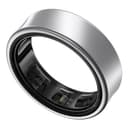
Oura Ring 4

Oura Ring 4

The most refined sleep and recovery ring with excellent data, but the full experience requires an ongoing paid Oura membership.

Best overall data
$349.00 · View on Amazon

Price as of August 19, 2026. #ad How we’re funded

2
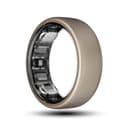
RingConn Gen 2 Smart Ring

RingConn Gen 2 Smart Ring

The subscription-free answer to Oura, with the longest battery of any ring here and a charging case that carries months of top-ups.

Best without a subscription
$269.00 · View on Amazon

$299.0010% off

Price as of August 19, 2026. #ad How we’re funded

3
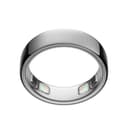
Samsung Galaxy Ring

Samsung Galaxy Ring

A comfortable, subscription-free smart ring with solid sleep tracking, but it's at its best paired with a Samsung Galaxy phone.

Best for Samsung phones
$247.87 · View on Amazon

Price as of August 19, 2026. #ad How we’re funded

4
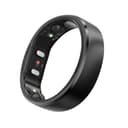
Amazfit Helio Smart Ring

Amazfit Helio Smart Ring

The cheapest way into a titanium smart ring with no subscription, and the only one here with a dedicated EDA sensor for stress.

Best value
$149.99 · View on Amazon

Price as of August 19, 2026. #ad How we’re funded

The picks in full

#1Best overall data

Oura Ring 4

The most refined sleep and recovery ring with excellent data, but the full experience requires an ongoing paid Oura membership.

Strengths

  • Class-leading sleep, readiness and recovery tracking
  • Up to 8-day battery in a discreet screen-free ring
  • SpO2 and skin-temperature trend sensing

Trade-offs

  • Requires a paid monthly Oura membership for full insights
  • No display and no built-in GPS
Battery lifeUp to 8 days
SensorsHR/HRV, SpO2 (blood oxygen), skin temperature trends
GPS / displayNone (screen-free ring)
Water resistance100m
SubscriptionOura Membership required for full insights

Worth knowing. Titanium smart ring with no screen — all data lives in the app.

Specs read from the product listing, on July 19, 2026. “Not published” means the maker does not state that figure.

#2Best without a subscription

RingConn Gen 2 Smart Ring

The subscription-free answer to Oura, with the longest battery of any ring here and a charging case that carries months of top-ups.

Strengths

  • 10-12 days per charge, and the case is stated to extend that past 150 days
  • No subscription - the full app feature set is included with the ring
  • 100 m water resistance at roughly 2 g on the finger

Trade-offs

  • RingConn uses its own sizing, so a sizing kit first is close to mandatory
  • Sleep apnea monitoring is a wellness signal, not a diagnosis - treat an AHI number as a prompt to see a doctor
Battery life10-12 days (varies by size); case 150+ days
TrackingSleep, sleep apnea (AHI), activity, stress, HR, HRV, SpO2
SubscriptionNone
Water resistance100 m
WeightAbout 2 g (varies by size)
SizingRingConn-specific; sizing kit recommended
Warranty12 months

Worth knowing. Ships with a charging case rather than a puck - that is what turns a 10-day ring into something you can leave the charger at home for.

Specs read from the product listing, on August 18, 2026. “Not published” means the maker does not state that figure.

#3Best for Samsung phones

Samsung Galaxy Ring

A comfortable, subscription-free smart ring with solid sleep tracking, but it's at its best paired with a Samsung Galaxy phone.

Strengths

  • No subscription — data lives in free Samsung Health
  • Up to 7-day battery in a light titanium build
  • HR, SpO2, skin temperature and sleep tracking

Trade-offs

  • Full features favor a paired Samsung Galaxy phone
  • No display and no built-in GPS
Battery lifeUp to 7 days (varies by size)
SensorsHR, SpO2 (blood oxygen), skin temperature, accelerometer
GPS / displayNone
Water resistance10 ATM + IP68
SubscriptionNone (Samsung Health is free)

Specs read from the product listing, on July 19, 2026. “Not published” means the maker does not state that figure.

#4Best value

Amazfit Helio Smart Ring

The cheapest way into a titanium smart ring with no subscription, and the only one here with a dedicated EDA sensor for stress.

Strengths

  • EDA sensor plus HRV for stress tracking, which most rings estimate from heart rate alone
  • Titanium alloy build with no subscription for the full Zepp feature set
  • Zepp reports VO2 max and recovery alongside the ring's sleep data

Trade-offs

  • This listing does not publish a battery figure, and battery is the headline spec for a ring
  • Helio uses Amazfit's own sizing, so buy the sizing kit before the ring
MaterialTitanium alloy
TrackingSleep stages, HR, HRV, SpO2, stress (EDA), VO2 max via Zepp
SubscriptionNone
AppZepp (iOS and Android)
SizingAmazfit-specific; sizing kit recommended
Battery lifeNot published
Water resistanceWater-resistant (level not published on listing)

Worth knowing. The EDA sensor is the reason to pick it over a cheaper band: skin conductance is a different signal from heart-rate variability, not a restatement of it.

Specs read from the product listing, on August 18, 2026. “Not published” means the maker does not state that figure.

How to choose a smart ring

The subscription question comes first

This decides the real cost. Oura publishes that without an active membership the app shows only the three daily scores and basic settings — so the ring you buy becomes a much simpler device if you stop paying. RingConn, Samsung and Amazfit all include their full feature sets with the hardware. Over three years, a monthly fee can approach the price of the ring again, which is why we treat it as a spec rather than a footnote. Whether it is worth paying is a genuine judgement call: Oura’s analysis is the most developed in this category, and some people will happily pay for it.

Battery, and the charging case

Ring battery runs 7 to 12 days depending on model and size — larger rings hold bigger cells, which is why makers quote ranges. The practical difference is the charger: a puck you leave at home versus a case that stores extra charges. RingConn states its case extends total runtime past 150 days, which is the difference between remembering a charger for a two-week trip and not thinking about it.

Sizing is a real obstacle

Rings are not jewellery-sized. Every maker here uses its own sizing standard and recommends a sizing kit before purchase, and getting it wrong means a return rather than a strap adjustment. Order the kit, wear the test ring for a day including overnight (fingers swell), and buy the size that is snug with the sensor flat against the underside of your finger. Index finger is the usual recommendation.

What rings measure well — and what they do not

Rings are strong on the passive metrics: sleep staging and duration, resting heart rate, heart rate variability, skin temperature trends, blood oxygen and readiness or recovery scores. They are weak on the active ones. There is no GPS, no display, and optical heart rate from a finger during hard exercise is not comparable to a chest strap. Nobody should buy a ring to track intervals.

Ring or watch?

They overlap less than the spec sheets suggest. A watch gives you a screen, GPS, workout tracking and notifications; a ring gives you comfort, battery and a device you will genuinely wear overnight. If you want one device, buy the watch. If your main interest is sleep, recovery and long-term trends — and you already own a phone you can start a workout on — the ring is the better instrument for the job. Our smart ring vs smartwatch comparison works through the decision in detail, and best sleep trackers covers the wider field including bedside and under-mattress options.

What the sleep data is actually good for

Consumer sleep tracking is genuinely useful for patterns: how consistent your bedtime is, how alcohol or a late meal shifts your resting heart rate, whether your sleep duration is trending down across a stressful month. It is much weaker as a precise account of any single night, because consumer devices infer sleep stages from movement and heart rate rather than measuring brain activity. Cleveland Clinic makes this point about wearable sleep tracking, and a clinical review of sleep apps reaches the same conclusion: directional, not clinical.

That matters for two reasons. First, do not chase a score — the anxiety of optimising a number can cost more sleep than it saves. Second, and more seriously, a ring that flags sleep apnea indicators is giving you a prompt to seek an assessment, not a diagnosis. Sleep apnea is diagnosed in a sleep study, and it is worth taking seriously enough to ask a doctor about rather than managing through an app.

Who should skip a ring

If you work with your hands, lift heavy with a bare-hand grip, or wear gloves for long shifts, a titanium ring takes a beating and can be uncomfortable under a loaded barbell. If you want one device for everything, a smartwatch is more useful. And if the only thing you want is step counting, a budget band does that for a fraction of the money.
Wellness guidance, not medical advice. Pulse & Plate is written by a fitness enthusiast, not a doctor. Wearable heart-rate, SpO2, ECG and sleep readings are for general wellness, not diagnosis. For a heart concern, a symptom, or before starting a new exercise program, talk to a qualified professional.

Frequently asked questions

What is the best smart ring?

For depth of sleep and recovery analysis, the Oura Ring 4 — with the caveat that the full app requires a paid membership. For the same job with no monthly fee, the RingConn Gen 2, which also has the longest battery here at a stated 10 to 12 days plus a charging case.

Do smart rings need a subscription?

Oura does for the full experience: without an active membership its app shows only the three daily scores and basic settings. RingConn, Samsung and Amazfit include their features with the hardware. Over a few years, a monthly fee can total more than the ring cost.

Are smart rings better than watches for sleep tracking?

In practice, yes — mostly because you will actually wear one to bed. A ring is a couple of grams, has no screen, and lasts a week or more per charge, so it is on your finger when the data is generated. A watch has more sensors but tends to come off at night.

How do I choose a smart ring size?

Order the maker's sizing kit — every brand uses its own standard and none match jewellery sizes. Wear the test ring for a full day including overnight, since fingers swell, and choose the size that stays snug with the sensor flat against the underside of your finger.

Can a smart ring track workouts?

Loosely. Rings log activity and heart rate, but there is no GPS, no display and finger-based optical sensing is unreliable during hard efforts. Use a watch or a chest strap for training and let the ring do what it is good at: sleep, resting heart rate, HRV and recovery trends.

Sources

Keep reading