Pulse & Plate

Best Running Watches

Built-in GPS, battery that survives a long run, and training data you can act on. Running watches compared on GPS battery life, metrics and what each one asks you to pay monthly.

By Stephen V.Last updated How we research

A running watch is not a fitness tracker with a stopwatch. Three things separate the category: built-in GPS so the watch maps a run without your phone, battery that survives long sessions with the GPS radio running, and training datayou can actually act on — pace, structured workouts, and a load or recovery view that tells you when to back off.

For most runners the Garmin Forerunner 165is the buy: real built-in GPS, an AMOLED screen, structured training plans, and up to 11 days of smartwatch battery or roughly 19 hours in GPS mode — with no subscription. From there it splits by what else you want the watch to do: the Venu 3 adds ECG and 14-day battery, the Apple Watch SE is the pick if you are deep in an iPhone, the Galaxy Watch 7 the same for Android, and the Amazfit GTR 4 is the long-battery budget option.

How this is funded: we earn a commission if you buy through our links, at no extra cost to you. It never changes which product we recommend, and we’ll tell you when we’d skip one. Full disclosure.

Picks at a glance

Ranked on published specs, footprint and buyer fit. Select a row to jump to the full write-up. We have not tested these ourselves — here is exactly what we do instead.

#ProductBest forPrice
1
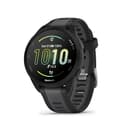
Garmin Forerunner 165

Garmin Forerunner 165

A focused running watch that finally brings an AMOLED screen and built-in GPS to Garmin's entry tier, with no subscription required.

Best overall for runners
$199.00 · View on Amazon

$249.9920% off

Price as of August 19, 2026. #ad How we’re funded

2
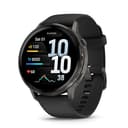
Garmin Venu 3

Garmin Venu 3

A do-everything AMOLED Garmin with built-in GPS, ECG and standout battery life and no subscription, though it's priced at the premium end.

Best all-rounder
$299.00 · View on Amazon

$449.9934% off

Price as of August 19, 2026. #ad How we’re funded

3
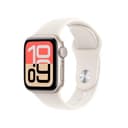
Apple Watch SE (2nd gen)

Apple Watch SE (2nd gen)

The most affordable way into watchOS with real built-in GPS and crash detection, but it drops ECG and blood oxygen and lasts only about a day.

Best for iPhone owners
$241.35 · View on Amazon

Price as of August 19, 2026. #ad How we’re funded

4
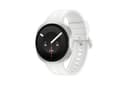
Samsung Galaxy Watch 7

Samsung Galaxy Watch 7

A polished Wear OS watch with dual-band GPS and ECG, but battery lasts roughly a day and ECG needs a paired Samsung Galaxy phone.

Best for Android
$180.49 · View on Amazon

Price as of August 19, 2026. #ad How we’re funded

5
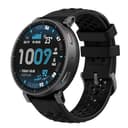
Amazfit GTR 4

Amazfit GTR 4

Remarkable battery and dual-band GPS for a budget smartwatch, though the Zepp software and third-party app support trail the big names.

Best battery on a budget
$99.99 · View on Amazon

Price as of August 19, 2026. #ad How we’re funded

The picks in full

#1Best overall for runners

Garmin Forerunner 165

A focused running watch that finally brings an AMOLED screen and built-in GPS to Garmin's entry tier, with no subscription required.

Strengths

  • Built-in GPS paired with a vivid AMOLED display
  • Strong running metrics and training plans, no subscription
  • Up to 11-day smartwatch battery

Trade-offs

  • Base model has no onboard music storage (needs the 165 Music edition)
  • Lacks the advanced multisport tools of pricier Forerunners
Battery lifeUp to 11 days smartwatch / up to 19 hrs GPS
GPSBuilt-in GPS (all-systems GNSS)
DisplayAMOLED touchscreen
Heart rateWrist HR + Pulse Ox (SpO2)
Water rating5 ATM
SubscriptionNone — Garmin Connect is free

Specs read from the product listing, on July 19, 2026. “Not published” means the maker does not state that figure.

#2Best all-rounder

Garmin Venu 3

A do-everything AMOLED Garmin with built-in GPS, ECG and standout battery life and no subscription, though it's priced at the premium end.

Strengths

  • Up to 14-day battery with built-in GPS
  • FDA-cleared ECG, Pulse Ox and detailed sleep and recovery data
  • No subscription — full data in Garmin Connect

Trade-offs

  • Premium price for a lifestyle smartwatch
  • No onboard offline maps like pricier Garmin models
Battery lifeUp to 14 days smartwatch mode
GPSBuilt-in GPS (all-systems GNSS)
Heart rate / ECGElevate v5 HR + FDA-cleared ECG app (US)
Blood oxygenPulse Ox (SpO2)
DisplayAMOLED touchscreen
SubscriptionNone — Garmin Connect is free

Specs read from the product listing, on July 19, 2026. “Not published” means the maker does not state that figure.

#3Best for iPhone owners

Apple Watch SE (2nd gen)

The most affordable way into watchOS with real built-in GPS and crash detection, but it drops ECG and blood oxygen and lasts only about a day.

Strengths

  • Full watchOS apps with built-in GPS
  • Crash Detection and Fall Detection safety features
  • Fast, familiar performance in the Apple ecosystem

Trade-offs

  • No ECG or blood oxygen sensor
  • About 18-hour battery and iPhone-only
Battery lifeUp to 18 hours
GPSBuilt-in GPS
Heart rateOptical HR + high/low HR alerts
ECG / SpO2Not available on SE
SafetyCrash Detection + Fall Detection
RequirementsRequires iPhone; 50m swimproof (WR50)

Specs read from the product listing, on July 19, 2026. “Not published” means the maker does not state that figure.

#4Best for Android

Samsung Galaxy Watch 7

A polished Wear OS watch with dual-band GPS and ECG, but battery lasts roughly a day and ECG needs a paired Samsung Galaxy phone.

Strengths

  • Dual-frequency built-in GPS
  • ECG, SpO2, skin temperature and BIA body composition
  • Smooth Wear OS 5 with a large app library

Trade-offs

  • Roughly one-day battery life
  • ECG requires a paired Samsung Galaxy phone (blood pressure unavailable in the US)
Battery300 mAh (40mm) / 425 mAh (44mm) — about a day
GPSBuilt-in dual-frequency GPS
Heart rate / ECGBioActive sensor + ECG (US, needs Galaxy phone)
Blood oxygen / tempSpO2 + skin temperature
Water resistance5 ATM + IP68
PlatformWear OS 5 / One UI Watch

Specs read from the product listing, on July 19, 2026. “Not published” means the maker does not state that figure.

#5Best battery on a budget

Amazfit GTR 4

Remarkable battery and dual-band GPS for a budget smartwatch, though the Zepp software and third-party app support trail the big names.

Strengths

  • Up to 14-day battery with built-in dual-band GPS
  • Large 1.43-inch AMOLED, no subscription
  • SpO2, built-in Alexa and 150+ sport modes

Trade-offs

  • Zepp ecosystem has limited third-party apps
  • No ECG and no contactless payments in the US
Battery lifeUp to 14 days (typical use)
GPSBuilt-in dual-band GPS (6 satellite systems)
Heart rateBioTracker HR + SpO2
Display1.43 in AMOLED
Water resistance5 ATM
SubscriptionNone (Alexa built-in)

Specs read from the product listing, on July 19, 2026. “Not published” means the maker does not state that figure.

What actually matters on a running watch

Built-in GPS versus connected GPS

This is the dividing line between a running watch and a tracker. Built-in GPS means the watch has its own satellite receiver and maps a run on its own. Connected GPS borrows your phone’s location, which is fine if you always run with your phone and useless the moment you want to leave it behind. Every pick on this page has built-in GPS; several of the bands in our tracker roundup do not, and that is the single most common disappointment for someone who bought the wrong device.

Battery in GPS mode, not headline battery

Manufacturers advertise smartwatch battery — days of ordinary wear. What decides whether a watch survives a marathon or a long weekend of trail running is the GPS figure, which is quoted in hours and is often a tenth of the headline. The Forerunner 165 publishes up to 11 days smartwatch and up to 19 hours GPS; an Apple Watch SE is around 18 hours of general use, which means a charging habit rather than a weekly top-up. Neither is wrong; they are different devices.

Training data you will use

Pace, distance and heart rate are table stakes. What separates watches is the layer above: structured workouts you can follow on the wrist, training plans, and a recovery or readiness view. Garmin’s versions of these come free with the watch — Garmin states that all existing features and data in Garmin Connect remain free alongside its optional paid tier. Apple and Samsung lean more on their broader health platforms. Treat any watch’s training-load number as guidance rather than physiology.

Heart rate accuracy on the run

Every watch here uses an optical wrist sensor, and every optical wrist sensor is at its weakest during interval work and in cold weather. For steady runs this genuinely does not matter. If your sessions are built around heart rate zones, pair a chest strap— all of these watches accept one, and it is the cheapest meaningful accuracy upgrade available. Our chest strap vs wrist comparison covers where each is trustworthy.

Do not overbuy

The multisport flagships are magnificent and most runners do not need them. Offline maps, multi-band GPS and 40-hour GPS battery are answers to problems that begin at ultra distances and remote trails. If you run road and park routes under two hours, an entry Forerunner or a mainstream smartwatch covers everything you will look at. Spend the difference on shoes, or on the recovery gear that keeps you running.

Running watch or smartwatch?

A dedicated running watch prioritises battery, physical buttons you can hit with cold fingers, and training features. A smartwatch prioritises apps, payments, notifications and looking normal at work — and charges most days. If running is the reason you are buying, start with the running watch and accept fewer apps. If running is one of several things you do, the all-rounder is the better daily device. Our fitness smartwatch roundup takes the other side of that question, and tracker vs smartwatch sets out the whole category map.

A note on health features

Several of these watches carry ECG and irregular-rhythm notifications — features that have gone through regulatory review, including the FDA’s De Novo grant for the first over-the-counter irregular-rhythm notification wearable. They are worth having and they are not a cardiologist. Treat every number a running watch produces as training information: useful for pacing and consistency, not for diagnosis.

Wellness guidance, not medical advice. Pulse & Plate is written by a fitness enthusiast, not a doctor. Wearable heart-rate, SpO2, ECG and sleep readings are for general wellness, not diagnosis. For a heart concern, a symptom, or before starting a new exercise program, talk to a qualified professional.

Frequently asked questions

What is the best running watch for beginners?

The Garmin Forerunner 165: built-in GPS, an AMOLED screen, structured training plans and up to 11 days of smartwatch battery, with no subscription for the data. It covers everything a new or improving runner looks at without the price or complexity of a multisport flagship.

Do I need built-in GPS, or is connected GPS enough?

If you ever want to run without your phone, you need built-in GPS. Connected GPS borrows your phone's location, so it maps a run accurately only while the phone is with you. Every pick on this page has its own receiver.

How much battery does a running watch need?

Look at the GPS figure rather than the headline. A watch quoting 11 days of smartwatch use might give around 19 hours with GPS running, which covers even a slow marathon comfortably. A general-purpose smartwatch at about 18 hours total needs charging most days.

Is an Apple Watch good for running?

Yes, for road running with an iPhone: built-in GPS, good workout tracking and safety features like Fall and Crash Detection. The trade-offs are battery — around 18 hours on the SE, so daily charging — and that the SE drops ECG and blood oxygen sensing.

Do running watches need a subscription?

None of these do for their core training data. Garmin states that all existing features and data in Garmin Connect remain free alongside its optional paid tier, and Apple and Samsung include workout tracking with the device. Paid tiers exist everywhere for coaching extras; you can ignore them.

Sources

Keep reading