Pulse & Plate

Best Apple Watch Alternatives

Ask one question before you shop: are you keeping the iPhone? Three of the six best alternatives will not pair with one at all. Six devices ranked by which Apple Watch problem is yours - the phone, the nightly charge, or the price.

By Stephen V.Last updated How we research

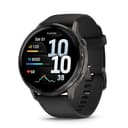
The Garmin Venu 4 is the best Apple Watch alternative for most people — because it is the only device here that fixes the two things people actually leave over without taking anything important away. It publishes up to 12 days of batteryin smartwatch mode on the 45 mm case against Apple’s 24 hours, it carries multi-band GPS and an FDA-cleared ECG app in the US, it works with an iPhone, and Garmin Connect is free. It suits anyone who wants a real health-and-training watch and is tired of a charger being part of the bedtime routine. Our budget pick is the Amazfit Active Max, which publishes up to 25 days and built-in positioning across five satellite systems with free offline maps, for a fraction of any Apple Watch.

It is worth being straight about what the Apple Watch is good at, because nothing on this page matches the whole package. Apple publishes a second-generation electrical heart sensor with the ECG app, an always-on optical sensor that reads heart rate every five seconds, a blood-oxygen sensor, a temperature sensor, Precision L1 GPS across five constellations, 50 m of water resistance to ISO 22810:2010, and a 2,000-nit always-on display — plus hypertension notifications, sleep apnea notifications, a nightly sleep score and a morning readiness score. It is also the only watch here with watchOS, which is the real moat: the apps, the payments, the handoff to an iPhone that just works. We own none of these devices and have tested none of them, so that is a reading of published specifications and of what Apple sells, not a test result.

Now the question that decides this entire page: are you keeping the iPhone? Because the reason an Apple Watch is hard to replace is printed in Apple’s own compatibility table, where every single row names an iPhone — the Series 12 needs an iPhone 11 or later on iOS 27 or later, the SE 3 an iPhone 11 or later on iOS 26, the Series 10 an iPhone XS or later. No Apple Watch pairs with anything else. If you have left iOS, that is why you are here, and the whole field below is open to you.

If you are stayingon an iPhone and simply want off the Apple Watch, your field is smaller than the internet suggests, and this is the part most “alternatives” lists get wrong. Samsung’s own support site states that “newer models like the Galaxy Watch4 and later are not compatible with iOS”. Google’s own Pixel Watch support page says, in three words, “iPhones aren’t supported”. So two of the six most obvious alternatives are off your list before you read a single spec, and the four that remain are the Garmin, the Withings, the Amazfit and the Oura. Prices below are live from our price layer with the date they were read, so you can check the gap against an Apple Watch yourself.

How this is funded: we earn a commission if you buy through our links, at no extra cost to you. It never changes which product we recommend, and we’ll tell you when we’d skip one. Full disclosure.

Picks at a glance

Ranked on published specs, footprint and buyer fit. Select a row to jump to the full write-up. We have not tested these ourselves — here is exactly what we do instead.

#ProductBest forPrice
1
Garmin Venu 4

Garmin Venu 4

A do-everything AMOLED Garmin with multi-band GPS, ECG and 12-day battery and no subscription — the price is the only thing that stings.

Best overall alternative
$449.00 · View on Amazon

$549.9918% off

Price as of November 23, 2026. #ad How we’re funded

2
Samsung Galaxy Watch9

Samsung Galaxy Watch9

The most complete Wear OS watch: a 3,000-nit screen, dual-band GPS and Samsung's full sensor stack — still about a day of battery, and ECG needs a Galaxy phone.

Best if you moved to a Galaxy phone
$369.99 · View on Amazon

Price as of November 23, 2026. #ad How we’re funded

3
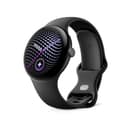
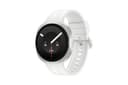
Google Pixel Watch 5

Google Pixel Watch 5

The Wear OS watch that finally stopped being a one-day watch: up to 40 hours on the 45 mm, with Fitbit's deepest sleep and health tracking.

Best Wear OS watch
$329.99 · View on Amazon

$429.9923% off

Price as of November 23, 2026. #ad How we’re funded

4
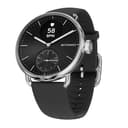
Withings ScanWatch 2

Withings ScanWatch 2

A classic-looking hybrid watch with medical-grade ECG, AFib detection and a month of battery — you trade a full smart display for elegance.

Best for a watch that looks like a watch
$369.95 · View on Amazon

Price as of November 23, 2026. #ad How we’re funded

5
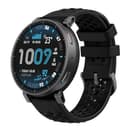
Amazfit Active Max

Amazfit Active Max

Close to a month of battery, real built-in positioning and offline maps for well under $200 — the trade is Amazfit's Zepp software rather than Apple's or Google's.

Best budget pick
$118.99 · View on Amazon

$169.9930% off

Price as of November 23, 2026. #ad How we’re funded

6
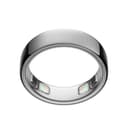
Oura Ring 5

Oura Ring 5

Oura shrank the ring by 40% without losing the week of battery — the sleep and recovery data is still the best here, and still behind a membership.

Best if you want the data without a watch
$299.00 · View on Amazon

$399.0025% off

Price as of November 23, 2026. #ad How we’re funded

Measured against the Series 12, on the three things people leave over

Read the phone row first - it eliminates options before any spec matters. Then the battery row, which is the single biggest gap between Apple and everything else here.

SpecApple Watch Series 12Garmin Venu 4Samsung Galaxy Watch9Google Pixel Watch 5Withings ScanWatch 2Amazfit Active MaxOura Ring 5
Works with an iPhoneYes - and ONLY an iPhoneYesNo - Samsung states Watch4 and later are not iOS compatibleNo - Google states "iPhones aren't supported"YesYesYes
Published battery lifeUp to 24 hrs (38 in Low Power Mode)Up to 12 days (45 mm smartwatch mode)About a day (390/445 mAh)Up to 40 hrs (45 mm), 30 hrs (41 mm)Up to 30 daysUp to 25 days (Amazfit)Typically 6-9 days
Cleared ECGYes - Series 4 and later, never on an SEYes - Garmin ECG App (US)Yes - but requires a paired Galaxy phoneYes - Google ECG app (US)Yes - with AFib detection (US)Not listedNone
GPSPrecision L1, five constellationsMulti-bandBuilt-in dual-frequency (L1+L5)Dual-frequency + Galileo, GLONASSConnected (uses phone)Built-in, five satellite systemsNone
ScreenAlways-On Retina OLED, 2,000 nitsAMOLED, 41 and 45 mmSuper AMOLED, up to 3,000 nitsActua 360 AMOLED, up to 3,000 nitsAnalog hands + grayscale sub-dial1.5 in AMOLED, quoted at 3,000 nitsNone
Subscription for the full pictureNoneNone - Garmin Connect is freeNoneSome insights need Fitbit PremiumNone needed to read your own dataNoneMembership required for full insights
Water resistance50 m, ISO 22810:2010, depth gauge to 6 mNot published here5 ATM + IP68 (MIL-STD-810H)5 ATM + IP68Not published hereNot published100 m
Charge speed80% in ~30 min; 15 min buys up to 12 hrsNot published hereNot published hereNot published hereNot published hereNot publishedAbout 80 min to full

Every figure above is one the maker publishes, read on the dated visit linked under each write-up below. “Not published” means the maker does not state it — we do not fill the gap with an estimate.

The picks in full

#1Best overall alternative

Garmin Venu 4

A do-everything AMOLED Garmin with multi-band GPS, ECG and 12-day battery and no subscription — the price is the only thing that stings.

Strengths

  • Up to 12 days of battery in smartwatch mode (45 mm)
  • Garmin ECG App, Pulse Ox and detailed sleep and recovery data
  • Multi-band GPS, an LED flashlight and on-wrist calls

Trade-offs

  • Premium price for a lifestyle smartwatch
  • No onboard offline maps like pricier Garmin models
Battery lifeUp to 12 days smartwatch mode (45 mm)
GPSMulti-band GPS
Heart rate / ECGWrist HR + FDA-cleared ECG App (US)
Blood oxygenPulse Ox (SpO2) — not available in all countries
DisplayAMOLED touchscreen, 41 mm and 45 mm cases
ExtrasBuilt-in LED flashlight; speaker and mic for calls
SubscriptionNone — Garmin Connect is free

Worth knowing. Adds an LED flashlight and a full metal bezel to the Venu line.

Specs read from the product listing, on August 25, 2026. “Not published” means the maker does not state that figure.

#2Best if you moved to a Galaxy phone

Samsung Galaxy Watch9

The most complete Wear OS watch: a 3,000-nit screen, dual-band GPS and Samsung's full sensor stack — still about a day of battery, and ECG needs a Galaxy phone.

Strengths

  • Dual-frequency (L1+L5) built-in GPS
  • ECG, SpO2, skin temperature and BIA body composition
  • 3,000-nit Super AMOLED on Wear OS 7 / One UI 9 Watch

Trade-offs

  • Roughly one-day battery life
  • ECG requires a paired Samsung Galaxy phone (blood pressure unavailable in the US)
Battery390 mAh (40mm) / 445 mAh (44mm) — about a day
GPSBuilt-in dual-frequency GPS (L1+L5)
Heart rate / ECGBioActive sensor + ECG (US, needs Galaxy phone)
Blood oxygen / tempSpO2 + skin temperature
DisplaySuper AMOLED, up to 3,000 nits peak
Water resistance5 ATM + IP68 (MIL-STD-810H)
PlatformWear OS 7 / One UI 9 Watch

Worth knowing. Cushion-shaped case in 40 mm and 44 mm, on the Snapdragon Wear Elite platform.

Specs read from the product listing, on August 25, 2026. “Not published” means the maker does not state that figure.

#3Best Wear OS watch

Google Pixel Watch 5

The Wear OS watch that finally stopped being a one-day watch: up to 40 hours on the 45 mm, with Fitbit's deepest sleep and health tracking.

Strengths

  • Up to 40 hrs on the 45 mm (30 hrs on the 41 mm) with the display always on
  • Google ECG app, SpO2 and far-field skin temperature sensing
  • Domed Actua 360 AMOLED at up to 3,000 nits

Trade-offs

  • Android-only, and some insights still require Fitbit Premium
  • Priced above the Wear OS competition
Battery life45mm: up to 40 hrs (72 hrs Battery Saver); 41mm: up to 30 hrs (48 hrs)
Battery465 mAh (45mm) / 332 mAh (41mm)
GPSDual-frequency GPS, Galileo, GLONASS
Heart rate / ECGMulti-path optical HR + Google ECG app (US)
Blood oxygen / tempSpO2 (red + infrared) + far-field skin temperature
DisplayActua 360 AMOLED LTPO, up to 3,000 nits
Water resistance5 ATM + IP68
PlatformWear OS 7; Fitbit metrics (some need Premium)

Worth knowing. Domed Actua 360 display in 41 mm and 45 mm, with 64 GB of storage.

Specs read from the product listing, on August 25, 2026. “Not published” means the maker does not state that figure.

#4Best for a watch that looks like a watch

Withings ScanWatch 2

A classic-looking hybrid watch with medical-grade ECG, AFib detection and a month of battery — you trade a full smart display for elegance.

Strengths

  • Up to 30-day battery life
  • FDA-cleared ECG with AFib detection plus on-demand SpO2
  • Timeless analog design with no subscription needed

Trade-offs

  • Connected GPS only — needs your phone for mapped routes
  • Tiny sub-dial display with limited smart features
Battery lifeUp to 30 days
Heart rate / ECGHR + FDA-cleared ECG app with AFib detection (US)
Blood oxygenOn-demand SpO2 (30-second reading)
Body temperatureTempTech24/7 skin-temperature sensor
DisplayAnalog hands + grayscale PMOLED sub-dial
GPS / subscriptionConnected GPS (via phone); no subscription

Worth knowing. Hybrid analog watch with real hands and a small grayscale OLED sub-dial.

Specs read from the product listing, on October 20, 2026. “Not published” means the maker does not state that figure.

#5Best budget pick

Amazfit Active Max

Close to a month of battery, real built-in positioning and offline maps for well under $200 — the trade is Amazfit's Zepp software rather than Apple's or Google's.

Strengths

  • Amazfit states up to 25 days of battery — weeks rather than days between charges
  • Built-in positioning across five satellite systems, with free downloadable offline maps
  • 4 GB of onboard storage for music and maps, 170+ workout modes and no subscription

Trade-offs

  • Zepp ecosystem has far fewer third-party apps than Apple, Google or Samsung
  • No ECG app is listed, and hands-free message replies need an Android phone
Battery lifeUp to 25 days (Amazfit)
GPSBuilt-in positioning, five satellite systems
Display1.5 in AMOLED, quoted at 3,000 nits
Storage4 GB for music and downloaded maps
NavigationFree downloadable terrain and ski maps, turn-by-turn
Training170+ workout modes, Zepp Coach plans, BioCharge score
CallsBluetooth calling with built-in speaker and mic
Water resistanceNot published
SubscriptionNone

Specs read from the product listing, on September 22, 2026. “Not published” means the maker does not state that figure.

#6Best if you want the data without a watch

Oura Ring 5

Oura shrank the ring by 40% without losing the week of battery — the sleep and recovery data is still the best here, and still behind a membership.

Strengths

  • Class-leading sleep, readiness and recovery tracking
  • 2.28 mm thick and 6.09 mm wide — the smallest ring Oura has made
  • Typically 6–9 days per charge, and about 80 minutes to refill

Trade-offs

  • Requires a paid monthly Oura membership for full insights
  • No display and no built-in GPS
Battery lifeTypically 6–9 days; about 80 min to charge
SensorsRed, green and infrared LEDs + digital temperature sensor
Dimensions2.28 mm thick, 6.09 mm wide
GPS / displayNone (screen-free ring)
Water resistance100m — sauna and water sports, not diving
Sizes6–13
SubscriptionOura Membership required for full insights

Worth knowing. Full titanium inside and out with a superhard PVD coating, 40% smaller than Ring 4.

Specs read from the product listing, on August 25, 2026. “Not published” means the maker does not state that figure.

Work out which Apple Watch problem you have

People arrive here for one of three reasons, and the right answer is different for each. Sort yourself first, because the specs only matter after that.

Problem 1: you left the iPhone

This is the common one and the easiest to solve, because the whole field opens up the moment iOS stops being a constraint. If you moved to a Samsung Galaxy phone, the Galaxy Watch9is the most complete answer: built-in dual-frequency L1+L5 GPS, a 3,000-nit Super AMOLED, and Samsung’s full sensor stack including ECG, SpO2, skin temperature and BIA body composition, which nothing else here offers. Honest cons, and they matter: it is about a one-day watch, so if the nightly charge was your complaint this fixes nothing; the ECG requires a paired Samsung Galaxy phone; and blood pressure is unavailable in the US.

On any other Android phone, the Pixel Watch 5 is the Wear OS pick and the generation that stopped being a one-day watch: Google publishes up to 40 hours on the 45 mm(72 in Battery Saver) and 30 on the 41 mm, with a dual-frequency GPS, a Google ECG app, SpO2 and far-field skin temperature behind a domed 3,000-nit display. Honest cons: it is Android only— Google’s own support page says “iPhones aren’t supported” — some insights sit behind Fitbit Premium, and it is priced above the Wear OS competition. We put the two Android flagships head to head in Samsung Galaxy Watch vs Pixel Watch.

Problem 2: the nightly charge

Apple publishes up to 24 hours of normal use, 38 in Low Power Mode, and 10 hours of workout tracking. That is a watch you charge every day, and it collides with the one thing people most want from a health wearable now, which is sleep data. A watch on the charger at bedtime measures nothing. In fairness, Apple has worked the problem from the other end rather than the battery end: 80% in about 30 minutes, and 15 minutes on the charger buying up to 12 hours, which is genuinely enough to top up while you shower.

If you would rather not manage that at all, this is where the alternatives win outright and it is not close. The Garmin Venu 4 publishes 12 days, the Amazfit Active Max up to 25, and the Withings ScanWatch 2 up to 30. Those are weeks-not-days devices, and all three pair with an iPhone, so this problem is solvable without changing phones. The whole field ranked on that spec alone is in best fitness trackers with long battery life.

Problem 3: the price

The honest answer here is the Amazfit Active Max, and the honest framing is that you are buying hardware and giving up software. For well under $200 Amazfit publishes 25 days of battery, built-in positioning across five satellite systems, free downloadable offline terrain and ski maps, 4 GB of onboard storage for music and maps, 170-plus workout modes, Bluetooth calling and no subscription. That is a specification sheet that reads like a watch costing three times as much.

The cons are real and they are all on the software side: the Zepp ecosystem has a fraction of the third-party apps Apple, Google or Samsung offer, no ECG app is listedfor this model, and Amazfit states the platform rule plainly — “Apple doesn’t allow third-party wearables to reply directly to notifications” — so hands-free message replies need an Android phone. Amazfit also does not publish a water rating for this model, which we record as a gap rather than fill in. If the budget is the whole brief, read best fitness trackers under $200 next, and best fitness trackers under $100 if the ceiling is lower still.

Two alternatives that are not watches at all

If what you valued about the Apple Watch was the health data rather than the smartwatch, two devices here do that job better than any watch, by not being one.

The Withings ScanWatch 2 is a hybrid: real analog hands, a small grayscale sub-dial, and underneath it an FDA-cleared ECG app with AFib detection, an on-demand 30-second SpO2 reading, a TempTech24/7 skin-temperature sensor and 30 days per charge. The Withings app is free, and while it does sell Withings+ and a paid cardiologist ECG review, neither is needed to read your own data. Honest cons: connected GPS only, so your phone draws the map, and the sub-dial is tiny with very limited smart features. Buy it because you want a watch that looks like a watch, not because you want a cheaper Apple Watch.

The Oura Ring 5goes further and removes the screen entirely: 2.28 mm thick, 6.09 mm wide, titanium with a hard PVD coating, rated to 100 m, with red, green and infrared LEDs plus a digital temperature sensor, and 6–9 days per charge. For sleep and recovery specifically it is the reference the rest of the category is measured against. Honest cons, and they are the reason it is last on this list rather than first: an Oura membership is required for the full insights— so you are trading a hardware bill for a monthly one — there is no display and no built-in GPS, and it needs sizing. Oura also publishes that its Apple Health integration is iOS-only and needs an active membership. If that trade appeals but the fee does not, Oura Ring alternatives ranks the subscription-free rings and bands, and smart ring vs smartwatch covers what a ring gives up.

What none of these six gives you

Three things, stated plainly, so nothing is a surprise after the box arrives.

watchOS, and everything built on it.No alternative runs Apple’s apps, Apple Pay the way an Apple Watch does, or the unlock-your-Mac, find-your-iPhone, answer-on-your-wrist integration that comes from one company owning both ends. If that handoff is what you actually like, you will notice its absence within a week, and the right move is a cheaper Apple Watch rather than a different brand — we rank those on best Apple Watches for fitness.

Apple’s newest cleared notifications.Hypertension notifications and sleep apnea notifications are Apple features on recent models, with conditions Apple publishes itself — hypertension notifications are not intended for people under 22, already diagnosed, or pregnant. Four of these six carry a cleared ECG, which is the feature most buyers mean when they say they want heart monitoring, but the newer notification set does not transfer. What a wrist ECG is and is not for is covered on best ECG smartwatches.

A guarantee on the iPhone side.Platform support is a moving target set by the maker, not by you. Garmin’s iOS app currently lists the highest requirement of any companion app we track, and Garmin’s own manual marks text-message replies and message signatures as Android-only. Amazfit documents the same Apple restriction. Expect any non-Apple watch on an iPhone to do a little less than it does on Android — notifications arrive, but replying from your wrist usually does not.

What we would buy

The Garmin Venu 4 for most people leaving an Apple Watch, on either phone: 12 days, multi-band GPS, a cleared ECG app and nothing paywalled. The Galaxy Watch9 if you now carry a Galaxy phone and want the deepest sensor set, accepting a one-day battery. The Pixel Watch 5 on any other Android phone, for the best-looking Wear OS watch with usable battery. The Withings ScanWatch 2 if you want 30 days and a real watch face with a cleared ECG hidden inside it. The Amazfit Active Maxif price is the brief and Zepp’s software is a trade you will accept. And the Oura Ring 5if the data was the point and the watch never was — as long as you are willing to pay monthly for it.
Wellness guidance, not medical advice. Pulse & Plate is written by a fitness enthusiast, not a doctor. Wearable heart-rate, SpO2, ECG and sleep readings are for general wellness, not diagnosis. For a heart concern, a symptom, or before starting a new exercise program, talk to a qualified professional.

Frequently asked questions

What is the best Apple Watch alternative?

The Garmin Venu 4, for most people. It is the only device here that fixes the two things people usually leave over without giving up anything major: Garmin publishes up to 12 days of battery in smartwatch mode on the 45 mm case against Apple's 24 hours, it carries multi-band GPS and an FDA-cleared ECG app in the US, Garmin Connect is free, and it works with an iPhone. If you have moved to a Galaxy phone the Galaxy Watch9 is the more complete watch, and if price is the deciding factor the Amazfit Active Max publishes up to 25 days for a fraction of the money.

Can I use a non-Apple smartwatch with my iPhone?

Some, but not the two most obvious ones. Samsung's own support site states that newer models like the Galaxy Watch4 and later are not compatible with iOS, and Google's Pixel Watch support page says plainly that iPhones aren't supported. That leaves the Garmin Venu 4, the Withings ScanWatch 2, the Amazfit Active Max and the Oura Ring 5 as iPhone-friendly options. Expect slightly reduced function on iOS either way - Garmin's own manual marks text-message replies as Android-only, and Amazfit states that Apple does not allow third-party wearables to reply directly to notifications.

Does any Apple Watch work with Android?

No. Apple publishes a per-model compatibility table and every row names an iPhone: the Series 12 needs an iPhone 11 or later with iOS 27 or later, the Series 11 and SE 3 an iPhone 11 or later on iOS 26, and the Series 10 an iPhone XS or later. There is no Android pairing option at any price or on any model, which is the single most common reason people end up on a page like this one.

Which Apple Watch alternative has the best battery life?

On published figures, the Withings ScanWatch 2 at up to 30 days, then the Amazfit Active Max at up to 25 days, then the Garmin Venu 4 at up to 12 days in smartwatch mode. The Oura Ring 5 runs typically 6 to 9 days. For comparison, Apple publishes up to 24 hours of normal use on the Series 12, or 38 hours in Low Power Mode. The ScanWatch 2 reaches its figure partly by not having a full display - it is an analog watch with a small grayscale sub-dial.

Is there an Apple Watch alternative with an ECG?

Four of the six here. The Garmin Venu 4 has the Garmin ECG App, the Pixel Watch 5 has the Google ECG app, and the Withings ScanWatch 2 has an FDA-cleared ECG app with AFib detection - all US features. The Galaxy Watch9 has one too, but Samsung requires a paired Samsung Galaxy phone for it. The Amazfit Active Max lists no ECG app, and the Oura Ring 5 has none. Note also that no Apple SE model has ever had the ECG app - Apple's footnotes limit it to Series 4 and later.

Is a cheaper Apple Watch better than switching brands?

Often, yes, and it is worth saying on a page like this. If what you like is watchOS - the apps, the payments, the handoff to your iPhone and Mac - no other brand reproduces it, and the SE line is the cheapest route into it. The trade is that no SE has ever carried the ECG app or a blood-oxygen sensor. Switch brands when your problem is the phone requirement, the daily charge or the price of the flagship; stay with Apple when your problem is only the price of the newest model.

What is the best Apple Watch alternative for sleep tracking?

The Oura Ring 5 if you want the best sleep and recovery reporting and will pay the membership, because a screen-free ring is the easiest thing to actually wear to bed. If you would rather not pay monthly, the Garmin Venu 4 at 12 days and the Amazfit Active Max at 25 days both track sleep with nothing paywalled, and a watch you are not charging at bedtime is a watch that is measuring. Bear in mind that sleep-stage tracking is the least reliable metric on any wearable - good for whether you slept enough, weaker on the exact stage.

Will my Apple Health data move to a new device?

Your history stays in Apple Health, and several of these devices can write new data into it, but none of them imports your old Apple Watch record. Withings offers to connect to Apple Health, Garmin's app offers to sync with Apple Health, Strava and MyFitnessPal, Amazfit documents Zepp-to-Apple-Health syncing, and Oura exports a long list of metrics - though Oura publishes that its Apple Health integration is iOS-only and needs an active membership. If a continuous multi-year record matters to you, export before you switch rather than after.

Sources

  • Apple — Apple Watch and iPhone compatibility — Apple's per-model requirement table. Series 12 and Ultra 4 need an iPhone 11 or later with iOS 27 or later; Series 11, SE 3 and Ultra 3 need an iPhone 11 or later with iOS 26 or later; Series 10 and Ultra 2 need an iPhone XS or later. Every row names an iPhone, so no Apple Watch pairs with anything else (accessed October 3, 2026)
  • Apple — Apple Watch Series 12 technical specifications — S11 chip; Always-On Retina wide-angle OLED with LTPO3 at up to 2,000 nits; second-generation electrical heart sensor with the ECG app, always-on optical heart sensor, blood oxygen sensor and temperature sensor; Precision L1 GPS across GPS, GLONASS, Galileo, QZSS and BeiDou; 50 m swimproof to ISO 22810:2010 with a depth gauge to 6 m; up to 24 hours of normal use, up to 38 in Low Power Mode and up to 10 hours of workout tracking; up to 80% in about 30 minutes and 15 minutes for up to 12 hours; system requirement stated as 'iPhone 11 or later, including iPhone SE (2nd generation or later), with iOS 27 or later' (accessed October 3, 2026)
  • Apple — Apple Watch Series 12 — Apple's own wording for the health features and their limits: hypertension notifications ('Series 12 can notify you if it identifies patterns of hypertension', not intended for people under 22, already diagnosed or pregnant); sleep apnea notifications (Series 9 and later, Ultra 2 and later, and SE 3); a nightly sleep score; a morning readiness score from recent activity, vitals and sleep; and the ECG app, which the footnotes limit to Series 4 and later and exclude on every SE model (accessed October 3, 2026)
  • Samsung — Samsung smart watch and phone compatibility — Samsung's support site says it outright: certain iPhones (iPhone 5 or later, iOS 9 or higher) pair with the older Galaxy Watch, Galaxy Watch Active and Gear series, 'but newer models like the Galaxy Watch4 and later are not compatible with iOS'. Read on Samsung's regional English support site; the US product pages state the Android requirement without naming iOS (accessed October 3, 2026)
  • Google — Phones that work with your Google Pixel Watch — Android floors per generation (8.0 for the original Pixel Watch up to 12.0 for the Pixel Watch 5) and, in Google's own words, 'iPhones aren't supported' (accessed October 3, 2026)
  • Apple App Store — Withings — Read here because support.withings.com and withings.com both return 403 to our fetcher: the Withings (Health Mate) app is free with in-app purchases, 'Requires iOS 18.0 or later', and offers to 'Connect your health apps like Apple Health, Strava, MyFitnessPal, and more'. The listed subscriptions are Withings+ and a paid cardiologist ECG review - neither is needed to read your own data (accessed October 3, 2026)
  • Amazfit — Active Max support documentation (US) — Amazfit's own requirement for the Active Max: 'The operating system of your mobile phone must be Android 7.0 or iOS 14.0, or later.' The page says nothing about Apple Health, which is documented separately for the Zepp app (accessed October 3, 2026)
  • Amazfit — How to reply to iOS message notifications on Amazfit devices — Amazfit states the platform rule plainly - 'Apple doesn't allow third-party wearables to reply directly to notifications' - and documents a workaround that routes chat apps through the third-party Beeper service and the Zepp app, listing the Balance, Cheetah 2 Pro, T-Rex series, Active 3+ and Bip 6 as the compatible models (accessed October 3, 2026)
  • Garmin — Venu 4 Series owner's manual: Enabling Phone Notifications — Garmin's own manual splits setup by platform - on an iPhone you choose which notifications appear in the iOS notification settings, on Android in the Garmin Connect app - and marks both the text-message reply and the message signature 'available only for compatible Android phones' (accessed October 3, 2026)
  • Oura — Apple Health Integration — Oura publishes that the Apple Health integration is iOS only and needs an active membership on Gen3 or later. It exports active energy, heart rate, mindful minutes, respiratory rate, sleep (duration, start and end times, and stages), steps, weight and workouts, and states that exported workouts 'will contribute to both the Move and Exercise rings' (accessed October 3, 2026)
  • Cleveland Clinic — Do Sleep Trackers Help You Achieve Better Sleep? — Cleveland Clinic on the real limits of consumer sleep tracking (accessed July 19, 2026)

Keep reading