Pulse & Plate

Best Fitness Trackers With Long Battery Life

Ranked on one number nobody can fudge: the days-per-charge figure the maker publishes. From 30 days down to the ones that need charging nightly - and what each of them gives up to get there.

By Stephen V.Last updated How we research

The best long-battery tracker for most people is the Amazfit Active Max: a stated 25 days per charge while still giving you a 1.5-inch AMOLED, built-in positioning across five satellite systems and free downloadable offline maps. It is the pick because it gives up the least to get there. If you want the single longest figure on the page, the Withings ScanWatch 2 publishes 30 days — but it buys them by having analogue hands and a tiny grayscale sub-dial instead of a screen. The Garmin Venu 3 is the long-battery pick that compromises on nothing else (14 days, built-in GPS, an ECG app, no subscription), the Xiaomi Smart Band 10 is the cheapest way to 21 days, and the Samsung Galaxy Fit3 gives you the most screen per charge on Android at 13 days.

Battery life is the spec buyers claim to care about most and rank on least, and there is a reason the two do not match: a long battery is always bought with something. Every device on this page pays for its days in one of three currencies — screen (the ScanWatch 2 has barely any), ecosystem (the Amazfit and the Xiaomi run their makers’ own apps rather than Apple’s or Google’s), or sensors (the two cheap bands have no ECG and no built-in GPS). Work out which of those three you can afford to give up and this decision becomes easy.

The ranking here is on published days per charge and what each device surrenders for it — not on price, which is the axis of our budget tracker roundup, and not on subscriptions, which is the axis of the no-subscription roundup. One honest caveat on every figure below: makers quote battery for a typical-use profile they define themselves, and the things people most want — always-on displays, continuous blood-oxygen readings, GPS-tracked workouts — are precisely the things that shorten it. Treat a published 21 days as the ceiling, not the average.

Every number is the maker’s own, read from the listing or spec page on the dated visit linked under each write-up. We have not run these devices down to empty on a bench; we have not run them at all. Here is exactly what we do instead.

How this is funded: we earn a commission if you buy through our links, at no extra cost to you. It never changes which product we recommend, and we’ll tell you when we’d skip one. Full disclosure.

Picks at a glance

Ranked on published specs, footprint and buyer fit. Select a row to jump to the full write-up. We have not tested these ourselves — here is exactly what we do instead.

#ProductBest forPrice
1
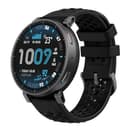
Amazfit Active Max

Amazfit Active Max

Close to a month of battery, real built-in positioning and offline maps for well under $200 — the trade is Amazfit's Zepp software rather than Apple's or Google's.

Best overall for long battery
$169.99 · View on Amazon

Price as of October 22, 2026. #ad How we’re funded

2
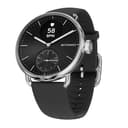
Withings ScanWatch 2

Withings ScanWatch 2

A classic-looking hybrid watch with medical-grade ECG, AFib detection and a month of battery — you trade a full smart display for elegance.

Longest published battery life
$369.95 · View on Amazon

Price as of October 22, 2026. #ad How we’re funded

3
Garmin Venu 3

Garmin Venu 3

A do-everything AMOLED Garmin with built-in GPS, ECG and standout battery life and no subscription, though it's priced at the premium end.

Best without other compromises
$368.00 · View on Amazon

$449.9918% off

Price as of October 22, 2026. #ad How we’re funded

4
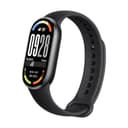
Xiaomi Smart Band 10

Xiaomi Smart Band 10

Three weeks of battery and a genuinely bright AMOLED for the price of a cheap pair of headphones — as long as you can live with Xiaomi's app and no onboard GPS.

Cheapest route to three weeks
$54.99 · View on Amazon

Price as of October 22, 2026. #ad How we’re funded

5
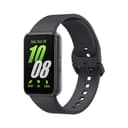
Samsung Galaxy Fit3

Samsung Galaxy Fit3

A big-screen band with close to a fortnight of battery and nothing behind a paywall — as long as you carry an Android phone, because it will not pair with an iPhone.

Most screen per charge
$53.99 · View on Amazon

Price as of October 22, 2026. #ad How we’re funded

Days per charge, and what each one costs you

Row two is the row that makes this page worth reading. Every device here is within a factor of about two on battery, so the real question is not how many days it lasts but which of screen, ecosystem or sensors it gave up to last that long.

SpecAmazfit Active MaxWithings ScanWatch 2Garmin Venu 3Xiaomi Smart Band 10Samsung Galaxy Fit3
Published battery lifeUp to 25 days (Amazfit)Up to 30 daysUp to 14 days in smartwatch modeUp to 21 days (Xiaomi)Up to 13 days (208 mAh)
What it gives up for thatEcosystem - Zepp has far fewer apps than Apple, Google or SamsungScreen - analogue hands plus a small grayscale sub-dialPrice - it is the most expensive device hereSensors and app - no built-in GPS, no ECG, metric-only appSensors and reach - no built-in GPS, no ECG, Android only
Display1.5 in AMOLED, quoted at 3,000 nitsAnalogue hands + grayscale PMOLED sub-dialAMOLED touchscreen1.72 in AMOLED, 1,500 nits high-brightness1.6 in AMOLED, 256 x 402
GPSBuilt-in positioning, five satellite systemsConnected GPS (uses the phone)Built-in GPS (all-systems GNSS)Not published - the Band 10 Pro is the GPS modelConnected GPS (uses the phone)
ECG appNot listedFDA-cleared ECG with AFib detection (US)FDA-cleared ECG app (US)NoNo
Published charge timeNot publishedNot publishedNot publishedAbout 1 hr to full (Xiaomi)Not published
Offline maps / onboard storageFree downloadable maps, 4 GB storageNoNo onboard offline mapsNoNo
SubscriptionNoneNoneNone - Garmin Connect is freeNoneNone - Samsung Health is free
Water ratingNot publishedNot published on the listing5 ATMNot published5 ATM + IP68

Every figure above is one the maker publishes, read on the dated visit linked under each write-up below. “Not published” means the maker does not state it — we do not fill the gap with an estimate.

The picks in full

#1Best overall for long battery

Amazfit Active Max

Close to a month of battery, real built-in positioning and offline maps for well under $200 — the trade is Amazfit's Zepp software rather than Apple's or Google's.

Strengths

  • Amazfit states up to 25 days of battery — weeks rather than days between charges
  • Built-in positioning across five satellite systems, with free downloadable offline maps
  • 4 GB of onboard storage for music and maps, 170+ workout modes and no subscription

Trade-offs

  • Zepp ecosystem has far fewer third-party apps than Apple, Google or Samsung
  • No ECG app is listed, and hands-free message replies need an Android phone
Battery lifeUp to 25 days (Amazfit)
GPSBuilt-in positioning, five satellite systems
Display1.5 in AMOLED, quoted at 3,000 nits
Storage4 GB for music and downloaded maps
NavigationFree downloadable terrain and ski maps, turn-by-turn
Training170+ workout modes, Zepp Coach plans, BioCharge score
CallsBluetooth calling with built-in speaker and mic
Water resistanceNot published
SubscriptionNone

Specs read from the product listing, on September 22, 2026. “Not published” means the maker does not state that figure.

#2Longest published battery life

Withings ScanWatch 2

A classic-looking hybrid watch with medical-grade ECG, AFib detection and a month of battery — you trade a full smart display for elegance.

Strengths

  • Up to 30-day battery life
  • FDA-cleared ECG with AFib detection plus on-demand SpO2
  • Timeless analog design with no subscription needed

Trade-offs

  • Connected GPS only — needs your phone for mapped routes
  • Tiny sub-dial display with limited smart features
Battery lifeUp to 30 days
Heart rate / ECGHR + FDA-cleared ECG app with AFib detection (US)
Blood oxygenOn-demand SpO2 (30-second reading)
Body temperatureTempTech24/7 skin-temperature sensor
DisplayAnalog hands + grayscale PMOLED sub-dial
GPS / subscriptionConnected GPS (via phone); no subscription

Worth knowing. Hybrid analog watch with real hands and a small grayscale OLED sub-dial.

Specs read from the product listing, on October 20, 2026. “Not published” means the maker does not state that figure.

#3Best without other compromises

Garmin Venu 3

A do-everything AMOLED Garmin with built-in GPS, ECG and standout battery life and no subscription, though it's priced at the premium end.

Strengths

  • Up to 14-day battery with built-in GPS
  • FDA-cleared ECG, Pulse Ox and detailed sleep and recovery data
  • No subscription — full data in Garmin Connect

Trade-offs

  • Premium price for a lifestyle smartwatch
  • No onboard offline maps like pricier Garmin models
Battery lifeUp to 14 days smartwatch mode
GPSBuilt-in GPS (all-systems GNSS)
Heart rate / ECGElevate v5 HR + FDA-cleared ECG app (US)
Blood oxygenPulse Ox (SpO2)
DisplayAMOLED touchscreen
SubscriptionNone — Garmin Connect is free

Specs read from the product listing, on July 19, 2026. “Not published” means the maker does not state that figure.

#4Cheapest route to three weeks

Xiaomi Smart Band 10

Three weeks of battery and a genuinely bright AMOLED for the price of a cheap pair of headphones — as long as you can live with Xiaomi's app and no onboard GPS.

Strengths

  • Xiaomi states up to 21 days per charge, and about an hour to recharge fully
  • 1.72-inch AMOLED with 2 mm bezels, quoted at 1,500 nits in high-brightness mode
  • Electronic compass for swim direction, plus staged sleep analysis, at a budget price

Trade-offs

  • No built-in GPS on the listing — Xiaomi's GPS model in this family is the separate Band 10 Pro
  • The Xiaomi Fit app is metric-only; showing pounds and feet means bridging it through Google Fit
Battery lifeUp to 21 days (Xiaomi); about 1 hr to full charge
GPSNot published — the separate Band 10 Pro is the GPS model
Heart rateHeart rate monitoring (listed)
SleepSleep stages and sleep-quality analysis
Display1.72 in AMOLED, 1,500 nits high-brightness (Xiaomi)
SoftwareXiaomi HyperOS 2; Xiaomi Fit app (metric units only)
Water resistanceNot published

Specs read from the product listing, on September 22, 2026. “Not published” means the maker does not state that figure.

#5Most screen per charge

Samsung Galaxy Fit3

A big-screen band with close to a fortnight of battery and nothing behind a paywall — as long as you carry an Android phone, because it will not pair with an iPhone.

Strengths

  • Up to 13-day battery on a budget
  • Large 1.6-inch AMOLED display
  • Sleep stages, snore detection, hourly stress and 100+ exercise modes, all free in Samsung Health

Trade-offs

  • No built-in GPS — needs your phone for routes
  • Android only — it will not pair with an iPhone
  • No ECG, and blood oxygen is a spot or overnight reading rather than continuous
Battery lifeUp to 13 days (208 mAh)
GPSConnected GPS (uses phone)
Heart rate24/7 optical HR
Blood oxygenSpO2 spot check and overnight
Display1.6 in AMOLED touchscreen (256 x 402)
Water resistance5 ATM, IP68
SubscriptionNone — Samsung Health is free

Specs read from the product listing, on August 21, 2026. “Not published” means the maker does not state that figure.

How to choose on battery life without wasting money

1. Work out which charging rhythm you actually want

There are only three meaningful answers, and the middle one is the one most people want without knowing it exists.

Nightly. Any full smartwatch — an Apple Watch at a published 18 to 24 hours, a Samsung Galaxy Watch at “about a day”. The advantage is a screen and an app store; the cost is that the device cannot be on your wrist at night, which is exactly when a sleep tracker needs to be there. This is the single commonest complaint about an otherwise excellent watch.

Weekly. The sweet spot: the Garmin Venu 3 at 14 days, the Galaxy Fit3 at 13. You charge it on a Sunday while you shower, and it is on your wrist every night of the week. For sleep and recovery data, which only works when the record is unbroken, this is the rhythm that matters.

Monthly. The ScanWatch 2 at 30 days and the Active Max at 25. This stops being a charging schedule and becomes a different kind of object — you charge it when you remember, not when the app nags. It is also the right answer for travel, where a charger is a thing to forget.

2. Know what you are giving up, because something always goes

The ScanWatch 2 is the clearest trade on the page. Thirty days, an FDA-cleared ECG app with AFib detection, on-demand SpO2, a skin-temperature sensor, and a watch that looks like a watch — in exchange for a grayscale sub-dial roughly the size of a thumbnail. You will not read a map on it, scroll a workout summary, or glance at a bright screen in sunlight. If you have ever thought “I want the health sensors, I do not want a computer on my wrist”, that is the device, and the month of battery comes free with the decision.

The Amazfit Active Max makes the subtler trade. It keeps the screen (1.5-inch AMOLED, quoted at 3,000 nits), keeps real built-in positioning across five satellite systems, adds free offline maps and 4 GB of storage — and still publishes 25 days. What it gives up is the ecosystem: Zepp has far fewer third-party apps than Apple, Google or Samsung, no ECG app is listed, and hands-free message replies need an Android phone. For a buyer who wants a sports watch rather than a smartwatch, that is close to a free lunch, and it is why it is our top pick.

The two cheap bands give up sensors. Neither the Xiaomi Band 10 nor the Galaxy Fit3 has built-in GPS or an ECG app, and the Xiaomi’s own app is metric-only, so showing pounds and feet means bridging the data through Google Fit. At these prices that is a reasonable deal rather than a flaw — but it does mean a run without your phone is untracked.

3. If the device is mainly for sleep, look at bands instead of watches

A screenless band is the purest expression of this page’s logic: remove the display and the battery problem largely disappears. The Amazfit Helio Strap publishes up to 10 days, Polar’s Loop 8 days from a 170 mAh cell, the Garmin Index Sleep Monitor up to 7 nights with Pulse Ox on, Google’s Fitbit Air up to 7 days, and WHOOP claims 14-plus. None of them has a screen, which is the point — Polar’s own stated reason for building one is “zero distractions”.

We rank that whole form factor separately in best sleep tracker bands, and if your interest is overnight data rather than workouts, start there instead of here. One of them — the Garmin Index — is explicitly designed as a second device, worn at night so the watch can be charged at bedtime. That is a legitimate answer to a one-day watch you otherwise like.

4. Read the quoted figure as a ceiling

Every number on this page is a maker’s typical-use claim, and the features that drain a battery fastest are the features people buy a tracker for: an always-on display, continuous rather than spot blood-oxygen sampling, GPS-tracked workouts, and high screen brightness. Garmin publishes the clearest illustration of the gap on its running watches — the Forerunner 165 is quoted at up to 11 days in smartwatch mode and up to 19 hours in GPS mode. Same battery, two very different numbers, both honest.

The practical rule: if a device’s published figure is around a week, assume you will charge it weekly and be pleased. If the published figure is three weeks or a month, you have enough headroom that your usage pattern stops mattering, which is really what people are buying when they shop for battery life.

Who should buy which

Buy the Active Max if you want weeks of battery and still want a bright screen and GPS that works without your phone. Buy the ScanWatch 2 if you want serious heart monitoring in something that reads as a traditional watch and you genuinely do not want a display. Buy the Venu 3 if you want a fortnight, a full AMOLED smartwatch, an ECG app and no subscription, and the price does not put you off. Buy the Xiaomi Band 10 if three weeks for the price of cheap headphones is the whole brief. Buy the Galaxy Fit3 if you are on a Samsung phone and want the biggest screen that still lasts a fortnight — see our Android roundup for the compatibility detail that decides it.

None of these devices is a medical device, and nothing here is medical advice. The ECG and AFib features on the ScanWatch 2 and the Venu 3 are screening prompts for a conversation with a doctor, not a diagnosis.
Wellness guidance, not medical advice. Pulse & Plate is written by a fitness enthusiast, not a doctor. Wearable heart-rate, SpO2, ECG and sleep readings are for general wellness, not diagnosis. For a heart concern, a symptom, or before starting a new exercise program, talk to a qualified professional.

Frequently asked questions

Which fitness tracker has the longest battery life?

Of the devices we track, the Withings ScanWatch 2 at a published 30 days, followed by the Amazfit Active Max at 25 and the Xiaomi Smart Band 10 at 21. The ScanWatch gets there by not really having a screen - analogue hands plus a small grayscale sub-dial - so if you want weeks of battery and a usable display, the Active Max is the better buy at a stated 25 days with a 1.5-inch AMOLED and built-in positioning.

Why do smartwatches have such short battery life compared to bands?

Because the screen is the biggest single consumer of power, and a watch exists to have one. An Apple Watch publishes 18 to 24 hours; a Samsung Galaxy Watch is quoted at about a day. A band with a small display gets a fortnight, and a screenless sleep band gets one to two weeks from a cell a fraction of the size. Remove the display and the battery problem mostly disappears - which is exactly why screenless recovery bands exist.

Is a long-battery fitness tracker worth it?

It is, for one specific reason that has nothing to do with convenience: sleep and recovery data only works when the record is unbroken, and a device that has to be charged nightly cannot be on your wrist at night. If you want sleep tracking, a device you charge weekly or monthly gives you data a nightly-charge watch structurally cannot. If you only track workouts, battery life is a convenience rather than a feature.

Do manufacturers exaggerate battery life claims?

They do not fabricate them, but every figure is quoted for a typical-use profile the maker defines, and the features people most want are the ones that shorten it - always-on displays, continuous blood-oxygen sampling, GPS workouts and high brightness. Garmin publishes the gap openly on the Forerunner 165: up to 11 days in smartwatch mode and up to 19 hours with GPS running. Read any published figure as a ceiling rather than an average.

What is the longest-lasting fitness tracker with GPS?

Among the devices here, the Amazfit Active Max: Amazfit publishes up to 25 days and the watch has built-in positioning across five satellite systems, plus free downloadable offline maps and 4 GB of storage. The Garmin Venu 3 is the next best combination at up to 14 days in smartwatch mode with built-in all-systems GNSS and an ECG app. Note that GPS-tracked activity draws the battery down far faster than idle wear on any device.

How long does a fitness tracker battery last before it needs replacing?

That is a different question from days-per-charge, and it is one almost nobody publishes. None of the makers here states a cycle count or an expected lifespan for the cell, so we are not going to invent a number. What we can tell you is what is published: the Xiaomi Band 10 recharges fully in about an hour, Google states the Fitbit Air goes 0 to 100% in 90 minutes, and Amazfit quotes under an hour for the Helio Strap. If a maker publishes nothing about battery longevity, treat the warranty term as the figure it is prepared to stand behind.

Can I get long battery life and an ECG app?

Yes, and there are two routes. The Withings ScanWatch 2 pairs a published 30 days with an FDA-cleared ECG app and AFib detection, at the cost of a real screen. The Garmin Venu 3 gives you an FDA-cleared ECG app, built-in GPS and a full AMOLED display at up to 14 days, at the cost of price. The two cheap long-battery bands here - the Xiaomi Band 10 and the Galaxy Fit3 - have no ECG at all.

Sources

  • Garmin — Garmin Connect+ announcement — Optional paid tier; “all existing features and data in Garmin Connect will remain free” (accessed July 20, 2026)
  • Polar (US) — Polar Loop product page — 'Screen-free, subscription-free fitness band'; 8-day battery from a 170 mAh cell and four weeks of onboard memory; Sleep Plus Stages, Nightly Recharge and SleepWise in the free Polar Flow app; WR30 water rating described as suitable for bathing and swimming; 29 g with wristband; two bands in the box (135-190 mm and 160-230 mm); Bluetooth LE only and cannot broadcast as an external heart rate sensor (accessed September 20, 2026)
  • Amazfit (US) — Helio Strap product page — Screenless band, 'no required subscription' for the Zepp app; up to 10 days of battery from a 232 mAh cell and charging under an hour; 5 ATM; sleep stages including REM, daytime naps, sleep breathing quality and a sleep score; BioTracker 6.0 PPG sensor; wrist 145-205 mm or upper-arm wear; iOS 15+ or Android 7+; weight stated as 20 g on the US page (accessed September 20, 2026)
  • Garmin — Index Sleep Monitor Owner's Manual: Specifications — Battery life 'up to 7 nights, with SpO2'; water rating 5 ATM; band dimensions S/M 12.8 in and L/XL 17.8 in; no weight is listed (accessed September 20, 2026)
  • Google Store — Google Fitbit Air tech specs — Battery life up to 7 days, 0-100% in 90 minutes, 1 day from a 5-minute charge; 5.2 g without band and 12 g with band; 34.9 x 17 x 8.3 mm; water resistant up to 50 meters; optical heart rate, 3-axis accelerometer + gyroscope, red and infrared SpO2 sensors, device temperature sensor; Bluetooth 5.0; Google Account and Google Health app required (accessed September 20, 2026)
  • WHOOP — WHOOP Unveils WHOOP 5.0 and WHOOP MG (press release, May 8, 2025, via Fitt Insider) — 14+ day battery life, a seven percent smaller form factor, sensors sampling 26 times per second, a reworked Sleep Performance score, Healthspan, and an FDA-cleared ECG Heart Screener on the WHOOP MG; membership tiers One, Peak and Life. Read from the Fitt Insider mirror because whoop.com and businesswire.com both returned 403 to our fetcher (accessed September 20, 2026)
  • Amazfit — Active Max support documentation (US) — Amazfit's own requirement for the Active Max: 'The operating system of your mobile phone must be Android 7.0 or iOS 14.0, or later.' The page says nothing about Apple Health, which is documented separately for the Zepp app (accessed October 3, 2026)
  • Cleveland Clinic — Fitness Trackers: Benefits and What To Look For — Cleveland Clinic on tracker accuracy and choosing by the metrics you care about (accessed July 19, 2026)

Keep reading