Which Oura problem are you solving?
There are only two real reasons to leave, and they point at different hardware.
Problem 1: the membership
Oura’s own membership page states the consequence plainly — without an active membership, the app shows only the three daily scores and basic settings. If that is the dealbreaker, you want a ring with no fee, and there are three.
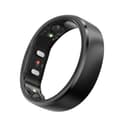
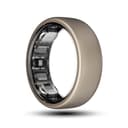
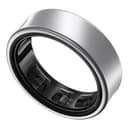
RingConn Gen 2is the closest replacement: no subscription, a published 10–12 days per charge, 100 m water resistance at roughly 2 g, and it reports sleep, activity, stress, HR, HRV, SpO2 and a sleep apnea AHI figure. Treat that AHI number as a wellness signal and a prompt to see a doctor, not a diagnosis. Samsung Galaxy Ringis the pick if your phone is a Galaxy: titanium, up to 7 days, 10 ATM plus IP68, all data free in Samsung Health — with the honest caveat that its full feature set favours a paired Samsung phone. Amazfit Helio Ring is the cheapest route into a titanium ring, and the only one here with a dedicated EDA sensor for stress, which is a different signal from heart-rate variability rather than a restatement of it.
One caution that applies to all three and to Oura itself: rings are sized per manufacturer and the sizes are not interchangeable. RingConn and Amazfit both use their own sizing, and a sizing kit before the ring is close to mandatory. We compare the ring field on its own terms in best smart rings and best smart rings without a subscription.
Problem 2: the price of the ring itself
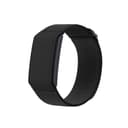
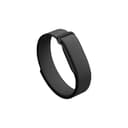
If the hardware cost is what stopped you, the answer is to stop shopping for rings. Three screenless bands here do the same night job for a fraction of any ring on this page, and two of them publish longer battery life than Oura does.
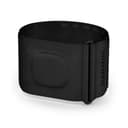
Amazfit Helio Strap is the budget pick and the value standout: up to 10 days per charge, charging in under an hour, sleep stages including REM plus naps, sleep breathing quality and overnight HRV, all free in Zepp, and a nylon strap that moves to the upper arm for training. Fitbit Airis a 12 g wrist pebble that pairs with an iPhone as well as Android, records sleep stages, HRV, resting heart rate, SpO2, temperature variation and Afib alerts, and Google states five minutes on the charger buys a day. Garmin Index Sleep Monitoris the one to buy if you already own a Garmin watch — it is an upper-arm band, night only by design, up to 7 nights per charge with Pulse Ox on, and Garmin’s own material describes it as combining its overnight data with a watch’s daytime data.
The trade is real and worth stating: a band is on your wrist or arm all night, which some people genuinely cannot sleep with, and that is exactly why rings exist. If that is you, buy a ring without a fee rather than a band. The whole band category is ranked in best sleep tracker bands.
What you give up by leaving Oura
Three things, honestly. The first is size: Oura publishes 2.28 mm of thickness and 6.09 mm of width on the Ring 5 and describes it as 40% smaller than the Ring 4, which is the smallest ring in this comparison. Thickness is what you notice when you make a fist or grip a bar, so it is not a vanity spec.
The second is the app itself. Oura’s readiness and sleep reporting is the thing the category copied, and the alternatives mostly present a similar set of numbers in their own makers’ apps — Zepp, Samsung Health, Garmin Connect, Google Health. Which of those you will tolerate opening every morning is a matter of taste that no spec sheet settles. The third is ecosystem risk: Zepp and RingConn are much smaller companies than Samsung, Google or Garmin, so long-term app support is more of a bet.
And one thing nobody here gives you: a screen or built-in GPS. Every device on this page, Oura included, is a passive sensor you read on a phone. If you want workouts, routes and notifications as well, you are shopping for a watch, and the form-factor trade is laid out in smart ring vs smartwatch. If sleep accuracy specifically is what you care about, read how accurate are sleep trackers before you spend anything — it sets expectations for every device here, including the expensive one.
What we would buy
If you want a ring and no monthly bill: the RingConn Gen 2, because it publishes more battery days than Oura and charges nothing for the app. On a Galaxy phone: the Samsung Galaxy Ring. On the smallest ring budget: the Amazfit Helio Ring, accepting that Amazfit does not publish a battery figure for it. If you already own a Garmin watch: the Index Sleep Monitor, which is built to be a second device rather than a replacement. And if the price is the whole problem: the Amazfit Helio Strap, or the Fitbit Air if you want a mainstream app that works on an iPhone too.
Worth saying for completeness: WHOOP is the other subscription-led device in this space, and swapping Oura’s membership for WHOOP’s is not solving the problem this page is about. We put those two head to head in WHOOP vs Oura Ring.