Apple Watch vs Garmin
A mainstream smartwatch vs an accessible running watch — compared on battery, GPS, training and smart features.
Apple Watch and Garmin are the two names most people weigh when they want a real fitness watch, but they were built with different priorities. To compare like with like we put Apple’s mainstream pick, the Apple Watch SE 3, against Garmin’s accessible running watch, the Garmin Forerunner 165. Both have built-in GPS and cover the fitness basics well; the gap is in what they optimize for.
The Apple Watch SE 3 is a true smartwatch first: a huge app library, calls and payments from the wrist, Crash and Fall Detection, and tight iPhone integration — at the cost of roughly a day of battery and no ECG or blood-oxygen sensor. The Forerunner 165 is a training watch first: a bright AMOLED, all-systems GPS, structured workouts and recovery tools, up to eleven days of battery and no subscription — but far fewer smart apps. Crucially, the Apple Watch is iPhone-only, while the Garmin works with iPhone or Android — though Garmin Connect demands a newer iOS version than any other tracker app, which we unpack in our fitness trackers for iPhone roundup. Below is the short answer, a side-by-side matrix, and who each watch suits.
How this is funded: we earn a commission if you buy through our links, at no extra cost to you. It never changes which product we recommend, and we’ll tell you when we’d skip one. Full disclosure.
| Feature | Apple Watch | Garmin |
|---|---|---|
| Battery life | About 18 hours | Up to 11 days |
| Training features | Capable Fitness app + many apps | Deeper running metrics + plans |
| Ecosystem / phone | iPhone only, deep watchOS | iPhone or Android |
| Smart features | Full — apps, calls, Apple Pay | Notifications and basics |
| GPS | Built-in GPS | Built-in all-systems GNSS |
| Best for | iPhone owners wanting an all-rounder | Runners wanting battery + training |
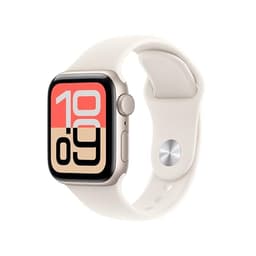
Apple Watch
Apple Watch SE 3
Buy this if: You own an iPhone and want a true all-in-one smartwatch — apps, calls, payments and safety features — with solid fitness tracking.
Strengths
- Full watchOS with a huge third-party app library
- Built-in GPS plus Crash and Fall Detection
- Fast, familiar performance in the Apple ecosystem
- Calls and Apple Pay from the wrist
Trade-offs
- No ECG or blood-oxygen sensor
- About 18-hour battery — charge daily
- Works only with an iPhone
Price as of October 22, 2026. #ad How we’re funded
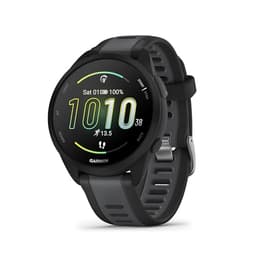
Garmin
Garmin Forerunner 165
Buy this if: You're a runner who wants accurate GPS, real training guidance and days of battery — on either iPhone or Android.
Strengths
- Up to 11-day battery with built-in all-systems GPS
- Bright AMOLED with strong running metrics and training plans
- No subscription — full data in Garmin Connect
- Works with iPhone or Android
Trade-offs
- Base model has no onboard music storage
- Far fewer smart apps than watchOS
- Lacks the advanced multisport tools of pricier Forerunners
Frequently asked questions
Is the Apple Watch or Garmin better for running?
For pure running, the Garmin Forerunner 165 is the stronger tool, with deeper running metrics, structured training plans and up to eleven days of battery. The Apple Watch SE 3 tracks runs well and adds a huge app library, but its roughly one-day battery is limiting for long training blocks and races.
Does the Apple Watch SE 3 work with Android?
No. The Apple Watch SE 3 requires an iPhone and does not pair with Android phones. If you use Android, the Garmin Forerunner 165 is the better choice here, since it works with both Android and iPhone. Match the watch to the phone you already own.
Which lasts longer, Apple Watch or Garmin?
Garmin wins clearly on battery. The Forerunner 165 lasts up to about eleven days in smartwatch mode, while the Apple Watch SE 3 lasts roughly 18 hours and needs daily charging. If you want to track sleep without charging around it, Garmin is the more practical option.
Does the Apple Watch SE 3 have ECG or blood oxygen?
No. The Apple Watch SE 3 does not include an ECG app or a blood-oxygen sensor; those are reserved for higher-end Apple Watch models. The Garmin Forerunner 165 also lacks ECG but does offer Pulse Ox (SpO2). For cleared ECG, see our health-monitoring wearables guide.
Sources
- Cleveland Clinic — Fitness Trackers: Benefits and What To Look For — Cleveland Clinic on tracker accuracy and choosing by the metrics you care about (accessed July 19, 2026)
- American Heart Association — Target Heart Rates Chart — AHA on maximum heart rate (~220 minus age) and 50–85% target zones (accessed July 19, 2026)
Keep reading
Best Fitness Smartwatches
See how the Apple Watch SE 3 and Forerunner 165 rank against every other watch we track.
See all smartwatchesBest Fitness Trackers
Prefer a slim band with days of battery over a full watch? Start here.
Compare trackersFitbit vs Garmin
Weighing bands instead of watches? Here's the other big head-to-head.
See the comparisonBest Health-Monitoring Wearables
Need ECG and deeper heart tracking? These are the watches and rings to weigh.
Explore health wearablesApple Watch SE vs Series 10
Leaning Apple? The value model against the health-sensor flagship, and whether the upgrade is worth it.
Compare the Apple WatchesGarmin Forerunner 165 vs Venu 3
Leaning Garmin? The running-first watch against the lifestyle smartwatch.
Compare the Garmins