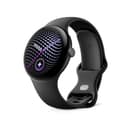
How to choose an ECG watch
Every watch on this page has the sensor, so the sensor is not the decision. These three things are.
1. Check what the maker says the ECG needs
This is the finding that organized the page. Samsung publishes that the Galaxy Watch9’s ECG requires a paired Samsung Galaxy phone— so on a Pixel, a Motorola or an iPhone, the hardware is in the watch and the feature is not available to you. Samsung also states that blood pressure is unavailable in the US. That is not a reason to avoid the watch; it is a reason to check your own phone before buying it for the ECG specifically.
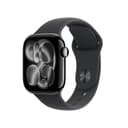
Apple’s condition is broader but just as firm: every row of its compatibility table names an iPhone, and the Series 11 is stated as needing an iPhone 11 or later. The Pixel Watch 5 is Android-only. Only the Garmin Venu 4 and the Withings ScanWatch 2 run their companion apps on both platforms. If platform is the question you are really asking, Apple Watch vs Samsung Galaxy Watch is the page for it.
2. A rhythm feature only works on a watch you are wearing
Which makes battery life a health spec here rather than a convenience spec. Atrial fibrillation is often intermittent; the background irregular-rhythm checks that flag it only run while the watch is on your wrist. A watch on a charger at 11pm is not checking anything.
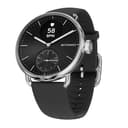
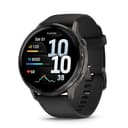
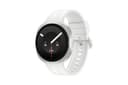
The published spread on this page is enormous. The ScanWatch 2 states up to 30 days. The Venu 4 states up to 12 days in smartwatch mode. The Pixel Watch 5states up to 40 hours on the 45 mm case and 30 on the 41 mm. The Series 11 states up to 24 hours, and the Galaxy Watch9is a 390 mAh or 445 mAh battery that Samsung describes as about a day. If round-the-clock monitoring is the point, that ranking matters more than the screen does — and our long-battery roundup ranks the whole field on that one figure.
3. Decide how much watch you want around the sensor
The ScanWatch 2 is the interesting case, because it is barely a smartwatch: analog hands, a small grayscale sub-dial, no GPS receiver of its own. What you get for accepting that is a month of battery and a watch that looks like a watch. The opposite end is the Galaxy Watch9 and the Pixel Watch 5, both with 3,000-nit AMOLED screens, dual-frequency GPS and full Wear OS app stores — and both paying for it in hours rather than days.
The Series 11 sits in the middle on battery and at the top on cleared features: it is the only watch here publishing hypertension notifications and sleep apnea notifications alongside the ECG app. The Venu 4 is the pick if you want days of battery and a real screen andno paywall on your own data. If you want the same data in a smaller package, the Fitbit Charge 6 band carries an FDA-cleared ECG app too, and it is the cheapest cleared ECG in our registry — it is ranked among the bands in best fitness trackers.
What a wrist ECG does not do
Worth saying plainly, because the marketing rarely does. A wrist ECG is a single-leadtrace. A clinical ECG uses twelve. The wrist version is designed and cleared for one job — spotting signs of atrial fibrillation — and it is not designed to detect a heart attack, and it will not tell you anything useful about a blocked artery. If you have chest pain, the watch is not the tool.
It also will not improve your training. Nothing about an ECG app makes your intervals better or your recovery faster; for training, the sensor that matters is a reliable heart-rate reading during effort, and the wrist is the worst place to take one. A chest strap beats every watch on this page at that job, which is the whole argument in chest strap vs wrist heart rate and why our heart rate monitor roundup exists separately.
And be realistic about blood pressure. Only the Series 11 publishes anything FDA-cleared in that area, and what it publishes is hypertension notifications— a pattern alert over time, not a cuff reading. Samsung’s blood-pressure feature is not available in the US at all. We cover the whole question honestly in do fitness trackers measure blood pressure?
What we would buy
On an iPhone: the Series 11, for the cleared-feature stack, with the ScanWatch 2 as the better buy if you want the ECG without a nightly charge. On Android: the Pixel Watch 5 if you do not own a Galaxy phone, the Galaxy Watch9 if you do and want the cheapest route to the sensor, and the Venu 4 if twelve days of battery and a free app matter more to you than the app store does. For a lower ceiling than any of these, see best fitness trackers under $200, where a band carries the same cleared ECG app for a fraction of the money.