Types of Rowing Machines
Air, magnetic, water and hydraulic rowers explained in plain terms - how each one creates resistance, what it sounds like, and which type suits your room and your training.
How this is funded: we earn a commission if you buy through our links, at no extra cost to you. It never changes which product we recommend, and we’ll tell you when we’d skip one. Full disclosure.
One machine per resistance type
Air
Concept2 RowErg (Model D)
Serious rowers who want a proven erg with best-in-class data and durability.
$990.00 · View on AmazonFull comparisonPrice as of October 13, 2026. #ad How we’re funded
Magnetic
Sunny Health & Fitness SF-RW5515 Magnetic Rowing Machine
Budget buyers who want a quiet, foldable magnetic rower for low-impact cardio.
$329.99 · View on AmazonFull comparisonPrice as of October 13, 2026. #ad How we’re funded
Water
Sunny Health & Fitness Obsidian Surge Water Rowing Machine
Rowers who want the whoosh and dynamic feel of water resistance without a premium price.
$449.99 · View on AmazonFull comparisonPrice as of October 13, 2026. #ad How we’re funded
Electromagnetic (connected)
Hydrow Rowing Machine
Rowers who want immersive live and scenic classes on a large screen.
$2,195.00 · View on AmazonFull comparisonPrice as of October 13, 2026. #ad How we’re funded
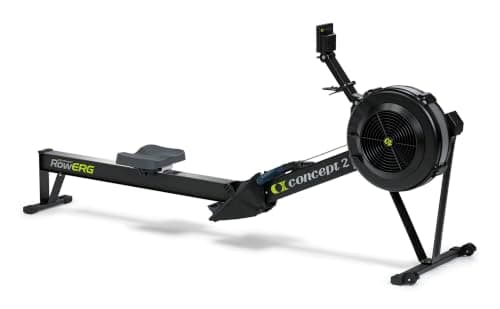
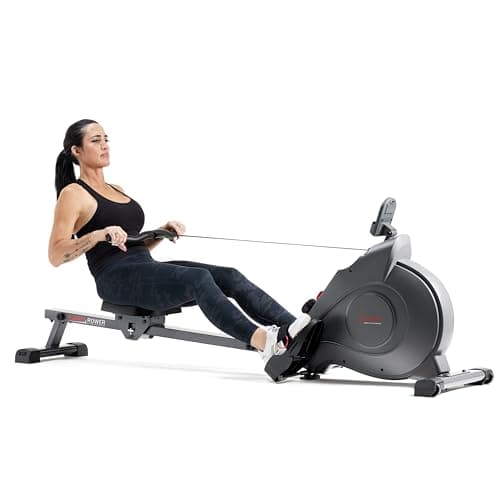
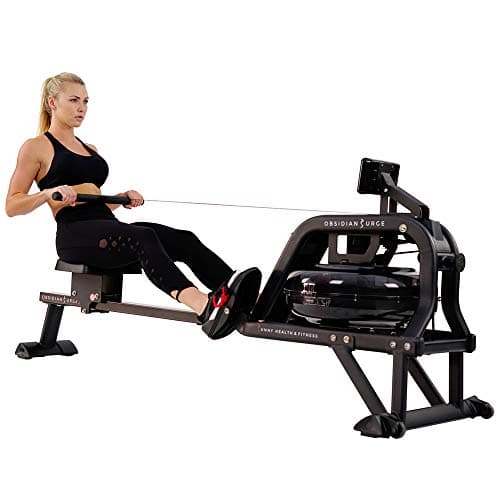
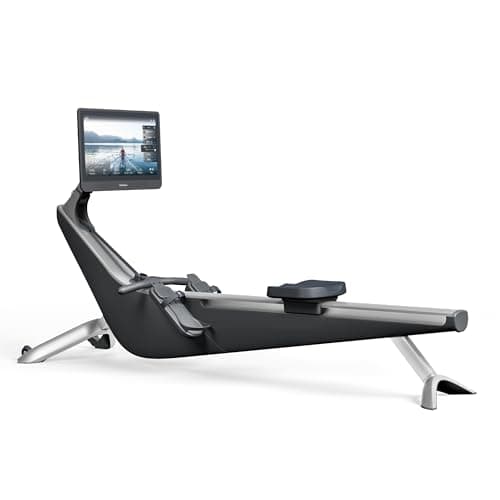
Every rowing machine puts you through the same movement — legs, then back, then arms, in that order — but they resist that movement in four different ways. The resistance type is what decides how the stroke feels, how loud the machine is, what it costs to keep, and whether it belongs in a flat or a garage. Get this decision right and the specific model matters much less than the internet suggests.
Air resistance
An air rower spins a caged fan. Air resists faster movement disproportionately, so the harder and quicker you pull, the more the machine pushes back — and when you ease off, it eases off with you. That self-scaling behavior is why air is the standard for competitive and structured training: two people of different strengths can use the same machine at the same setting and both be working at their own limit.
The damper on an air rower is not a difficulty dial, despite being used as one. It changes how much air reaches the flywheel, which changes the feel of the stroke — a high damper is like rowing a heavy boat, a low one like a light racing shell. Your actual intensity is decided by how hard you pull, which the monitor reports as a split time.
The trade-off is noise. The fan sound is the resistance, so a quiet air rower is a contradiction in terms. Air machines also tend to be long — plan around 9 ft by 4 ft of clear floor for a full-size erg — though many separate or stand upright for storage. Concept2 publishes five years on frame parts and two on moving parts and the monitor, which is unusually strong for home equipment and part of why these machines hold value. If air is already the type you want, we rank the machines themselves in best air rowing machines.
Magnetic resistance
A magnet is moved closer to or further from a steel flywheel; the closer it sits, the more braking force it applies. Nothing touches, so there is nothing to wear out and almost nothing to hear. Resistance is set by a lever or console at a fixed level and stays there no matter how hard you pull.
That makes magnetic rowers the right answer for shared floors, early mornings and small rooms — the machines are usually shorter than air rowers and most fold. It also makes them repeatable: level 6 today is level 6 next week, which is easier to program around than an air rower’s effort-scaled drag if you are new to structured training.
What you give up is the feel of the stroke answering you back, and usually the monitor. Budget magnetic rowers ship with basic LCDs that count strokes and estimate calories rather than reporting a proper split, so comparing your sessions to anyone else’s is not really possible. Rail length is also the spec to check: cheaper magnetic frames are short, and taller rowers run out of slide.
Water resistance
Paddles turn inside a sealed tank. Like air, water resists faster movement more, so the stroke scales with effort — and it produces the whoosh that is the whole reason many people buy one. Water rowers usually look better than other machines, which matters if the rower lives in a living room rather than a garage.
The costs are honest ones: the sound is real and repeats every few seconds, the tank needs topping up and treating to keep the water clear, and mid-range water rowers rarely match air machines on data. Capacity can also be lower than you expect at this price point, so check the published maximum user weight before buying. We compare the two most cross-shopped types directly in water vs magnetic, and rank the water machines themselves in best water rowing machines.
Electromagnetic and connected rowers
A newer variation: resistance is still magnetic, but a computer controls it, so a class or program can change the drag for you mid-session. That is what makes an instructor able to say “push” and have the machine respond. These are the quietest machines of all — there is no fan and no water — and the most expensive, and the class content that justifies them is normally a paid membership.
Buy one only if you will genuinely use the classes. Price the machine plus two years of membership before you compare it to an air rower with no ongoing cost; that arithmetic is laid out in how much a home gym costs, and the wider connected-equipment question in smart home gym equipment.
Hydraulic resistance
The cheapest and smallest type: one or two pistons, like the strut on a car boot, resisting the arms. They fold into a cupboard and cost a fraction of everything above.
We do not feature one, and here is why. Piston resistance changes as the cylinder warms up over a session, so the effort you set at the start is not the effort you finish with. The arms often pivot independently rather than pulling a single handle, which is not the rowing stroke. And because the resistance sits at the arms, the movement tends to become an upper-body exercise rather than the legs-first, full-body pattern that makes rowing worth doing. If space and budget are both tight, an entry-level magnetic rower or a jump rope gets you more real training per dollar.
Choosing by your constraint, not by the reviews
In practice one constraint usually decides this:
- Noise matters most(flat, shared walls, sleeping household) → magnetic, or an electromagnetic machine if the budget stretches.
- Training data matters most(intervals, splits, comparing sessions) → air, with a proper performance monitor.
- Feel and looks matter most(the machine lives in a living room) → water.
- Space matters most→ a folding magnetic rower, and measure the rail length against your height before ordering.
Whichever type you land on, the rowing stroke itself is the same and is worth learning properly: legs drive, then the body swings back, then the arms finish, and the sequence reverses on the recovery. Rowing well is what makes it a genuine full-body, low-impact session — and rowing badly is what makes it a lower-back complaint. Our best home rowing machines roundup has the current picks with live prices, and quietest cardio machines covers what to put under whichever one you choose.
Frequently asked questions
Which type of rowing machine is best?
Air is the default for serious training because resistance scales with effort and the performance monitors are comparable between machines. Magnetic is best for quiet rooms and small spaces. Water suits people who want the on-water feel and sound. Hydraulic is the cheapest and the one we do not recommend if you can stretch to any of the others.
What is the difference between air and magnetic rowers?
An air rower spins a fan, so drag rises with how hard you pull and the machine is loud in proportion. A magnetic rower moves a magnet near a steel flywheel, so resistance is a fixed level you set and the machine is near-silent. Air rewards hard efforts; magnetic is quieter and repeatable.
Are water rowers better than air rowers?
They feel closer to a boat and sound better to most people, but air rowers generally have stronger performance monitors and are the standard for structured training and comparable split times. Water rowers also need the tank topping up and treating; air rowers need nothing.
Which rowing machine is quietest?
Magnetic, comfortably. Nothing touches the flywheel, so what you hear is the seat rolling on the rail. Water is next, with a whoosh on every stroke. Air rowers are the loudest — the fan noise is the resistance, so you cannot have one without the other.
Are hydraulic rowers any good?
They are cheap and compact, and that is the case for them. The pistons heat up and change feel as they warm, the stroke path is usually not a true rowing motion, and the arms often move independently. If budget is the constraint, an entry magnetic rower is a better buy than a hydraulic one.
Sources
- American Heart Association — Recommendations for Physical Activity in Adults — AHA's 150 min/week moderate aerobic + 2 days strength recommendation (accessed July 19, 2026)
- U.S. HHS / ODPHP — Physical Activity Guidelines for Americans (2nd ed.) — Federal guideline: 150–300 min/week moderate aerobic + muscle strengthening 2+ days (accessed July 19, 2026)
- Concept2 — RowErg warranty — Five years on frame parts, two years on moving parts and the monitor (accessed July 20, 2026)
- Sunny Health & Fitness — Warranty policy — Cycles, rowers and treadmills: 3-year frame, 180-day parts, labor and shipping excluded, non-transferable (accessed July 20, 2026)
Keep reading
Rowing Machine Brands
Once you have picked a resistance type, the brands separated on published warranty and ownership.
Read the guideBest rowing machine for tall people
Once you have picked a resistance type, the slide-rail inseam is what decides whether the machine fits you.
See the tall picksBest home rowing machines
Our ranked picks across every resistance type, with live prices and capacity details.
See the rower picksAir vs magnetic rower
The two most common types compared head to head on noise, feel and training data.
Compare air and magneticWater vs magnetic rower
The whoosh and the self-scaling stroke against near-silence and a folding frame.
Compare water and magneticRowing machine vs exercise bike
Full-body pull against seated legs-only cycling, on space, joints and calorie burn.
Read the comparison