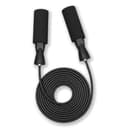
#1Best overall
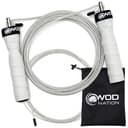
WOD Nation Attack Speed Jump Rope
The default speed rope for double-unders and fast footwork: light, adjustable without tools and cheap enough to be a first rope.
Strengths
- 2.2 mm alloy-steel cable spins fast enough for double-unders
- Fold-over adjustment sets the length in seconds, with no tools and nothing to cut
- Four bearings — two in the handles, two at the cable tips — keep the turn smooth
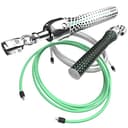
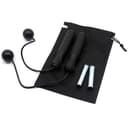
- A thicker 3.3 mm cable and a travel bag are in the box
Trade-offs
- Thin speed cable stings on a missed rep
- Even the 3.3 mm cable is far lighter than a true weighted rope
| Type | Speed rope |
|---|---|
| Cables | Alloy steel — 2.2 mm speed, 3.3 mm endurance |
| Cable length | 11 ft |
| Adjustment | Fold-over, no tools |
| Handles | Alloy steel |
| Bearings | 4-bearing system (2 in the handles, 2 at the tips) |
| In the box | Two cables plus a travel bag |
Specs read from the product listing, on August 21, 2026. “Not published” means the maker does not state that figure.