Rowing Machine vs Exercise Bike
Both are low-impact, but one works your whole body and the other just your legs. Muscles worked, intensity, space and data — which low-impact machine earns your floor space.
A rowing machine and an exercise bike are both low-impact cardio, so this isn’t a joint-friendliness contest — both are kind to the knees and hips. The real difference is how much of your body they work. A rower — here the Concept2 RowErg — is a full-body pull that recruits legs, back, arms and core in every stroke. An indoor bike — the Schwinn IC4 — is a leg-and-lung machine you can ride for hours, with a cycling feel and the option to stand and sprint.
Choose by what you want cardio to also do. If you want conditioning that builds and holds upper-body and back muscle in the same session, the rower is the more complete machine. If you want a comfortable, repeatable ride you can do while watching a show, or you already love cycling, the bike is the easier habit. Both options below show a live price.
How this is funded: we earn a commission if you buy through our links, at no extra cost to you. It never changes which product we recommend, and we’ll tell you when we’d skip one. Full disclosure.
| Feature | Rowing machine | Exercise bike |
|---|---|---|
| Motion | Full-body pull | Seated cycling |
| Muscles worked | Legs, back, arms, core | Mainly legs |
| Joint impact | Very low | Very low |
| Resistance | Air, spiral damper 1-10 | Magnetic, 100 micro-levels |
| Flywheel | Air flywheel | 40 lb |
| Monitor | PM5 (Bluetooth, ANT+) | Basic console; bring your own tablet |
| Footprint | 96 x 24 in (needs ~9 x 4 ft) | Compact bike footprint |
| Max user weight | 500 lb | 330 lb |
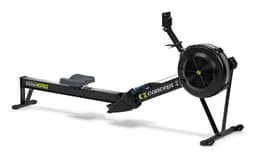
Rowing machine
Concept2 RowErg (Model D)
Buy this if: People who want low-impact cardio that works the whole body in one motion, with best-in-class data.
Strengths
- Works legs, back, arms and core in every stroke
- Legendary durability and the widely used PM5 monitor
- 500 lb capacity; separates into two pieces to store
Trade-offs
- Air resistance is louder than a magnetic bike
- Rowing form takes practice to do efficiently
- Needs a long ~9 ft clear lane to use
Price as of September 20, 2026. #ad How we’re funded
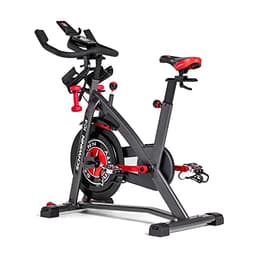
Exercise bike
Schwinn IC4 Indoor Cycling Bike
Buy this if: Riders who want a comfortable, repeatable seated ride, class-style intervals and app compatibility.
Strengths
- 100 micro-adjustable magnetic resistance levels for climbs and sprints
- Comfortable to ride for long sessions; easy to watch a screen
- Bluetooth pairs with Peloton, Zwift and other apps
Trade-offs
- Works mainly the legs, not the upper body
- No built-in screen; you supply a tablet for classes
- Saddle comfort takes some getting used to
Full-body vs legs: the core difference
Both machines are low-impact, so the decision comes down to muscle involvement. Every rowing stroke is roughly a leg drive, a back swing and an arm pull, so the rower trains most of the body in one motion — it’s cardio and light strength-endurance together. Cycling is a lower-body engine: it’s superb for the legs and cardiovascular system and you can sustain it comfortably for a long time, but your upper body is largely along for the ride. If you want a single machine that keeps your back and arms working too, that’s the rower’s biggest edge.
Intensity and comfort
The bike wins on comfort and repeatability. You’re seated and stable, so it’s easy to ride while watching a show, to do a class, or to grind out a long steady session without thinking about form. The IC4’s 100 micro-adjustable magnetic levels let you fine-tune everything from an easy spin to a standing sprint. Rowing can reach very high intensity too, but it demands more technique — a sloppy stroke is inefficient and can nag the lower back — so there’s a short learning curve before you get the most from it.
Data, space and noise
For training data, the Concept2’s PM5 monitor is a genuine strength: accurate, consistent splits and easy connectivity that serious rowers rely on. The IC4 keeps its onboard console basic and expects you to bring a tablet for the app experience. On space, the bike has the smaller, more predictable footprint; the rower needs a long lane to use but stores compactly on end. And on noise, the bike’s magnetic resistance is nearly silent while the rower’s air flywheel whooshes on each pull — if quiet is a priority, that favors the bike, or a magnetic rower.
Which should you buy?
Want the most complete low-impact workout and the best data? Row. Want the most comfortable, lowest-friction cardio habit you can do daily while distracted? Ride. Both comfortably cover the weekly aerobic activity health authorities recommend; the winner is the one you’ll come back to. Compare specific models in our best rowing machines and best exercise bikes roundups, and see how both stack up against running in rowing vs treadmill.
Wellness guidance, not medical advice. Pulse & Plate is written by a fitness enthusiast, not a doctor. Wearable heart-rate, SpO2, ECG and sleep readings are for general wellness, not diagnosis. For a heart concern, a symptom, or before starting a new exercise program, talk to a qualified professional.
Frequently asked questions
Is a rowing machine or exercise bike better?
Neither is universally better; they suit different goals. A rower works your whole body — legs, back, arms and core — in a low-impact motion, and offers excellent data. An exercise bike is a comfortable, repeatable leg-and-lung workout that is easy to do while watching something. Choose the rower for full-body conditioning, the bike for a lower-friction daily cardio habit.
Which burns more calories, rowing or cycling?
Calorie burn depends mainly on effort, and both can be intense. Rowing engages more muscle per stroke, which can raise the burn for a given effort and doubles as light strength-endurance work. Cycling lets many people sustain steady effort comfortably for longer. The bigger factor is how hard and how often you train, not the machine itself.
Are both a rowing machine and exercise bike low-impact?
Yes. Both are seated or non-pounding, so neither sends impact through the knees, hips and ankles the way running does. That makes both good choices for sensitive joints. The main difference is muscle involvement — full-body for the rower, mostly legs for the bike — not joint impact.
Do I need a subscription for either?
Not to use them. The Concept2 rower is fully self-contained with its PM5 monitor. The Schwinn IC4 works without any membership too, though its best experience comes from pairing your own tablet with an app like Peloton or Zwift, which are optional paid services. Neither machine forces a subscription to function.
Sources
- American Heart Association — Recommendations for Physical Activity in Adults — AHA's 150 min/week moderate aerobic + 2 days strength recommendation (accessed July 19, 2026)
- U.S. HHS / ODPHP — Physical Activity Guidelines for Americans (2nd ed.) — Federal guideline: 150–300 min/week moderate aerobic + muscle strengthening 2+ days (accessed July 19, 2026)
- Concept2 — RowErg warranty — Five years on frame parts, two years on moving parts and the monitor (accessed July 20, 2026)
- Schwinn Fitness — IC4 Indoor Cycling Bike (published warranty) — 10-year frame, 3-year mechanical parts and electronics, 1-year labor; 330 lb max user weight (accessed July 20, 2026)
Keep reading
Best Rowing Machines
Air, magnetic and water rowers compared on resistance feel, footprint and monitor.
See the picksBest Exercise Bikes
Indoor cycles and upright bikes compared on resistance, flywheel and app support.
See the picksRowing Machine vs Treadmill
Full-body rowing against the most familiar cardio machine there is.
Compare theseUpright vs Recumbent Bike
If you lean toward a bike, which style fits your body and goals.
Read the guideRowing Machine vs Assault Bike
The air bike is the extreme version of this matchup - fan resistance, arms included, and a ten-minute ceiling.
Compare theseRowing Machine vs Elliptical
The other low-impact alternative, compared on muscles worked, technique and console data.
Compare these