Pulse & Plate

Best Air Rowing Machines

Air rowers are the loud, honest, self-scaling end of the category. Five compared on what the console actually reports, how much floor they need, published capacity and how each one stores.

By Stephen V.Last updated How we research

An air rower makes drag by spinning a caged fan. Nothing is set, nothing is stored, and nothing holds a level for you: the resistance is whatever you just did to the handle. Pull harder and the fan meets more air and pushes back harder; ease off and it goes light immediately. That is why every competitive erg test, every rowing club and every CrossFit box runs air, and it is also why an air rower is the loudest machine most people will ever put in a spare room.

The specs that separate these machines are not the ones on the box. A damper lever is gearing rather than resistance, so the number it points at is close to meaningless on its own. What actually decides which one to buy is whether the console reports data you can pace by, how many feet of floor the machine needs, what the maker will put in writing about capacity and warranty, and what shape it becomes when you are done. The Concept2 RowErg remains the pick for most people, for the unglamorous reason that its numbers are the ones everyone else’s programs are written in. The MERACH NovaRow R50 Pro gets remarkably close on data for a mid-priced machine, the Body-Solid Endurance R300 is the one to buy if it has to survive a household, the Sunny SF-RW520007 is the only air rower here that fits a small room, and the Stamina ATS Air Rower 1399 is the cheapest way into the resistance type. Every pick was confirmed purchasable on the day this page was written, and every trade-off below is a real one.

How this is funded: we earn a commission if you buy through our links, at no extra cost to you. It never changes which product we recommend, and we’ll tell you when we’d skip one. Full disclosure.

Picks at a glance

Ranked on published specs, footprint and buyer fit. Select a row to jump to the full write-up. We have not tested these ourselves — here is exactly what we do instead.

#ProductBest forPrice
1
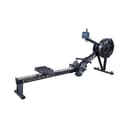
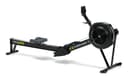
Concept2 RowErg (Model D)

Concept2 RowErg (Model D)

The widely cited standard for home rowing, durable and data-rich, but louder than magnetic or water rowers.

Best overall
$990.00 · View on Amazon

Price as of September 6, 2026. #ad How we’re funded

2
MERACH NovaRow R50 Pro Air Rower

MERACH NovaRow R50 Pro Air Rower

The only console on this page besides the Concept2's that reports watts and drag factor - the two numbers that make a session on one erg comparable with a session on another - and it sits in the middle of the price range rather than the top.

Best value
$559.99 · View on Amazon

Price as of September 6, 2026. #ad How we’re funded

3
Body-Solid Endurance R300 Indoor Rower

Body-Solid Endurance R300 Indoor Rower

A 500 lb published capacity, a monitor your own stroke powers, and a warranty that runs to lifetime on the frame - the one to buy if the machine has to outlast the enthusiasm.

Best for heavier rowers
$925.00 · View on Amazon

Price as of September 6, 2026. #ad How we’re funded

4
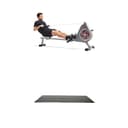
Sunny Health & Fitness Smart Premium Air Resistance Rowing Machine (SF-RW520007)

Sunny Health & Fitness Smart Premium Air Resistance Rowing Machine (SF-RW520007)

At 72.6 in assembled it is nearly two feet shorter than the rest of the air field, and it stands upright afterwards - the air rower for a room that has to go back to being a room.

Best for small rooms
$440.86 · View on Amazon

Price as of September 6, 2026. #ad How we’re funded

5
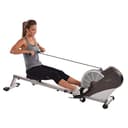
Stamina ATS Air Rower 1399

Stamina ATS Air Rower 1399

The cheapest genuine air rower on the page and the only one that actually folds - a plain steel machine with a four-readout monitor and very little to go wrong.

Best budget
$349.00 · View on Amazon

Price as of September 6, 2026. #ad How we’re funded

The picks in full

#1Best overall

Concept2 RowErg (Model D)

The widely cited standard for home rowing, durable and data-rich, but louder than magnetic or water rowers.

Strengths

  • Legendary durability and the widely used PM5 monitor
  • 500 lb capacity and a wide 1-10 damper range
  • Separates into two pieces for storage

Trade-offs

  • Air resistance is louder than magnetic or water rowers
  • Frequently sold direct, so Amazon may show 'Check price' or third-party stock
ResistanceAir (flywheel), spiral damper 1-10
MonitorPM5 (Bluetooth, ANT+)
Max user weight500 lb
Footprint96 in L x 24 in W (needs ~9 x 4 ft)
Seat height14 in
StorageSeparates into two parts

Worth knowing. Often sold direct by Concept2, so on Amazon it may list as 'Check price' or ship from a third-party seller.

Specs read from the product listing, on July 19, 2026. “Not published” means the maker does not state that figure.

#2Best value

MERACH NovaRow R50 Pro Air Rower

The only console on this page besides the Concept2's that reports watts and drag factor - the two numbers that make a session on one erg comparable with a session on another - and it sits in the middle of the price range rather than the top.

Strengths

  • Console publishes time/500 m, watts, stroke rate and drag factor - the full pacing set
  • 1,200 mm (47.2 in) rail inseam is the longest published seat travel here
  • Folds to 635 x 835 x 1,370 mm (25.0 x 32.9 x 53.9 in), a small footprint for a 93.7 in machine

Trade-offs

  • MERACH's US spec sheet publishes no maximum user weight and no user height range
  • Two years of warranty, against five from Concept2 and lifetime-on-frame from Body-Solid
  • Every figure is published in millimeters and kilograms, so the inch and pound numbers here are conversions rather than the maker's own
ResistanceAir, 10 levels, 32-blade fan, manual lever
Flywheel3.5 kg (7.7 lb)
Monitor5.3 in backlit LCD - time, distance, calories, strokes, pulse, SPM, time/500 m, watts, stroke waveform, drag factor
Slide rail1,365 mm (53.7 in) track, 1,200 mm (47.2 in) inseam
Rail materialAluminum with a stainless steel sliding rail
Assembled size2,380 x 610 x 1,022 mm (93.7 x 24.0 x 40.2 in)
Folded size635 x 835 x 1,370 mm (25.0 x 32.9 x 53.9 in)
Machine weight33.3 kg (73.4 lb)
Seat height380 mm (15.0 in)
AppMERACH and Kinomap (Bluetooth 5.0)
Warranty2 years
Max user weightNot published

Worth knowing. Drag factor is the one console reading that makes two different air rowers comparable. It measures how quickly the flywheel slows between strokes, so the monitor knows how much air the fan is actually moving no matter where the damper lever sits. Publishing it on a machine at this price is unusual.

Specs read from the product listing, on August 31, 2026. “Not published” means the maker does not state that figure.

#3Best for heavier rowers

Body-Solid Endurance R300 Indoor Rower

A 500 lb published capacity, a monitor your own stroke powers, and a warranty that runs to lifetime on the frame - the one to buy if the machine has to outlast the enthusiasm.

Strengths

  • 500 lb published capacity, the joint-highest of any rower on this site
  • Warranty is lifetime on the frame, 5 years parts, 2 years electronics, 1 year labor
  • Self-generating, so the console runs on your stroke - no outlet, no batteries

Trade-offs

  • 95 in assembled is the second-longest machine here and it needs clear space behind it
  • The console has no time-per-500 m split, which is the number most rowing programs are written in
  • Body-Solid publishes no seat height and no separated-for-storage dimensions
ResistanceAir, user-controlled air resistance wheel
MonitorTime, stroke, heart rate (with a wireless strap), calories, paddle width, stroke rate, distance, cycle, watts
PowerSelf-generating - no outlet required
Programs8 (quick start, distance, time, calories, game, intervals 20/10, 10/20, 10/10)
Max user weight500 lb
Assembled size95 in L x 25 in W x 40 in H
Machine weight81 lb
ChainNickel-plated steel
StorageSeparates into multiple pieces
WarrantyEndurance 5 Year In-Home: lifetime frame, 5 years parts, 2 years electronics, 1 year labor, 6 months wear items
Seat heightNot published
Folded sizeNot published

Worth knowing. Self-generating means the flywheel spins a small generator that powers the console, so there is nothing to plug in and no battery to replace. The trade-off is that the display is live only while you are rowing - stop, and the numbers go with it unless you keep the handle moving.

Specs read from the product listing, on August 31, 2026. “Not published” means the maker does not state that figure.

#4Best for small rooms

Sunny Health & Fitness Smart Premium Air Resistance Rowing Machine (SF-RW520007)

At 72.6 in assembled it is nearly two feet shorter than the rest of the air field, and it stands upright afterwards - the air rower for a room that has to go back to being a room.

Strengths

  • 72.6 in assembled is the shortest air rower here by close to two feet
  • Folds upright onto a 31.3 x 25.1 in floor patch, and Sunny publishes those folded numbers
  • 300 lb capacity with a published 14.6-15.7 in seat height, an easy height to sit down onto

Trade-offs

  • The console shows time, count, total count and calories - no split, no stroke rate, no watts
  • Of the two picks that publish a rail inseam, its 38.5 in is the shorter, so long-legged rowers will run out of travel
  • Resistance is described as progressive rather than adjustable, so there is no damper to set
  • The Amazon listing that names the model number is a bundle, so the price covers a floor mat as well as the rower
ResistanceAir (fan), progressive - no resistance levels
MonitorTime, count, total count, calories, scan
Max user weight300 lb
Assembled size72.6 in L x 25.1 in W x 31.3 in H
Folded size31.3 in L x 25.1 in W x 72.6 in H
Slide rail44.7 in long, 38.5 in inseam
Seat height14.6-15.7 in
Machine weight56.7 lb
StorageFolds upright, transport wheels
AppSunnyFit (free, Bluetooth)
Warranty3 years structural frame, 180 days other parts

Worth knowing. Sunny publishes slide rail length (44.7 in) and slide rail inseam (38.5 in) as two separate figures. The inseam is the seat's usable travel and the one that decides fit - and 38.5 in is short enough that a tall rower should measure their own leg length against it first.

Specs read from the product listing, on August 31, 2026. “Not published” means the maker does not state that figure.

#5Best budget

Stamina ATS Air Rower 1399

The cheapest genuine air rower on the page and the only one that actually folds - a plain steel machine with a four-readout monitor and very little to go wrong.

Strengths

  • Folds to 48 x 18 x 28 in - the only pick that stores lying down rather than standing on end, so it slides under a bed
  • 54 lb, light enough for one person to move and store without help
  • 3 years on the frame and 90 days on parts, published by Stamina on this model's own page

Trade-offs

  • The monitor reads speed, distance, time and calories only - no stroke rate, no split, no watts
  • 250 lb capacity is the lowest here, half of the Body-Solid's
  • Stamina publishes no damper or resistance setting, so the drag is whatever the fan gives you
ResistanceAir (wind resistance)
MonitorSpeed, distance, time, calories
Max user weight250 lb
Assembled size77 in L x 18.75 in W x 22 in H
Folded size48 in L x 18 in W x 28 in H
Machine weight54 lb
RailOversized angled seat rail, upholstered sliding seat
StorageFolding frame
Appmuuv audio coaching app (free access included)
Warranty3 years frame, 90 days parts
Seat heightNot published
Damper settingNot published

Worth knowing. Stamina's SKU for the version currently on its own site is 35-1399C, where the C is a revision letter - earlier A and B versions of the same 1399 shipped before it. The figures above are from the C spec sheet, and Amazon carries more than one ATS Air Rower listing at more than one price, so check the listing's own dimensions before you measure a corner around them.

Specs read from the product listing, on August 31, 2026. “Not published” means the maker does not state that figure.

How to choose an air rower

Rowing is one of the few home machines that is genuinely full-body and genuinely low-impact at the same time, which is why it keeps appearing in guidance about hitting a weekly activity target without punishing your knees. Air is the version of it that behaves like a boat. These are the things that decide which air rower to buy, roughly in the order they should decide it.

The damper is gearing, not resistance

Almost every buyer gets this backwards, and Concept2 says so on its own site. The lever on the side of the flywheel cage opens and closes a vent, which changes how much air reaches the fan. More air makes each stroke feel heavier and slower, like rowing a barge; less air makes it feel lighter and quicker, like a racing shell. What it does not do is set your workout intensity. That is set entirely by how hard you pull. A damper on 10 with a lazy stroke is easier than a damper on 3 with an honest one.

The practical consequence is that a spec sheet advertising “10 levels of resistance” on an air rower is describing 10 gear ratios, not 10 intensities, and a machine whose maker publishes no damper setting at all — the Stamina and the Sunny here — is not therefore an easier machine. Concept2 suggests most people start somewhere between 3 and 5 and leave it there. If you are coming from a magnetic rower, where the level genuinely is the resistance, this is the single biggest adjustment to make.

Drag factor is the number that makes two machines comparable

Because a damper setting means different things on different machines (and on the same machine as dust builds up in the cage), the useful reading is drag factor: a measure of how quickly the flywheel slows down between strokes, which tells the monitor how much air the fan is actually moving. A monitor that knows the drag factor can calculate real work, which is why a Concept2 split is portable between machines and a generic LCD calorie count is not.

Of the picks here, two publish a drag factor readout: the Concept2’s PM5 and the MERACH R50 Pro’s backlit console. That is the entire reason the MERACH is the value pick rather than simply the cheap one. The Body-Solid reports watts, which is the next best thing, and the Sunny and Stamina report neither. If nobody is ever going to compare your numbers with anyone else’s, none of this matters. If you have a coach, a leaderboard or a program written in splits, it is the whole decision.

The console: three readouts, and everything else is decoration

Screen size is not the measure of a rowing monitor. What matters is whether it reports time per 500 m, strokes per minute and a distance you can hold yourself to. Those three let you pace an interval, repeat a session next week and see whether anything is improving. Calories are a modeled estimate on every machine ever built and are the worst possible thing to steer by.

The spread on this page is wide. The PM5 and the MERACH console publish the full set plus watts. The Body-Solid publishes stroke rate, distance and watts but no 500 m split, which is an odd gap on an otherwise serious machine. The Sunny publishes time, count, total count and calories — enough to know you did something, not enough to know what. The Stamina publishes speed, distance, time and calories. If your training is heart-rate-led rather than pace-led, note that none of these machines includes a chest strap — Body-Solid publishes a Polar-compatible wireless pairing and the Concept2 and MERACH consoles read a pulse, but you supply the strap, so plan on adding one from our heart-rate monitor roundup.

Length is the constraint, and storage is a separate question

Air rowers are long, because the fan cage has to go somewhere and the rail has to be long enough to row on. Assembled, the picks here run from 72.6 in to 96 in, and the Concept2 asks for a 9 ft by 4 ft clear area to use properly. Add roughly two more feet behind the machine so you can get on and off it. That is a real chunk of a small room, and it is the reason many people who want air end up buying magnetic.

The three storage answers are genuinely different and makers use the words loosely. The Concept2 separates into two pieces with no tools, leaving a 25 × 33 × 54 in stack. The MERACH and the Sunny stand on end, trading floor length for height — 53.9 in and 72.6 in tall respectively. The Stamina folds flat to 48 × 18 × 28 in, which is the only stored shape here that slides under something. The Body-Solid separates into pieces but publishes no dimensions for the result. Read the published folded numbers rather than the word “foldable,” and if floor space is the binding constraint, our small-apartment equipment guide covers the trade-off across every category.

Weight capacity is a stability number

Published capacity is a proxy for how much frame you are buying, not a cliff you fall off. The spread here is enormous: 250 lb on the Stamina, 300 lb on the Sunny, 500 lb on both the Body-Solid and the Concept2, and nothing at all published by MERACH. A rower is loaded dynamically — you drive backwards against the seat with your whole body — so a frame near its limit flexes and creaks, and a machine that creaks is a machine you stop using. Give yourself headroom rather than buying to the number. Our high-capacity equipment guide sorts the wider catalog the same way.

Fit is a separate measurement from capacity, and the spec that governs it is the rail inseam— the seat’s usable travel, always shorter than the tube it runs on. MERACH publishes 1,200 mm (47.2 in) against a 1,365 mm rail; Sunny publishes 38.5 in against a 44.7 in rail. The other three publish no inseam at all. There is no honest way to convert height into a required inseam, because leg length varies enormously at the same height. Sit on the floor with your legs straight and measure from your heels to your seat bones, then compare that to whatever the maker publishes.

Noise is the price of admission

There is no quiet air rower. The fan is the resistance, so the sound rises and falls with every stroke, and at a hard effort it is a whoosh you can hear through a floor. Owners describe it as closer to a household fan on high than to a treadmill’s footfall — broadband rather than percussive, which is easier on the person in the next room and worse for the person below. If a shared wall, a sleeping household or a downstairs neighbor is a live constraint, this is the resistance type to skip, and the quietest cardio machines ranks the alternatives.

Why air rowers do not get cheap

The bottom of the air market sits well above the bottom of the magnetic market, and the reason is physical. A magnetic rower needs a magnet, a small steel flywheel and a cable — parts that cost very little and can be bolted to a light frame. An air rower needs a balanced fan large enough to move real air, a cage stiff enough to hold it, and a chain or strap that will not stretch under the load a fan generates at a high stroke rate. That is more metal, more machining and more shipping weight, and it shows up in the price.

What it means practically is that the cheapest honest air rower and the cheapest honest magnetic rower are not competing for the same buyer. If your budget is at the bottom of the range, you have a real choice to make rather than a compromise to accept: an entry-level air machine that behaves correctly but reports almost nothing, or a magnetic machine at the same money with a longer rail, a fuller console and a quiet room. We would take the magnetic one in most rooms. Our air vs magnetic rower comparison walks through that trade in detail.

Who should skip air entirely

Three groups should. If noise is a constraint you cannot design around, buy magnetic — nothing about an air rower gets quieter with use. If you want the feel of being on the water rather than the feel of a competition erg, a water rower gives you a stroke that also self-scales, with a sound most people find pleasant instead of intrusive. And if your room genuinely cannot spare eight feet of clear floor, do not buy the machine and hope; measure first, then look at the shorter machines in the full rowing machine roundup, which covers all three resistance types in one place.

Read the warranty per model, not per brand

Coverage on this page ranges from the best on this site to two plain years, and it does not track price the way you would expect. Body-Solid’s Endurance 5 Year In-Home terms run to lifetime on the frame, five years on parts, two on electronics, one on labor and six months on wear items such as the seat and brake pad. Concept2 publishes five years on frame parts and two on moving parts and the monitor. Sunny publishes three years on the structural frame and 180 days on everything else, with labor and shipping excluded and the cover non-transferable. Stamina writes its warranty per model rather than per brand, and the 1399 gets three years on the frame and 90 days on parts. MERACH publishes two years and no breakdown of what that covers.

One more thing worth knowing before you buy at the value end: MERACH publishes a full metric spec sheet for the R50 Pro but no maximum user weight and no height range anywhere on it. That is survivable if you are comfortably inside what any rower would take. It is not survivable if capacity is the reason you are shopping, because you cannot check yourself against a number nobody has printed.
Frequently asked questions

Are air rowing machines better than magnetic ones?

For training, mostly yes — an air rower's drag scales with how hard you pull, so a sprint feels like a sprint and your numbers can be compared with other machines. For living with, mostly no. Air rowers are the loudest home cardio machines, they are long, and they cost more at every point in the range. Buy air if you want honest rowing feel and portable data; buy magnetic if quiet, short and cheap matter more.

What damper setting should I use on an air rower?

Concept2 suggests starting between 3 and 5 and leaving it there. The damper controls how much air reaches the fan, which changes how heavy each stroke feels — it is gearing, not intensity. Rowing hard on a low damper is harder work than rowing lazily on a high one, and a high damper mostly just slows your stroke rate down.

What is drag factor and does it matter?

Drag factor measures how quickly the flywheel slows between strokes, which tells the monitor how much air the fan is really moving. It matters because it is what lets a monitor calculate real work, so a split on one machine means the same thing on another. Two picks here publish a drag factor readout: the Concept2's PM5 and the MERACH R50 Pro's console.

How loud is an air rowing machine?

Loud enough that it is the main reason people choose a different resistance type. The fan is the resistance, so the sound rises and falls with each stroke and peaks during hard efforts. It is broadband whoosh rather than the thud of a treadmill, which travels less through a wall and more through a floor. There is no quiet air rower and no accessory that makes one quiet.

How much space does an air rower need?

More than most people expect. The machines here are 72.6 to 96 inches long assembled, and Concept2 asks for a clear 9 by 4 foot area to use the RowErg properly. Add roughly two feet behind the machine for getting on and off. Storage is a separate question: some separate into two pieces, some stand on end, and one folds flat to 48 by 18 by 28 inches.

Do air rowers need a subscription?

None of the picks here do. The Concept2's PM5 records everything on the machine and syncs free to Concept2's own logbook, MERACH's app and Kinomap link over Bluetooth without the machine depending on them, Sunny's SunnyFit app is free, and Stamina bundles free access to its audio coaching app. Air rowers as a category are almost entirely subscription-free, which is unusual in home cardio.

Are air rowers good for beginners?

Yes, with one caveat. The self-scaling drag means a beginner simply rows gently and gets a gentle machine, with no settings to learn — that part is genuinely beginner-friendly. The caveat is the console: a monitor that only counts calories gives a beginner nothing to improve against, so if you can stretch to a machine that reports stroke rate and a 500 m split, the habit is much easier to build.

Sources

Keep reading