How to buy a rower that will live on a shared floor
A machine in a house does maybe forty hours a year. A machine in a studio can do forty hours a month, used by people who did not pay for it, who will not adjust the damper gently and who will not report a noise. Everything below follows from that difference, roughly in the order it should decide the purchase.
The warranty is the spec, and almost nobody reads it
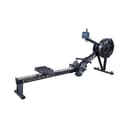
This is the section that should change your shortlist. Take the Body-Solid Endurance R300: a 500 lb published capacity, a self-generating console, a nickel-plated steel chain and a lifetime frame warranty. On paper it is the most commercial-looking machine on this page. Body-Solid’s own terms cover products “for non-commercial, personal, family, or household use”, and state that products sold for commercial use are sold “AS IS” without any warranty. Put it in a gym and the lifetime frame coverage is gone. That is not a loophole somebody found; it is the plain text of the warranty page linked under its write-up.
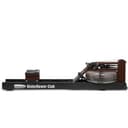
The WaterRower Club sits at the other end. Its seller publishes the design intent explicitly — the Club “has been designed for High Traffic Areas such as Commercial Gyms, Studios, Rehabilitation Clinics, etc.” — and the stained ash and rosewood finish is chosen to resist soiling, which is an institutional concern rather than a home one. The warranty itself is one year on frame and components, upgradeable to five years on the frame and three on parts if you register within the first year. Register it on day one; on a busy floor that upgrade is most of what you are buying.
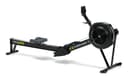
Concept2 takes a third position: its RowErg warranty runs five years on frame parts and two on moving parts and the monitor, and the terms carry no residential restriction at all. Concept2 also runs a commercial channel of its own, describing itself as a GSA approved supplier to the military and federal government and its equipment as commercial quality, engineered to last for decades. A warranty that does not exclude your use case, from a company that sells into institutions on purpose, is a materially different proposition from a lifetime warranty that stops at your front door.
Published capacity, and why it matters more on a shared floor
At home you know who uses the machine. On a shared floor you do not, so the published figure has to cover the heaviest person who might sit on it, not the person who bought it. The spread here is wide: 700 lb on both WaterRowers, 500 lb on the Concept2 and the Body-Solid, and nothing at all from MERACH, which publishes no user weight capacity for the R50 Pro on its US spec sheet and states figures on its other regional pages that do not agree with each other. For a home buyer that is an annoyance. For a studio it is disqualifying, because an unpublished limit is a limit you cannot point at when something bends.
Can you buy the parts?
A commercial machine is not one that never breaks. It is one you can fix on a Tuesday. Concept2 is the strongest here by a distance: it sells wear parts openly with written and video instructions, which is why twenty-year-old ergs are still on gym floors. The WaterRowers are mechanically simple — a tank, a paddle and a strap — with no resistance mechanism to fail at all, because there is no damper, magnet or motor anywhere on the machine. The Body-Solid’s self-generating console removes the other common failure point, an external power supply, since the flywheel powers the display. Ask about parts before you ask about features; on a shared floor the machine that stays in service wins.
Noise, and the room the machine is actually in
Air rowers are the loudest machines in home cardio because the fan noise is the resistance, and a studio full of them is genuinely loud. Water rowers trade that for a broad whoosh most people find pleasant, which is a real part of why boutique studios buy them. If the room is small, shared or above someone, the honest answer is a magnetic machine rather than anything on this page — see our best magnetic rowing machines roundup and the quietest cardio machines. Magnetic rowers are quiet because nothing touches the flywheel, and that is also why none of them are here: no magnetic machine in this catalog publishes anything about non-residential use.
The Club and the Oak are the same rower
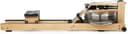
Worth stating plainly, because the price difference invites the wrong conclusion. The WaterRower Club and the WaterRower Oak share a chassis: the same 82.25 in frame, the same 700 lb published capacity, the same S4 monitor, the same water flywheel. What the Club adds is a finish specified for a floor other people use. If the machine is going in your own spare room, the Oak is the same rower for less, and our best water rowing machines roundup ranks it against the rest of that category on tank size, rail length and seat height. We would rather tell you that than sell you the badge.
What “commercial” probably means for you
Most people searching this phrase are not fitting out a gym. They want a machine that feels like the one at their gym and will not wear out — which is a durability question, not a licensing one. If that is you, the honest shortlist is short: buy the Concept2 if you want the machine gyms actually run, or the Oak if you want a hardwood rower that looks like furniture. Neither decision needs the word commercial in it. Our best home rowing machines roundup compares the whole field on console, footprint and budget tiers, which is the more useful axis for a spare room, and best air rowing machines covers the resistance type most gym ergs use.
Height, weight and the rest of the fit
Two fit specs still apply on a shared floor and are easy to forget. The slide-rail inseam decides whether a tall user gets a full stroke, and of the machines here only MERACH publishes one — 1,200 mm, or 47.2 in, the longest published seat travel in this catalog. Our rowing machines for tall people guide explains how to measure your own against it. And seat height decides who can get on and off unaided: the WaterRower chassis sits at 9 in, which is low, and matters a great deal in a rehabilitation setting or anywhere older members train — our rowing machines for seniors guide ranks on that spec first.