Pulse & Plate

Best Fitbit Alternatives

The two reasons people leave Fitbit are the paid tier and the Google account. Five bands ranked against the Charge 6 on exactly that - what each one gives away for free, and what it asks you to sign into.

By Stephen V.Last updated How we research

The Garmin vivosmart 5 is the best Fitbit alternative for most people. It is the same thing a Charge is — a slim, screened, all-day band — with wrist heart rate and Pulse Ox, a 5 ATM water rating and up to 7 days per charge, and the difference that matters is the one you came here for: Garmin Connect charges nothing for the data it records. It suits a Fitbit owner who wants the same daily experience without a tier sitting between them and their own sleep report. Our budget pick is the Xiaomi Smart Band 10, the cheapest device here, which publishes up to 21 days per charge on a 1.72-inch AMOLED screen quoted at 1,500 nits.

The Fitbit Charge 6 is the benchmark column in the table below, not a pick. It is a capable band — built-in GPS, an FDA-cleared ECG app in the US, SpO2, 50 m water resistance, up to 7 days — and the reason people search for alternatives is not the hardware. It is that the fuller insights sit behind a paid tier with a trial in the box, and that setting the device up means a Google account. Every one of the five alternatives below publishes its sleep and health reporting in a free app.

There is one thing the Charge 6 does that only one alternative here matches, and you should know it before you switch: a cleared ECG. None of these five publishes one. Two of them do publish something the Charge does not — far longer battery, at up to 21 days on the Xiaomi band and up to 25 days on the Amazfit Active Max, against Fitbit’s 7.

We own none of these devices and have tested none of them. Every figure below is read from the maker’s published specifications or the listing on the dated visit recorded under each write-up, “Not published” means the maker does not state it, and prices come from our live price layer with the date they were read.

How this is funded: we earn a commission if you buy through our links, at no extra cost to you. It never changes which product we recommend, and we’ll tell you when we’d skip one. Full disclosure.

Picks at a glance

Ranked on published specs, footprint and buyer fit. Select a row to jump to the full write-up. We have not tested these ourselves — here is exactly what we do instead.

#ProductBest forPrice
1
Garmin vivosmart 5

Garmin vivosmart 5

A simple, slim band with Garmin's trusted health metrics and no subscription, but the display is basic monochrome and GPS relies on your phone.

Best overall alternative
$148.90 · View on Amazon

Price as of November 23, 2026. #ad How we’re funded

2
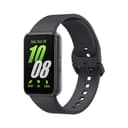
Samsung Galaxy Fit3

Samsung Galaxy Fit3

A big-screen band with close to a fortnight of battery and nothing behind a paywall — as long as you carry an Android phone, because it will not pair with an iPhone.

Best for Android phones
$62.95 · View on Amazon

Price as of November 23, 2026. #ad How we’re funded

3
Amazfit Active Max

Amazfit Active Max

Close to a month of battery, real built-in positioning and offline maps for well under $200 — the trade is Amazfit's Zepp software rather than Apple's or Google's.

Best battery and built-in GPS
$118.99 · View on Amazon

$169.9930% off

Price as of November 23, 2026. #ad How we’re funded

4
Xiaomi Smart Band 10

Xiaomi Smart Band 10

Three weeks of battery and a genuinely bright AMOLED for the price of a cheap pair of headphones — as long as you can live with Xiaomi's app and no onboard GPS.

Best budget pick
$54.90 · View on Amazon

Price as of November 23, 2026. #ad How we’re funded

5
Polar Loop (2025)

Polar Loop (2025)

Polar's screen-free band brings its Nightly Recharge and Sleep Plus Stages analysis to a subscription-free wearable with eight days of battery - the strongest recovery reporting here that does not bill you monthly.

Best if you only used it for sleep
$161.49 · View on Amazon

$199.9919% off

Price as of November 23, 2026. #ad How we’re funded

The Charge 6 against the five, on the rows that decide a switch

The first column is the benchmark, not a pick. Read the subscription row and the battery row together - between them they explain almost every Fitbit alternative search.

SpecFitbit Charge 6Garmin vivosmart 5Samsung Galaxy Fit3Amazfit Active MaxXiaomi Smart Band 10Polar Loop (2025)
Subscription for the full picturePaid tier for full insights (trial included)None - Garmin Connect is freeNone - Samsung Health is freeNoneNone - Xiaomi Fit is metric-onlyNone - Polar Flow is free
Published battery lifeUp to 7 daysUp to 7 daysUp to 13 days (208 mAh)Up to 25 days (Amazfit)Up to 21 days (Xiaomi)8 days, 170 mAh
GPSBuilt-in GPSConnected GPS (uses phone)Connected GPS (uses phone)Built-in, five satellite systemsNot published - the Band 10 Pro is the GPS modelNot published
ECGFDA-cleared ECG app (US)Not publishedNot publishedNot publishedNot publishedNot published
DisplayColor touchscreenMonochrome OLED touchscreen1.6 in AMOLED (256 x 402)1.5 in AMOLED, quoted at 3,000 nits1.72 in AMOLED, 1,500 nitsNone - screenless band
Water rating50 m (5 ATM)5 ATM5 ATM, IP68Not publishedNot publishedWR30
Sleep reportingSleep tracking; deeper insights on the paid tierSleep tracking in Garmin Connect, freeSleep stages, snore detection - freeSleep stages and BioCharge score - freeSleep stages and sleep-quality analysisSleep Plus Stages, Nightly Recharge, SleepWise
Phone it demandsiOS or Android, plus a Google accountiOS or AndroidAndroid only - will not pair with an iPhoneiOS or AndroidXiaomi Fit (metric units only)Polar Flow; syncs to Apple Health, Google Health, Strava

Every figure above is one the maker publishes, read on the dated visit linked under each write-up below. “Not published” means the maker does not state it — we do not fill the gap with an estimate.

The picks in full

#1Best overall alternative

Garmin vivosmart 5

A simple, slim band with Garmin's trusted health metrics and no subscription, but the display is basic monochrome and GPS relies on your phone.

Strengths

  • No subscription — full data in the free Garmin Connect app
  • Body Battery, stress and Pulse Ox (SpO2) tracking
  • Comfortable, lightweight and unobtrusive

Trade-offs

  • No built-in GPS — uses connected phone GPS
  • Basic black-and-white OLED display
Battery lifeUp to 7 days
GPSConnected GPS (uses phone)
Heart rateWrist-based HR + Pulse Ox (SpO2)
DisplayMonochrome OLED touchscreen
Water rating5 ATM
SubscriptionNone — Garmin Connect is free

Specs read from the product listing, on July 19, 2026. “Not published” means the maker does not state that figure.

#2Best for Android phones

Samsung Galaxy Fit3

A big-screen band with close to a fortnight of battery and nothing behind a paywall — as long as you carry an Android phone, because it will not pair with an iPhone.

Strengths

  • Up to 13-day battery on a budget
  • Large 1.6-inch AMOLED display
  • Sleep stages, snore detection, hourly stress and 100+ exercise modes, all free in Samsung Health

Trade-offs

  • No built-in GPS — needs your phone for routes
  • Android only — it will not pair with an iPhone
  • No ECG, and blood oxygen is a spot or overnight reading rather than continuous
Battery lifeUp to 13 days (208 mAh)
GPSConnected GPS (uses phone)
Heart rate24/7 optical HR
Blood oxygenSpO2 spot check and overnight
Display1.6 in AMOLED touchscreen (256 x 402)
Water resistance5 ATM, IP68
SubscriptionNone — Samsung Health is free

Specs read from the product listing, on August 21, 2026. “Not published” means the maker does not state that figure.

#3Best battery and built-in GPS

Amazfit Active Max

Close to a month of battery, real built-in positioning and offline maps for well under $200 — the trade is Amazfit's Zepp software rather than Apple's or Google's.

Strengths

  • Amazfit states up to 25 days of battery — weeks rather than days between charges
  • Built-in positioning across five satellite systems, with free downloadable offline maps
  • 4 GB of onboard storage for music and maps, 170+ workout modes and no subscription

Trade-offs

  • Zepp ecosystem has far fewer third-party apps than Apple, Google or Samsung
  • No ECG app is listed, and hands-free message replies need an Android phone
Battery lifeUp to 25 days (Amazfit)
GPSBuilt-in positioning, five satellite systems
Display1.5 in AMOLED, quoted at 3,000 nits
Storage4 GB for music and downloaded maps
NavigationFree downloadable terrain and ski maps, turn-by-turn
Training170+ workout modes, Zepp Coach plans, BioCharge score
CallsBluetooth calling with built-in speaker and mic
Water resistanceNot published
SubscriptionNone

Specs read from the product listing, on September 22, 2026. “Not published” means the maker does not state that figure.

#4Best budget pick

Xiaomi Smart Band 10

Three weeks of battery and a genuinely bright AMOLED for the price of a cheap pair of headphones — as long as you can live with Xiaomi's app and no onboard GPS.

Strengths

  • Xiaomi states up to 21 days per charge, and about an hour to recharge fully
  • 1.72-inch AMOLED with 2 mm bezels, quoted at 1,500 nits in high-brightness mode
  • Electronic compass for swim direction, plus staged sleep analysis, at a budget price

Trade-offs

  • No built-in GPS on the listing — Xiaomi's GPS model in this family is the separate Band 10 Pro
  • The Xiaomi Fit app is metric-only; showing pounds and feet means bridging it through Google Fit
Battery lifeUp to 21 days (Xiaomi); about 1 hr to full charge
GPSNot published — the separate Band 10 Pro is the GPS model
Heart rateHeart rate monitoring (listed)
SleepSleep stages and sleep-quality analysis
Display1.72 in AMOLED, 1,500 nits high-brightness (Xiaomi)
SoftwareXiaomi HyperOS 2; Xiaomi Fit app (metric units only)
Water resistanceNot published

Specs read from the product listing, on September 22, 2026. “Not published” means the maker does not state that figure.

#5Best if you only used it for sleep

Polar Loop (2025)

Polar's screen-free band brings its Nightly Recharge and Sleep Plus Stages analysis to a subscription-free wearable with eight days of battery - the strongest recovery reporting here that does not bill you monthly.

Strengths

  • Sleep Plus Stages, Nightly Recharge and SleepWise alertness prediction, all in the free Polar Flow app
  • 8 days per charge and four weeks of onboard memory if you leave the phone behind
  • Two wristband sizes ship in the box (S/M 135-190 mm and M/L 160-230 mm)

Trade-offs

  • The most expensive screenless band here and it cannot broadcast heart rate to a bike computer or gym machine
  • Water rating is WR30 (Polar: bathing and swimming), lower than the 5 ATM bands
  • At 29 g with the band it is the heaviest wristband on this page
Worn onWrist (two bands included: 135-190 mm and 160-230 mm)
ScreenNone
Battery life8 days, 170 mAh (Polar)
Night reportSleep Plus Stages (light, deep, REM), Nightly Recharge (HR, HRV, breathing), SleepWise
SensorsPrecision Prime optical HR (Gen 3.5), accelerometer
SubscriptionNone - Polar Flow is free
Water ratingWR30 (bathing and swimming)
PhonePolar Flow app; syncs to Apple Health, Google Health, Strava, TrainingPeaks
Weight29 g with wristband (1 oz)

Worth knowing. Polar's stated reason for a screen-free band is 'zero distractions' - the argument for a band you wear to bed is that nothing on it can wake you.

Specs read from the product listing, on September 20, 2026. “Not published” means the maker does not state that figure.

Why are you leaving Fitbit?

Three answers cover almost everyone, and each one points at a different band.

“I am tired of paying for my own data”

Then the only row that matters is the first one, and five of six columns in the table say “none”. The Garmin vivosmart 5is the straightest swap: the same slim, screened, all-day band, with wrist heart rate, Pulse Ox, 5 ATM and a free app. The Samsung Galaxy Fit3gives away sleep stages, snore detection, hourly stress and more than 100 exercise modes in Samsung Health, with almost twice the Charge’s battery. Neither has a tier to argue with.

“I am tired of charging it”

This is where leaving Fitbit is a genuine upgrade rather than a sideways move. Fitbit publishes up to 7 days for the Charge 6. The Amazfit Active Max publishes up to 25, with built-in positioning across five satellite systems, 4 GB of storage for music and downloaded maps, free terrain maps and turn-by-turn navigation. The Xiaomi Smart Band 10 publishes up to 21, on the biggest screen here, for the lowest price. Neither of those is a compromise device with a long battery; the battery is the headline.

“I only ever looked at the sleep screen”

Then buy a device built around the night. The Polar Loopis screenless by design, publishes 8 days per charge, and reports Sleep Plus Stages, Nightly Recharge from heart rate, HRV and breathing, and SleepWise — all free in Polar Flow, which also syncs out to Apple Health, Google Health and Strava rather than keeping the data to itself. If you want that in a ring instead, our no-subscription smart rings page is the next stop.

What you give up by switching

The ECG.The Charge 6 publishes an FDA-cleared ECG app in the US and none of these five does. If a heart-rhythm feature is why you own a tracker, do not switch on price — read best ECG smartwatches and buy accordingly, and talk to a doctor rather than a wearable.

Built-in GPS, on three of the five.The Charge 6 maps a run on its own. So does the Amazfit Active Max. The vivosmart 5 and the Galaxy Fit3 use connected GPS, which means carrying your phone; Xiaomi publishes no GPS on the Band 10 and sells the Band 10 Pro as its GPS model; Polar publishes none for the Loop.

The social layer. This is the least technical and most real reason people stay. If your friends and family are in Fitbit challenges, no spec on this page replaces that, and it is a legitimate reason to buy another Fitbit.

One platform trap to check first

The Samsung Galaxy Fit3 is Android only — it will not pair with an iPhone. That is the single most important sentence on this page for about half of the people reading it, and it is not obvious from the listing. The Xiaomi Fit app is metric-only, so pounds and miles mean bridging through another app. The vivosmart 5, the Active Max and the Polar Loop all pair with either platform. Our iPhone and Android pages take that question apart properly.

What we would buy

The Garmin vivosmart 5if you want the closest thing to a Charge without the tier: same shape, same daily use, free app, 5 ATM. The Samsung Galaxy Fit3 if you carry an Android phone and want 13 days and a big screen for very little. The Amazfit Active Maxif battery and built-in GPS are the point — 25 days with offline maps is a different category of device from a Charge. The Xiaomi Smart Band 10 if you want the cheapest capable band with the longest battery and the biggest screen, and can live with a thin spec sheet. And the Polar Loop if you were really only ever reading the sleep report.
Wellness guidance, not medical advice. Pulse & Plate is written by a fitness enthusiast, not a doctor. Wearable heart-rate, SpO2, ECG and sleep readings are for general wellness, not diagnosis. For a heart concern, a symptom, or before starting a new exercise program, talk to a qualified professional.

Frequently asked questions

What is the best alternative to a Fitbit?

The Garmin vivosmart 5, for most people. It is the same kind of device as a Fitbit Charge - a slim, screened, all-day band with wrist heart rate and Pulse Ox, a 5 ATM water rating and up to 7 days per charge - with the difference that Garmin Connect charges nothing for the data. If battery is your complaint rather than the paid tier, the Amazfit Active Max publishes up to 25 days with built-in GPS.

Is there a Fitbit alternative with no subscription?

All five on this page. Garmin Connect, Samsung Health, the Zepp app, Xiaomi's app and Polar Flow all publish the sleep and health reporting their devices record without a paid tier. That is the central difference with Fitbit, where the fuller insights sit behind a paid tier with a trial included. Over three years that gap is usually larger than the price difference between the devices themselves.

What is a cheap Fitbit alternative?

The Xiaomi Smart Band 10 is the cheapest device on this page, and it is not a stripped-down one - Xiaomi publishes up to 21 days of battery and a 1.72 in AMOLED screen quoted at 1,500 nits, which is larger and brighter than the Charge 6's. The Samsung Galaxy Fit3 is close behind with up to 13 days and a 5 ATM plus IP68 rating. The trade on the Xiaomi is a thin spec sheet: no published water rating and no published GPS.

Can you use a Fitbit without a Google account?

Setting a current Fitbit up is tied to a Google account, and that is one of the two reasons people look for alternatives in the first place. None of the five devices here requires one: Garmin Connect, Samsung Health, Zepp, Xiaomi Fit and Polar Flow each use their own account. The Samsung Galaxy Fit3 does require an Android phone, which is a different platform constraint worth checking before you buy.

Which Fitbit alternative has the best battery life?

The Amazfit Active Max, at up to 25 days published by Amazfit, followed by the Xiaomi Smart Band 10 at up to 21 days and the Samsung Galaxy Fit3 at up to 13. The Polar Loop publishes 8 days and the Garmin vivosmart 5 up to 7. Fitbit publishes up to 7 days for the Charge 6, so four of the five alternatives here are a straight improvement on that row.

Do any Fitbit alternatives have ECG?

Not among these five. The Fitbit Charge 6 publishes an FDA-cleared ECG app in the US and none of the alternatives on this page publishes a cleared ECG. If a heart-rhythm feature is the reason you wear a tracker, switching on price is the wrong trade - the devices that do publish a cleared ECG are wrist smartwatches rather than slim bands, and our ECG smartwatch roundup covers them.

Will a Fitbit alternative work with an iPhone?

Four of the five will. The Garmin vivosmart 5, the Amazfit Active Max, the Xiaomi Smart Band 10 and the Polar Loop all pair with either platform, and Polar Flow and Zepp both sync out to Apple Health. The exception is the Samsung Galaxy Fit3, which is Android only and will not pair with an iPhone at all - the single most important thing to check on this page before you buy.

Is it worth switching from Fitbit at all?

It depends entirely on why you are asking. If the paid tier or the Google account is the problem, yes - every alternative here publishes its reporting free. If the battery is the problem, yes, and by a wide margin. If you use the ECG, or your friends and family are in Fitbit challenges with you, those are real reasons to stay that no competing spec sheet addresses.

Sources

  • Google Store — Fitbit Charge 6 Technical Specs — Read for the two figures that decide fit on a small wrist, as indexed by a live search of store.google.com on the day (the spec page itself returned truncated content to our fetcher): both band sizes ship in the box, the small fitting wrists 5.1-6.7 in around and the large 6.7-8.3 in, on a 36.73 x 23.09 x 11.20 mm tracker weighing about 30 g. Menstrual health logging - periods, symptoms, cycle patterns and an estimated ovulation window - is listed as a feature of the Fitbit app (accessed October 17, 2026)
  • Google — Google Health (Fitbit) setup requirements — The app a Fitbit needs states its own floor: 'An iPhone with iOS 16.4 or higher' or 'An Android phone with Android 11 or higher', plus a Google Account requirement for former Fitbit-account users (accessed October 3, 2026)
  • Google — Google Health Premium (formerly Fitbit Premium) — Fitbit Premium rebranded to Google Health Premium; deeper coaching sits behind the paid tier (accessed July 20, 2026)
  • Garmin — vivosmart 5 (published sizes and weights) — Garmin's product page is JS-rendered and returned only navigation to our fetcher, so these figures are as indexed by a live search of garmin.com on the day: two band sizes with published wrist ranges - small/medium for 122-188 mm wrists at 24.5 g, large for 148-228 mm at 26.5 g - on a 19.5 mm wide, 10.7 mm thick silicone band. Garmin publishes a printable vivosmart band sizing guide as a PDF, which is the only paper sizing tool any maker here offers (accessed October 17, 2026)
  • Samsung — Galaxy Fit3 (published dimensions and weight) — The lightest body of any band we cover, and Samsung is explicit about what the figure excludes: a 42.9 x 28.8 x 9.9 mm body at 18.5 g where 'the specified weight refers to the body only and excludes the weight of the band', a 1.6 in (40.0 mm) AMOLED at 256 x 402, Bluetooth 5.3 and up to 13 days of battery. The replacement sport band is published as 22 x 122 x 9.5 mm in fluoroelastomer - a strap length figure rather than a wrist range (accessed October 17, 2026)
  • Amazfit — Active Max support documentation (US) — Amazfit's own requirement for the Active Max: 'The operating system of your mobile phone must be Android 7.0 or iOS 14.0, or later.' The page says nothing about Apple Health, which is documented separately for the Zepp app (accessed October 3, 2026)
  • Polar (US) — Polar Loop product page — 'Screen-free, subscription-free fitness band'; 8-day battery from a 170 mAh cell and four weeks of onboard memory; Sleep Plus Stages, Nightly Recharge and SleepWise in the free Polar Flow app; WR30 water rating described as suitable for bathing and swimming; 29 g with wristband; two bands in the box (135-190 mm and 160-230 mm); Bluetooth LE only and cannot broadcast as an external heart rate sensor (accessed September 20, 2026)
  • Cleveland Clinic — Fitness Trackers: Benefits and What To Look For — Cleveland Clinic on tracker accuracy and choosing by the metrics you care about (accessed July 19, 2026)

Keep reading