How to choose a subscription-free smart ring
1. Battery is the spec, not a feature
A ring has no screen, no buttons and nothing to interact with. Its entire value is that you forget you are wearing it, which means the only failure mode that matters is a ring sitting on a charger at bedtime. Every night it spends off your finger is a night of the data you bought it for.
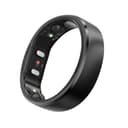
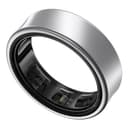
That is why RingConn leads this page. 10–12 days published, and crucially it ships with a charging case rather than a puck, which RingConn states carries over 150 days of top-ups. The practical difference is travel: a puck is one more cable in the bag and one more thing to forget, while a case that holds months of charge means the ring simply never runs out. Samsung publishes up to 7 days, which is still a week and comfortably past the threshold where charging becomes a weekly chore rather than a nightly decision.
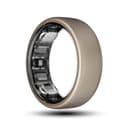
Amazfit publishes no battery figure at all for the Helio Ring on the listing we read, and we are not going to borrow one from a sibling product or a review. On a device whose headline spec is battery life, an unpublished figure is a genuine mark against it, and it is the reason the Helio ranks third here despite having the most interesting sensor.
2. Get the sizing right before you buy the ring
This is the step that generates most returns in the category, and it is entirely avoidable. A ring cannot be resized, loosened or padded. All three makers here use their own sizingrather than standard jewellery sizes, so a US 9 from one brand is not a US 9 from another, and your jeweller’s measurement does not transfer. Buy or request the maker’s sizing kit, wear the trial ring for a full day including overnight, and order from that.
Two things worth knowing. Fingers swell over the course of a day and in heat, so a ring that fits perfectly at 9 am can be tight at 9 pm — which is exactly why the kit is meant to be worn for 24 hours rather than tried on. And fit affects the data as well as the comfort: the optical sensors need consistent skin contact, so a loose ring that rotates produces worse readings, not just a looser fit.
3. Understand which signals are measured and which are inferred
All three rings report heart rate, heart-rate variability, blood oxygen, sleep stages and a stress or recovery figure. They do not all produce those the same way, and the distinction is where the Amazfit Helio earns its place.
Most rings and watches derive a stress score from heart-rate variability — a real physiological signal, but a single one, and one that is also moved by caffeine, alcohol, illness and the time you went to bed. The Helio adds an EDA sensor, which measures electrodermal activity: skin conductance changes driven by sweat-gland activity, which is a separate autonomic signal rather than another way of looking at the heartbeat. Two independent signals is a better basis for a stress estimate than one. Whether the resulting number tells you anything actionable is a different and more open question — consumer stress scores are not validated clinical measures, and should be read as trends rather than readings.
The RingConn’s sleep apnea feature deserves the same care. It reports an AHI-style figure, and an elevated one is worth taking to a doctor. It is not a diagnosis, a sleep study or a substitute for either. Clinical reviews of consumer sleep tracking are consistent on this point: these devices are reasonable at detecting time asleep and weak at distinguishing sleep stages, so treat a stage breakdown as indicative and a trend over weeks as the useful output.
4. Check the phone in your pocket
The Galaxy Ring is the one pick here with a real platform caveat: Samsung publishes that its full feature set favours a paired Samsung Galaxy phone. If you carry a Galaxy, that is an advantage — the ring folds into Samsung Health alongside a Galaxy Watch and costs nothing extra. If you carry an iPhone or a Pixel, it is a reason to choose one of the other two, both of which publish iOS and Android support. Our fitness trackers for iPhone page goes through the platform question in detail, including which companion apps demand which iOS version.
What an Oura membership actually buys
It is worth stating plainly rather than implying, because Oura is the ring most readers are comparing against. Oura’s hardware is excellent — the Ring 5 publishes 2.28 mm of thickness and 6.09 mm of width, the smallest ring Oura has made, with 6–9 days of battery and 100 m water resistance. The membership is what unlocks the analysis: Oura states that without an active membership the app shows only the three daily scores and basic settings.
So the honest framing is not “Oura charges you for your own data”. It is that Oura sells an ongoing analysis service with a ring attached, and the three rings on this page sell a ring with an app attached. If what you want is the best-developed sleep and readiness interpretation in consumer wearables, the membership is the product and it is not unreasonable. If what you want is a long-battery ring that logs your nights and lets you look at the trends yourself, you should not be paying monthly for it. Our smart ring roundup ranks the whole category including Oura, and Oura Ring vs Galaxy Ring is the head-to-head.
The subscription-free pattern across wearables
Rings are the sharpest version of a question that runs through the whole category, and it is worth knowing where each maker stands because their positions differ more than the marketing suggests. Garmin, launching a paid tier, committed that “all existing features and data in Garmin Connect will remain free”. Google moved Fitbit Premium to Google Health Premium and keeps deeper coaching behind the paid tier. Oura requires a membership for insights. Samsung Health is free.
The useful test before any wearable purchase is the one this page is built on: with no subscription, what does this device still show me? Ask it of a ring, a band or a watch. Our fitness trackers without a subscription and sleep trackers without a subscription pages apply it to the wrist and the bedside respectively.