Fitbit vs Garmin
Two evenly matched everyday bands, compared: which one suits you comes down to subscriptions, GPS and how much polish you want.
Fitbit and Garmin dominate the fitness-band world, but they aim at different buyers. To keep this concrete we compare two directly matched everyday bands: the Fitbit Charge 6 and the Garmin vivosmart 5. Both track 24/7 heart rate, sleep and workouts in a slim, comfortable package, and both cost about the same — so the decision is really about philosophy.
Fitbit optimizes for approachability: a bright color touchscreen, a genuinely easy app, and headline features like built-in GPS and an FDA-cleared ECG app that the vivosmart lacks. The price of that polish is Fitbit Premium, the subscription that unlocks Fitbit’s most detailed sleep and health analysis. Garmin takes the opposite stance: the vivosmart 5’s display is a basic monochrome OLED and it leans on your phone for GPS, but everything it measures — Body Battery, stress, Pulse Ox — is free forever in Garmin Connect. Below is the short answer, a side-by-side matrix, and who each band is really for.
How this is funded: we earn a commission if you buy through our links, at no extra cost to you. It never changes which product we recommend, and we’ll tell you when we’d skip one. Full disclosure.
| Feature | Fitbit | Garmin |
|---|---|---|
| Ease of use | Very easy — color touchscreen | Simple, plainer monochrome display |
| Subscription | Fitbit Premium for full insights | None — Garmin Connect is free |
| Battery life | Up to 7 days | Up to 7 days |
| Training depth | Basics, sleep score, ECG | Body Battery, stress, Pulse Ox |
| App / ecosystem | Fitbit + Google, very polished | Garmin Connect, data-rich |
| Best for | Beginners wanting GPS + ECG | Subscription-free data fans |
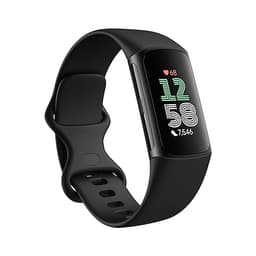
Fitbit
Fitbit Charge 6
Buy this if: You want the easiest band to use, with built-in GPS and an FDA-cleared ECG app, and you don't mind Fitbit Premium for the deepest insights.
Strengths
- Built-in GPS maps runs without your phone
- FDA-cleared ECG app plus SpO2 and 24/7 heart rate
- Bright color touchscreen and beginner-friendly app
- Google Maps and Google Wallet on the wrist
Trade-offs
- Deepest sleep and health analysis needs paid Fitbit Premium
- Smaller display than a full smartwatch
- About a week of battery per charge
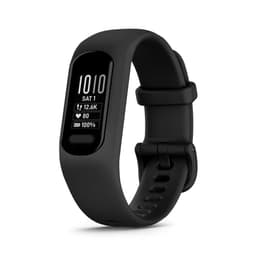
Garmin
Garmin vivosmart 5
Buy this if: You want Garmin's health metrics with no monthly fee and are happy with a plain display and phone-based GPS.
Strengths
- No subscription — full data free in Garmin Connect
- Body Battery, stress and Pulse Ox (SpO2) tracking
- Slim, light and comfortable for all-day and overnight wear
- Simple, reliable everyday tracking
Trade-offs
- Connected GPS only — needs your phone for mapped routes
- Basic monochrome OLED display
- No ECG app
Frequently asked questions
Is Fitbit or Garmin better for beginners?
Fitbit is generally easier for beginners, thanks to the Charge 6's color touchscreen and a simpler app. Garmin's vivosmart 5 is still approachable but shows more data on a plainer display. If you want the gentlest learning curve, Fitbit has the edge.
Does Garmin require a subscription like Fitbit Premium?
No. Garmin Connect is free, so the vivosmart 5's Body Battery, stress and Pulse Ox data cost nothing beyond the device. Fitbit puts its most detailed sleep and health analysis behind paid Fitbit Premium, though new devices include a trial. This is often the deciding factor.
Which has better battery life, Fitbit or Garmin?
The Fitbit Charge 6 and Garmin vivosmart 5 are similar, both rated at up to about seven days. Real-world life drops if you use built-in GPS on the Fitbit or run always-on features. Neither is a multi-week band; for that, look at budget models like the Samsung Galaxy Fit3.
Does the Fitbit Charge 6 have built-in GPS and ECG?
Yes. The Charge 6 has built-in GPS to map workouts without your phone and an FDA-cleared ECG app in the US, plus SpO2. The Garmin vivosmart 5 has neither built-in GPS nor ECG and uses your phone's GPS. Where present, ECG is a wellness screening feature, not a diagnosis.
Sources
- Cleveland Clinic — Fitness Trackers: Benefits and What To Look For — Cleveland Clinic on tracker accuracy and choosing by the metrics you care about (accessed July 19, 2026)
- Accuracy of Optical Heart Rate Sensing in Wearable Fitness Trackers (NIH/PMC) — Validation study of wrist optical HR accuracy across activities and ages (accessed July 19, 2026)
Keep reading
Best Fitness Trackers
See how the Charge 6 and vivosmart 5 stack up against the rest of the field.
See all trackersBest Fitness Smartwatches
Want a bigger screen, apps and calls? Step up from a band to a smartwatch.
Compare smartwatchesApple Watch vs Garmin
Considering a watch instead of a band? Here's the smart-first vs training-first split.
See the comparisonBest Health-Monitoring Wearables
If ECG and heart tracking are your priority, these devices go deeper.
Explore health wearablesGarmin Forerunner 165 vs Venu 3
Picked Garmin? The next call is running-first against lifestyle smartwatch.
Compare the Garmins