Amazfit vs Fitbit
Marathon battery and no subscription against a polished app, an ECG and deep Google integration. Which affordable wearable ecosystem fits how you actually track.
Amazfit and Fitbit both win buyers who don’t want to spend flagship money, but they pull in opposite directions. Amazfit — here the GTR 4 smartwatch — leans on enormous battery life, built-in dual-band GPS and no subscription, wrapped in the Zepp app. Fitbit — the Charge 6 band — leans on a polished app, an FDA-cleared ECG, and deep Google integration (Maps, Wallet, YouTube Music), with its best insights sitting behind Fitbit Premium.
So this is really a values question: raw hardware and freedom-from-fees, or software polish and a richer health-and-Google ecosystem. Both are affordable and track the everyday basics well. Both options below show a live price.
How this is funded: we earn a commission if you buy through our links, at no extra cost to you. It never changes which product we recommend, and we’ll tell you when we’d skip one. Full disclosure.
| Feature | Amazfit GTR 4 | Fitbit Charge 6 |
|---|---|---|
| Form factor | Full smartwatch | Slim band |
| Battery | Up to 14 days | Up to 7 days |
| GPS | Built-in dual-band | Built-in GPS |
| ECG | No | FDA-cleared ECG app (US) |
| Subscription | None | Premium for full insights |
| Ecosystem | Zepp; limited 3rd-party apps | Google Maps, Wallet, YouTube Music |
| Payments | No US contactless | Google Wallet |
| Best for | Battery + value, no fees | ECG + Google apps + polish |
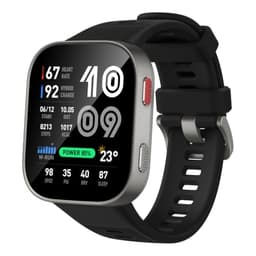
Amazfit GTR 4
Amazfit GTR 4
Buy this if: Budget buyers who want a large-screen smartwatch with marathon battery, built-in GPS and no monthly fee.
Strengths
- Up to 14-day battery with built-in dual-band GPS
- Large 1.43-inch AMOLED, no subscription, built-in Alexa
- SpO2 and 150+ sport modes
Trade-offs
- Zepp ecosystem has limited third-party apps
- No ECG and no contactless payments in the US
Price as of September 20, 2026. #ad How we’re funded
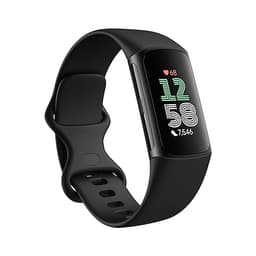
Fitbit Charge 6
Fitbit Charge 6
Buy this if: Trackers who want a polished app, an ECG and Google integration in a slim band.
Strengths
- FDA-cleared ECG plus SpO2, EDA stress and 24/7 heart rate
- Google Maps, Google Wallet and YouTube Music on the wrist
- Built-in GPS in a slim, light band
Trade-offs
- Full sleep and health analytics require Fitbit Premium
- Up to 7-day battery — well short of the Amazfit
Battery and hardware: Amazfit’s home turf
If you hate charging, the Amazfit wins outright. Up to two weeks of battery against the Fitbit’s week is a real day-to-day difference, and the GTR 4 pairs that with built-in dual-band GPS (which can track more accurately in cities) and a big 1.43-inch AMOLED screen — a lot of smartwatch for the money. The Charge 6’s battery is respectable for a slim band, but it’s in a different weight class from Amazfit’s endurance.
Software and ecosystem: Fitbit’s home turf
Here the Fitbit pulls ahead. The Fitbit app is more polished and its insights better presented than Amazfit’s Zepp app, and the Charge 6 plugs into Google’s ecosystem in a way Amazfit can’t match — turn-by-turn Google Maps, Google Wallet contactless payments, and YouTube Music controls on the wrist. Amazfit’s Zepp platform covers the basics competently but has limited third-party app support and no US contactless payments. If a refined app and Google features matter to you, that’s a genuine reason to choose Fitbit.
Health features and the subscription question
The Charge 6 carries an FDA-cleared ECG app, SpO2 and EDA stress sensing; the GTR 4 has SpO2 but no ECG. So if wrist ECG matters to you, Fitbit is the pick. The catch is Fitbit’s subscription: the band’s deepest sleep and health analytics live inside Fitbit Premium (Google’s paid tier), while the basics stay free and new devices include a trial. Amazfit charges nothing ongoing. So the honest framing is: Fitbit offers more health capability but nudges you toward a monthly fee for the full picture; Amazfit gives you everything it has for free, minus the ECG.
Which should you buy?
Choose Amazfit for battery, built-in GPS and no-fee freedom in a full smartwatch on a budget. Choose Fitbit for the ECG, the Google integration and the more polished app, accepting the Premium nudge. Both track steps, heart rate, workouts and sleep well enough for everyday motivation, so you won’t go wrong — it’s about which set of strengths you’ll actually use. For more no-fee options, see our trackers without a subscription, and for the cheapest good options overall, best budget fitness trackers.
Wellness guidance, not medical advice. Pulse & Plate is written by a fitness enthusiast, not a doctor. Wearable heart-rate, SpO2, ECG and sleep readings are for general wellness, not diagnosis. For a heart concern, a symptom, or before starting a new exercise program, talk to a qualified professional.
Frequently asked questions
Is Amazfit or Fitbit better?
It depends on what you value. Amazfit (like the GTR 4) offers far longer battery, built-in GPS and no subscription, but a less polished app and no ECG. Fitbit (like the Charge 6) has a refined app, an FDA-cleared ECG and deep Google integration, but shorter battery and a Premium subscription for full insights. Choose Amazfit for battery and value; Fitbit for software and health features.
Does Amazfit require a subscription?
No. Amazfit's Zepp app and its features are free with no ongoing fee, which is one of the brand's main appeals. Fitbit, by contrast, keeps the basics free but puts its deepest sleep and health analytics behind Fitbit Premium. If avoiding a monthly fee is a priority, Amazfit has the edge.
Does Amazfit have ECG like Fitbit?
The Amazfit GTR 4 does not have an ECG app; it offers SpO2 and heart-rate tracking. The Fitbit Charge 6 does include an FDA-cleared ECG app in the US. If wrist ECG is important to you, Fitbit is the better choice between these two.
Which has better battery life, Amazfit or Fitbit?
Amazfit, by a wide margin. The GTR 4 lasts up to about two weeks, while the Fitbit Charge 6 lasts up to a week. If you dislike frequent charging, Amazfit's endurance is a clear advantage, especially for a full smartwatch with built-in GPS.
Sources
- Cleveland Clinic — Fitness Trackers: Benefits and What To Look For — Cleveland Clinic on tracker accuracy and choosing by the metrics you care about (accessed July 19, 2026)
- Apple Newsroom — ECG app and irregular heart rhythm notification on Apple Watch — Manufacturer announcement of the first direct-to-consumer wrist ECG (accessed July 19, 2026)
- Google — Google Health Premium (formerly Fitbit Premium) — Fitbit Premium rebranded to Google Health Premium; deeper coaching sits behind the paid tier (accessed July 20, 2026)
- Accuracy of Optical Heart Rate Sensing in Wearable Fitness Trackers (NIH/PMC) — Validation study of wrist optical HR accuracy across activities and ages (accessed July 19, 2026)
Keep reading
Best Fitness Trackers
The full field compared on heart-rate accuracy, GPS, battery and subscriptions.
See the picksBest Budget Fitness Trackers
The most affordable trackers and bands, including both of these brands.
See the picksFitbit vs Garmin
Fitbit's other big rivalry — simple and friendly vs deep and battery-first.
Read the comparisonFitness Tracker vs Smartwatch
Band or full watch? Which form factor fits your life.
Read the guide