Option A: spend it all on one thing
Three purchases under $500 are big enough to change what you can train, and they suit three different people.
Adjustable dumbbellsare the highest-utility single buy, which is why the Bowflex 552 leads this page. A dial that spans 5 to 52.5 lb per hand in 2.5 lb steps at the low end covers every basic pattern and gives a beginner two years of progression in a cabinet-sized footprint. The honest trade is the long plastic housing, which is awkward for close-grip work, and the 52.5 lb ceiling a strong lifter will eventually outgrow. We rank the whole category in best adjustable dumbbells, and adjustable vs fixed dumbbells is the decision that comes first.
A power rackis the buy if you already own a barbell and plates, or intend to. The Titan T-2 is a real 2 × 2 in, 11-gauge cage with 2 in hole spacing, available at 71 or 83 in tall, and it means you can squat and bench alone without a spotter. Two cautions: Titan does not publish a weight capacity for the T-2, and a rack is the one item here that is effectively permanent — measure your ceiling, then read what size power rack do I need before you buy any of them.
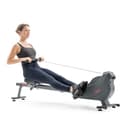
A rowing machineis the buy if what you are missing is conditioning rather than strength. The Sunny Dual Rail is the pick under this ceiling because it is the only sub-$500 rower that publishes everything — 16 magnetic levels, 300 lb capacity, 63.2 in assembled, a 40.9 in usable rail inseam, and a monitor that reads a 500 m split rather than just a calorie estimate. The full band is ranked in best rowing machines under $500. A rower is not the only cardio machine that fits under this ceiling, either — three ellipticals do, including one with a full 16 in stride, and best ellipticals under $500 ranks that band if low-impact matters more to you than muscle recruited per minute.
Option B: build the kit instead
This is the better answer for most people starting from nothing, and it is the one that gets used. Four items, each the best in its slot under the ceiling, and all four together come in well under $500 at the live prices on this page:
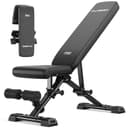
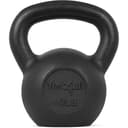
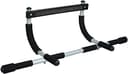
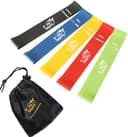
The FLYBIRD adjustable benchfor incline, flat and decline pressing — it folds flat, so it does not claim a corner permanently. The Yes4All cast iron kettlebellfor swings, cleans, goblet squats and carries; Yes4All publishes a ±3% weight tolerance, which is more than most budget bells will state, and the painted finish is the compromise. The Iron Gym doorway barfor pull-ups, with a published 300 lb capacity, three grip positions, no screws and a floor mode for push-ups and dips. And the Fit Simplify loop bands for warm-ups, glute work and the rehab you will eventually need.
That kit trains the whole body: a hinge and a carry from the bell, a vertical pull from the bar, a horizontal press from the bench, and mobility from the bands. What it cannot do is load a squat heavily or give you a barbell pattern — for that you need the rack, and the rack alone is most of the budget. Our home gym equipment list works through the order to buy things in, and how to build a home gym covers the space and flooring decisions that come before any of it.
What to buy first, if it is one item at a time
In this order, and the reasoning is utility per dollar rather than price:
1. Bands. Cheapest thing here, and the only item you will still be using in five years for something other than its original purpose. Warm-ups, glute activation, mobility, and the thing you take on a trip.
2. A pull-up bar.Under $40 for the hardest bodyweight pull pattern there is. The doorway design needs a frame 24–32 in wide and no screws, which makes it the single most renter-friendly thing on this page. If you have never done one, how to get your first pull-up is the progression, and best pull-up bars ranks the field including wall-mounted options.
3. One kettlebell.A single bell at the right weight is a complete conditioning tool. Pick the weight before the brand — what weight kettlebell should I buy is written for exactly this moment — and note that cast iron on tile is a bad combination.
4. A bench. This is where the money starts going. A bench on its own does nothing; a bench plus dumbbells is a gym. Buy it when you buy the weights, not before. Flat vs adjustable bench explains why the adjustable one is worth the premium at this price.
5. Then the big thing— dumbbells, a rack or a rower, depending on which of the three paragraphs above described you.
What $500 does not buy, and what to skip
It does not buy a treadmill: the cheapest in our registry is above this ceiling, and a walking pad is the honest sub-$500 answer if walking is the goal. It does not buy a barbell and plates on top of a rack— the rack is most of the budget, and the bar and plates are a second purchase of similar size. And it does not buy a cable machine or anything with a motor and a screen; see smart home gym equipment for what that tier actually costs.
Two things to actively skip at this budget. Skip a second kettlebell until the first one is light — the money is better spent widening what you can do than doubling what you already have. And skip any all-in-one tower that claims to replace a gym for a few hundred dollars; the pattern across this category is that machines combining six functions do none of them at a loadable weight. If you are specifically trying to spend as little as possible rather than exactly $500, our budget equipment guide picks the cheapest competent item in each category instead of the best one under a ceiling.
One honest limit on everything here: none of it needs a subscription, none of it has a screen, and none of it will tell you what to do. That is a feature at this price, but it means the programming is on you. If a small apartment rather than a small budget is the real constraint, best fitness equipment for small apartments ranks the same registry on footprint, and how much does a home gym cost sets this ceiling in context against the tiers above it.