What Weight Kettlebell Should I Buy?
Most people buy their first kettlebell too light, then wonder why swings feel like an arm exercise. How to pick the first bell, the second, and when an adjustable makes more sense.
How this is funded: we earn a commission if you buy through our links, at no extra cost to you. It never changes which product we recommend, and we’ll tell you when we’d skip one. Full disclosure.
Where to buy the weight you land on
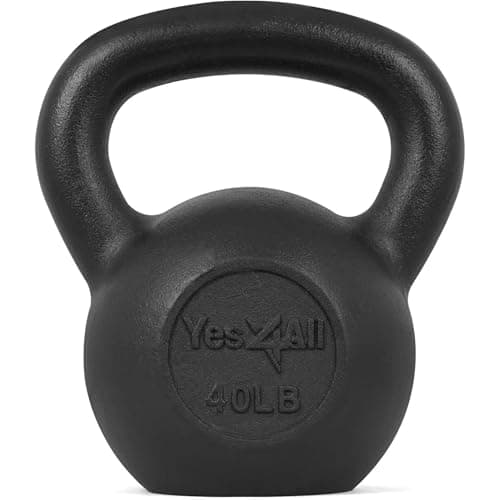
Best first bell
Yes4All Cast Iron Kettlebell
First-time kettlebell buyers picking up one or two fixed weights.
Full comparisonCheapest way to add a size
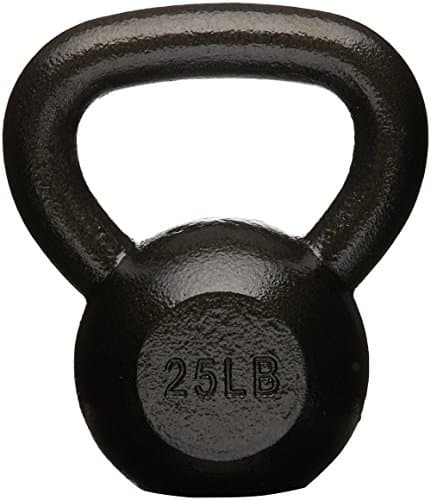
Amazon Basics Cast Iron Kettlebell
Beginners buying one or two bells for basic swings and goblet squats.
$35.99 · View on AmazonFull comparisonPrice as of October 13, 2026. #ad How we’re funded
If you want six weights in one
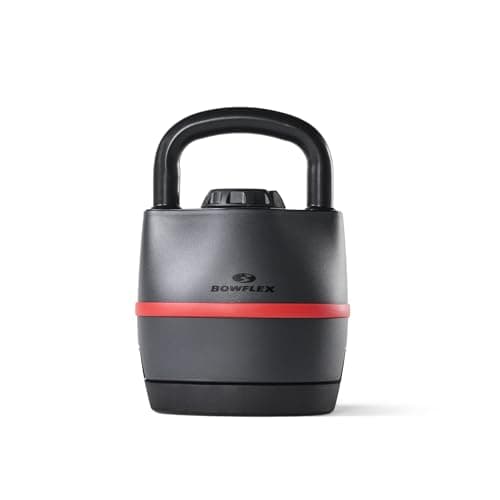
Bowflex SelectTech 840 Adjustable Kettlebell
Home users who want a range of kettlebell weights in a single footprint.
Full comparison
Kettlebell sizing goes wrong in a specific way: people buy the weight that feels comfortable to hold, then discover that a light bell cannot teach a swing. The swing is a hip-driven movement in which the bell floats up because your hips snapped, not because your arms lifted it — and if the bell is too light, your arms will happily do the job and you will learn the wrong pattern.
So the first bell is chosen against the swing, not against the curl. Here is the whole decision in one line: heavy enough that your hips have to drive it, light enough that you can press it overhead a few times.
The usual starting weights
Kettlebells are traditionally sold in kilogram jumps, which is why the pound figures look odd. The sizes people most often start on:
- 18–26 lb (8–12 kg)— the common first bell for women, for older beginners, and for anyone with no lifting background.
- 26–35 lb (12–16 kg)— the common first bell for men, and for women with a training history.
- 35–44 lb (16–20 kg)— a swing-focused first bell for people who already lift, and the standard second purchase.
Treat these as starting points rather than prescriptions. Training history predicts the right bell far better than height, age or gender do, and there is no prize for guessing correctly online when you can test in a shop.
The two-test method
Test one: the swing test
Hinge at the hips, hike the bell back between your legs, and snap your hips forward. If the bell floats to chest height with your arms relaxed, the weight is right. If you find yourself lifting it with your shoulders, it is too light — a heavier bell will actually teach you a better swing, which is the counterintuitive part of kettlebell sizing.
Test two: the press test
Clean the bell to the rack position and press it overhead. You want a few controlled reps per side. If you cannot press it at all, and you only own one bell, you have lost the entire pressing half of kettlebell training. If it presses easily for ten, it is probably too light to swing well.
Most people cannot satisfy both tests perfectly with one bell — that is normal. Err toward the swing, because swings, cleans and carries are the movements kettlebells do better than anything else, and dumbbells cover pressing perfectly well if you own them.
What to buy second
The instinct is to buy a heavier bell. The better move is usually a matched pair of the weight you already have. Two equal bells unlock double swings, double cleans, double front squats, double presses and farmer carries — a genuinely different training menu, and roughly double the load without any new technique. A heavier single bell only adds load to movements you can already do.
After that, the classic home progression is three bells: one light for pressing and get-ups, one medium for general work, one heavy for swings and deadlifts. That is three purchases spread over a year or two, not a starter kit — and it is the point at which an adjustable bell starts to look like a reasonable alternative on cost and floor space.
When an adjustable makes more sense
An adjustable kettlebell replaces several fixed bells in one footprint, which is a real win in a small room. The catches are honest ones: the body is larger than a fixed bell of the same weight, which changes how it sits in the rack position against your forearm; the jumps between settings can be uneven; and the price is closer to three or four cast iron bells than to one. Buy adjustable if space is your binding constraint and you know you will progress. Buy cast iron if you want one weight that will outlive you.
A note on handles and finish
Weight is not the only fit question. Handle width and finish decide whether high-rep work is pleasant: a painted finish can chip and roughen, a powder coat grips chalk better, and handle dimensions on cheap bells vary between weights in the same range, which is noticeable when you switch bells mid-session. Our kettlebell roundup covers those differences model by model.
How this fits your week
Whatever weight you land on, the target is unchanged: muscle-strengthening work covering all the major muscle groups on two or more days a week, per federal activity guidance. One correctly sized kettlebell can carry a large share of that in a square foot of floor — swings, goblet squats, rows, presses and carries between them cover every pattern except a true hinge under heavy load. If you want the full picture of what a first home gym should contain, start with how to build a home gym.
Frequently asked questions
What weight kettlebell should a beginner buy?
The common first bell is 26 to 35 lb (12 to 16 kg) for most men and 18 to 26 lb (8 to 12 kg) for most women. Those are starting points, not rules — someone with a lifting background usually starts higher, and someone rebuilding after injury lower. The test that matters is whether the swing is driven by your hips rather than lifted with your arms.
Is a 35 lb kettlebell too heavy to start with?
For swings, usually not — the swing is a hip movement and a bell that is too light teaches you to lift with the arms. For overhead pressing and get-ups, 35 lb is a lot for a beginner. If you own one bell, expect it to feel easy on swings and hard on presses, and scale reps accordingly.
Should I buy one kettlebell or a set?
One bell first, in a weight you can both swing and press. If you keep training, buy a matched pair of that same weight before you buy a heavier single — double cleans, front squats and carries add far more variety than a bigger bell does.
Why does a kettlebell feel heavier than a dumbbell of the same weight?
The mass hangs below and behind the handle instead of sitting level with it, so it has a longer lever against your wrist and shoulder. That is most obvious overhead and in the racked position — and it is the same offset that makes swings work at all.
Is an adjustable kettlebell a good first purchase?
It can be, if you want several weights in one footprint and expect to progress. The trade-offs are a larger body than a fixed bell of the same weight, uneven jumps between settings, and a much higher price. If you only ever want one weight, a single cast iron bell is cheaper and indestructible.
Sources
- CDC — Adult Activity: An Overview — CDC on muscle-strengthening 2+ days/week, 8–12 reps, all major muscle groups (accessed July 19, 2026)
- U.S. HHS / ODPHP — Physical Activity Guidelines for Americans (2nd ed.) — Federal guideline: 150–300 min/week moderate aerobic + muscle strengthening 2+ days (accessed July 19, 2026)
Keep reading
Best kettlebells
Cast iron, powder coat and adjustable bells compared on handle, finish and weight jumps.
See the kettlebell picksCast iron vs adjustable
One dial-adjustable bell against a set of fixed ones, on feel, cost and durability.
Compare the twoDumbbells vs kettlebells
Which tool to buy first, and what each one trains that the other does badly.
Read the comparisonWhat weight dumbbells should I buy?
The same question for the other half of a home gym - ranges, not single weights.
Size your dumbbellsBest Cast Iron Kettlebells
Once you know the weight, this is which cast bell to buy it in - finish, casting, handle and the size ladder behind it.
See the cast iron picks