Flat vs Adjustable Weight Bench
A rock-solid flat bench against a foldable one that inclines and declines. Stability, versatility, storage and price — which weight bench belongs in your gym.
The bench decision is stability versus versatility. A flat benchlike the Amazon Basics is a single fixed surface: rock-solid, cheap, and perfect for flat pressing and rows, but that’s all it does. An adjustable benchlike the FLYBIRD moves through incline, flat and decline and folds away, so one bench covers far more exercises — at the cost of some rigidity and a higher price.
Which is right comes down to how varied your training is and how much you value a dead-solid platform. If you only press flat and want maximum stability for the least money, the flat bench is hard to beat. If you want incline presses, seated work and the ability to fold it away, the adjustable earns its keep. Both options below show a live price.
How this is funded: we earn a commission if you buy through our links, at no extra cost to you. It never changes which product we recommend, and we’ll tell you when we’d skip one. Full disclosure.
| Feature | Flat bench | Adjustable bench |
|---|---|---|
| Adjustability | Fixed flat only | Incline / flat / decline |
| Angles | Flat | Multiple backrest positions |
| Exercises | Flat press, rows, step-ups | Incline/flat/decline press, seated work |
| Stability | Very high (no moving parts) | Good; some flex under heavy loads |
| Storage | Compact, doesn't fold | Folds flat |
| Weight capacity | Not published | 700 lb (advertised) |
| Price | Cheapest | A bit more |
| Best for | Flat pressing, max stability | Versatility, incline work, storage |
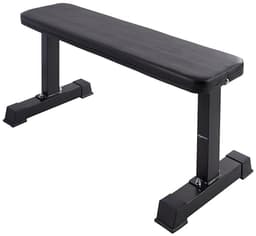
Flat bench
Amazon Basics Flat Weight Bench
Buy this if: Lifters who only need a sturdy flat surface for dumbbell and barbell pressing and rows.
Strengths
- Simple, very stable flat platform with no moving parts
- Cushioned pad on a steel frame
- Inexpensive and compact
Trade-offs
- No incline or decline adjustment at all
- Short pad length can limit taller lifters
- One job only — no seated or incline work
Price as of September 20, 2026. #ad How we’re funded
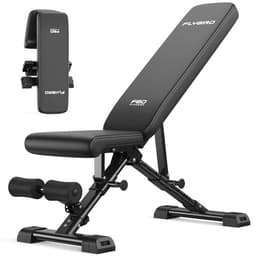
Adjustable bench
FLYBIRD Adjustable Weight Bench
Buy this if: Dumbbell users who want incline/flat/decline versatility and a bench that folds away.
Strengths
- Adjusts through incline, flat and decline positions
- Folds flat for storage in a small space
- Commonly rated to a 700 lb load
Trade-offs
- Some wobble becomes noticeable with heavy pressing
- Pad is narrow and firm for bigger lifters
- Costs more than a plain flat bench
Price as of September 20, 2026. #ad How we’re funded
Stability: the flat bench’s trump card
A flat bench has nothing that moves, so it’s inherently the most stable option — no hinge, no pin, no backrest that can shift under a heavy press. For pure flat barbell or dumbbell pressing, that dead-solid feel inspires confidence, especially as the weight climbs. An adjustable bench introduces a hinge and adjustment mechanism, and even a good one like the FLYBIRD has a touch more flex than a fixed bench when you’re pressing genuinely heavy. For most home loads it’s a non-issue; for very heavy flat pressing, some lifters still prefer a dedicated flat bench.
Versatility: where the adjustable pulls ahead
The flat bench does one angle. The adjustable does many, and that opens up a lot of training: incline presses for the upper chest and shoulders, an upright back support for seated overhead pressing and curls, and a decline for the lower chest and some core work. If you train with dumbbells at home, that range is genuinely valuable — it’s the difference between a bench-press station and a bench that supports a full upper-body program. For most people building a versatile home gym, that versatility is worth more than the last few percent of rigidity.
Storage, capacity and price
The adjustable bench folds flat, which is a real advantage if it lives in a shared room and needs to disappear between sessions; the flat bench is compact but doesn’t fold. On capacity, the FLYBIRD advertises a 700 lb rating, which is plenty for home pressing, while budget flat benches often don’t publish a figure — check the listing if you’re a heavier lifter loading heavy. Price-wise the flat bench is the cheaper buy, but the gap is modest, and the adjustable gives you more exercises per dollar.
Which should you buy?
If your training is simple and pressing-focused, or you specifically want the steadiest possible platform for heavy flat work, the flat bench is the honest, economical pick. For almost everyone else — especially dumbbell users who want incline and seated work and value the fold-away storage — the adjustable bench is the more useful tool. A bench pairs naturally with a rack and dumbbells; see our best weight benches and best power racks roundups, and FLYBIRD vs Fitness Realityif you’ve settled on adjustable.
Frequently asked questions
Is a flat or adjustable weight bench better?
It depends on your training. A flat bench is more stable and cheaper, and it is ideal if you mainly flat-press and row. An adjustable bench does incline, flat and decline, supports seated work, and folds away — far more versatile at the cost of a little rigidity and a bit more money. For most home gyms, the adjustable bench's versatility wins; for heavy flat pressing on a budget, the flat bench is hard to beat.
Do adjustable benches wobble?
A good adjustable bench is stable for normal home loads, but its hinge and adjustment mechanism give it slightly more flex than a fixed flat bench, which can be noticeable when pressing very heavy. If maximum rigidity for heavy flat pressing is your priority, a dedicated flat bench is the steadier platform.
What exercises need an adjustable bench?
Incline pressing for the upper chest and shoulders, seated overhead pressing and curls (using the upright backrest), and decline pressing all benefit from an adjustable bench. A flat bench only supports flat presses, rows and step-ups. If you train the upper body with dumbbells, the extra angles of an adjustable bench meaningfully expand your program.
Is a flat bench worth it if it's cheaper?
For a pressing-focused lifter, absolutely — a flat bench is stable, durable and inexpensive, and it does its one job very well. It only falls short if you want incline, decline or seated work, or need to fold it away. If your program is simple and you value stability and low cost, a flat bench is a smart buy.
Sources
- CDC — Adult Activity: An Overview — CDC on muscle-strengthening 2+ days/week, 8–12 reps, all major muscle groups (accessed July 19, 2026)
- American Heart Association — Recommendations for Physical Activity in Adults — AHA's 150 min/week moderate aerobic + 2 days strength recommendation (accessed July 19, 2026)
- U.S. HHS / ODPHP — Physical Activity Guidelines for Americans (2nd ed.) — Federal guideline: 150–300 min/week moderate aerobic + muscle strengthening 2+ days (accessed July 19, 2026)
Keep reading
Best Weight Benches
Flat, adjustable and folding benches compared on capacity, angles and wobble.
See the picksFLYBIRD vs Fitness Reality Bench
If you've chosen adjustable, which budget bench to buy.
Compare benchesBest Power Racks
A bench pairs with a rack — the backbone of a barbell home gym.
See the picksStrength Training
How a bench fits alongside dumbbells, racks and the rest of your strength gear.
Explore strength