How to Get Your First Pull-Up
You do not get a pull-up by trying pull-ups. Four movements, in order, with the two pieces of equipment that make the progression measurable - and the published capacity figures that decide which bar you can hang a band from.
How this is funded: we earn a commission if you buy through our links, at no extra cost to you. It never changes which product we recommend, and we’ll tell you when we’d skip one. Full disclosure.
The two pieces of equipment this progression needs
Best bands for the progression
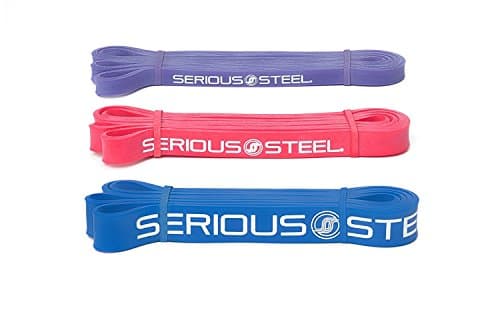
Serious Steel Fitness 41 in Resistance Band Set (#1, #2, #3)
People who want to train full-body with bands as the main resistance and want the numbers stated.
$52.90 · View on AmazonFull comparisonPrice as of October 13, 2026. #ad How we’re funded
Best bar to hang a band from
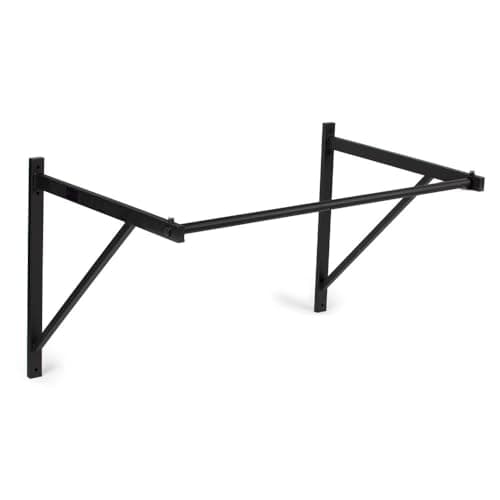
Titan Fitness Ceiling & Wall-Mount Pull-Up Bar (53.5 in)
Garage gyms with studs to bolt into, weighted pull-ups, and anyone hanging rings or a suspension trainer.
$89.99 · View on AmazonFull comparisonPrice as of October 13, 2026. #ad How we’re funded
Best no-drill bar
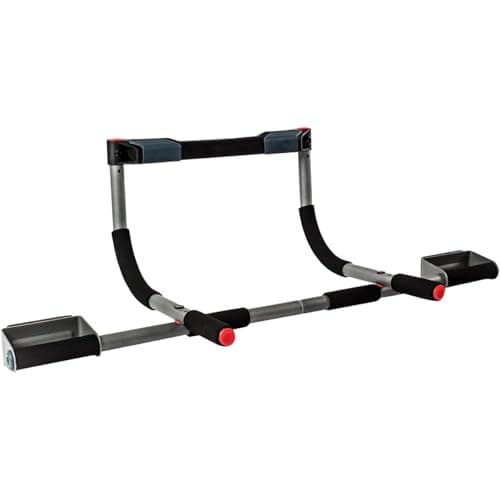
Perfect Fitness Multi-Gym Pro Doorway Pull-Up Bar
Buyers who will use the bar daily and want padded grips and a door frame that survives it.
$59.99 · View on AmazonFull comparisonPrice as of October 13, 2026. #ad How we’re funded
Most people trying to get a pull-up spend months doing the one thing that cannot work: walking up to a bar, attempting a pull-up, failing, and going home. A movement you cannot do once is a movement you cannot practise, and you cannot get stronger at something you never perform.
The fix is to break the pull-up into pieces you canperform, do those two or three times a week, and make each piece measurably harder until the whole thing falls out. That takes two bits of equipment — a bar and a band — and about twenty minutes a session. The rest of this page is the progression, what to use, and how to know when to move on.
Stage 1: Build the hang
This is the stage almost everyone skips and the one that unblocks the most people. Hang from the bar, arms straight, shoulders relaxed, feet off the floor. Hold until your grip starts to go, then drop, rest and repeat. Accumulate two to three minutes of total hang time per session across as many sets as that takes.
Two things are happening. The obvious one is grip: if your hands fail at fifteen seconds, every other exercise on this page is capped at fifteen seconds, so grip is the binding constraint before strength is. The less obvious one is that a dead hang loads the shoulders and lats in exactlythe position a pull-up starts from — shoulder blades fully elevated, arms completely straight, which is the hardest inch of the whole movement and the one a lat pulldown machine never trains.
Move on when you can hold one unbroken 30-second hang. Keep hanging after that anyway: it stays useful, it is pleasant, and it is the easiest thing in this progression to do every day.
A note on the bar. If you are using a doorway bar, check that it sits square before you load it, every time — a leverage bar holds position because your weight presses its upper arm into the wall, and a bar that is not square is a bar whose geometry you are relying on and have not checked. Our pull-up bars for apartments page covers which no-drill designs load the frame how.
Stage 2: Scapular pulls
From a dead hang with straight arms, pull your shoulder blades down and backso your whole body rises an inch or two — without bending your elbows at all. Hold for a second. Lower under control. Three sets of eight to ten.
It looks like almost nothing and it is the highest-leverage movement here. The reason: a pull-up does not start with the arms. It starts with the shoulder blades setting down and back, which puts the lats in a position to pull. People who can do lat pulldowns but not pull-ups are usually missing precisely this — they hang with elevated, disconnected shoulders, then try to bend their arms, and nothing happens because the big muscle is not engaged yet.
Do these before the assisted reps in the same session, while you are fresh. They are low-load enough that they do not need recovery days of their own.
Stage 3: Band-assisted pull-ups
Now you practise the actual movement. Loop a 41 in long loop bandover the bar, step one foot (or both, for more assistance) into the bottom, and do full pull-ups — dead hang to chin over the bar, lowered under control. Three to four sets, two or three times a week.
The band choice is the part worth getting right, and it is where published specifications earn their money. Pick the band that gets you about eight clean reps— not the one that makes the movement easy, and not the one that lets you grind out three. Eight reps with full range is enough volume to drive adaptation and enough to practise the pattern.
Then you step down. This only works if you know what the bands actually do, which most sets will not tell you. Serious Steel publishes a range per band — 5–35 lb, 10–50 lb and 25–80 lbfor the #1, #2 and #3, with matching widths of 1/2 in, 13/16 in and 1-1/8 in. Gymreapers publishes 20–150 lb across its five-band set, which gives you the ceiling but not the band in your hand. Most sets publish nothing and sell levels as colours, which turns a deliberate step-down into guesswork. Our loop resistance bands page sorts out which is which.
One honest thing about band assistance that nobody mentions: a band helps you most at the bottom of the pull-up and least at the top, because band tension falls as the band shortens. That is the opposite of where a pull-up is hardest for most beginners — the bottom — so the band is well matched to the problem. It also means the last few inches to the bar stay genuinely hard, which is why a band-assisted rep does not feel like cheating at the top.
Stage 4: Negatives, and the step off the band
When eight reps on your narrowest band feels controlled, you have run out of assistance to remove. Switch to negatives: get to the top position by jumping or stepping from a box, then lower yourself as slowly as you can — aim for five seconds — fighting the whole way down. Three sets of three to five.
Negatives work because you are stronger lowering than lifting, so this is the one way to load the full movement at your actual bodyweight before you can lift it. They have two costs: you get very few reps, and they produce real soreness. So keep them as the smallest part of your week, and do not use them as your main method — they train the lowering and not the pull.
Test properly. Attempt one unassisted rep at the start of a session when you are fresh, roughly every two weeks. Testing at the end of a workout is the most common way people conclude they have made no progress when they have.
What this progression needs, in equipment terms
A bar you trust. Every doorway bar we cover publishes a 300 lb capacity, and the figure covers you plus everything else on the bar. That matters more than usual here, because stepping into a band adds load on top of your bodyweight and the moment you drop your weight into the band is a dynamic load rather than a static hang. If you are comfortably inside 300 lb, a good doorway bar is fine. If you are near it, or you intend to add weight later, the bolted answer publishes 500 lb on 11 gauge steelwith a 34 in bracket depth — and that clearance figure is the other thing a doorway cannot give you, because there is nothing behind a doorway bar but a doorway.
A band set with published numbers.See stage three. If you buy one band rather than a set, buy the one that gets you eight reps now — you will outgrow it, but a single correctly-sized band beats a five-band set where four sit in a drawer.
Nothing else. You do not need a weight vest, a dip belt, an assist machine or straps. Our bar roundupcovers the hardware choice in full, and once you have your first rep the useful next purchase is nothing at all — it is more reps.
Three mistakes that stall people
Half reps.Starting with bent arms or stopping with your chin below the bar feels like progress and trains the easy middle of the movement. A rep is dead hang to chin over bar. If you cannot do that with your current band, use a wider one — full range on more assistance beats partial range on less.
Max effort every session. Pull-up progression is driven substantially by coordination early on, which responds to frequency rather than intensity. Two or three sessions a week with a day between them is the shape, matching the CDC and federal guidance of muscle-strengthening work on two or more days a week. Grinding a failed attempt daily is not training.
Stopping at one.A first pull-up is a rep, not a capability — it will disappear if you stop. Keep the band for volume work: three sets of five assisted reps alongside your one unassisted rep, and within a couple of months the unassisted number is three. That is also the point at which the rest of the upper-body picture matters, and our home gym accessoriesguide covers the cheap additions — chalk, straps — that start being useful when the reps go up.
Frequently asked questions
How long does it take to get your first pull-up?
There is no honest universal number, and anyone quoting one is guessing about your starting strength, bodyweight and training history. What is reliable is the shape of the progression and the fact that it needs two or three sessions a week for months rather than weeks. The federal guideline asks for muscle-strengthening activity on two or more days a week, which is also the minimum useful frequency here. Track the measurable things - unbroken hang time, reps on a given band width - rather than weeks on a calendar.
What band should I use for assisted pull-ups?
The one that gets you to about eight clean reps with full range of motion, not the one that makes the movement easy. Published resistance ranges make this a decision rather than a guess: Serious Steel publishes 5-35 lb, 10-50 lb and 25-80 lb for its #1, #2 and #3 bands, with widths of 1/2 in, 13/16 in and 1-1/8 in. Most sets sell levels as colours with no figures at all, which means you cannot plan a step-down. A set that publishes its numbers is worth paying for here specifically.
Do dead hangs help you get a pull-up?
Yes, and they are the stage people skip. Grip is often the first thing to fail, and if your hands give out at 15 seconds you cannot practise anything that takes longer than 15 seconds. A dead hang also loads the shoulders and lats in the exact bottom position the pull starts from, which is where most failed attempts fail. Build to one unbroken 30-second hang before you spend time on assisted reps.
Are negatives or band-assisted pull-ups better?
They do different jobs and the order matters. Band-assisted reps let you practise the full movement pattern with real range of motion, many times, which is how you learn the coordination. Negatives load the muscle harder but give you very few reps and leave you sore, and they do not teach the pull at all - only the lowering. Use bands to learn the movement and build volume, then add negatives when you have run out of bands to step down to.
Can I get a pull-up on a doorway bar?
Yes for the bodyweight work, with one real caveat about bands. Every doorway bar we cover publishes a 300 lb capacity, and that figure covers you plus anything else loading the bar. Stepping into a band adds a dynamic load on top of your bodyweight, and the sudden tension when you drop into the band is worse than a static hang. If you are well inside 300 lb, a quality doorway bar with a frame guard is fine. If you are close to it, the bolted option publishes 500 lb and 34 in of clearance.
Why can't I do a pull-up even though I can do lat pulldowns?
Three reasons, usually together. A pulldown machine stabilises your torso with a seat and a thigh pad, so it asks nothing of the trunk; a pull-up has to be stabilised by you. A pulldown rarely loads your full bodyweight, so the absolute strength requirement is lower than it feels. And a pulldown never trains the hardest part of a pull-up - the first inch out of a dead hang with the shoulder blades fully elevated. Scapular pulls are the specific fix for the third one.
How often should I train pull-ups?
Two or three sessions a week, with a day between them, which matches the CDC and federal guidance to do muscle-strengthening work on two or more days a week. Pull-up progression responds well to frequency because much of the early gain is coordination rather than muscle. What does not work is max effort every day: the dead hangs and scapular pulls are low enough load to repeat often, while negatives are the opposite and should be the smallest part of your week.
Should I lose weight to get a pull-up?
A pull-up is a bodyweight lift, so the ratio of strength to bodyweight is what decides it, and either side of the ratio can move. That said, training the movement is the thing you control directly and the thing that produces the pull-up; chasing a weight target instead often produces neither. Train the progression two or three times a week and keep the rest of your activity up - the federal guideline of 150 to 300 minutes of moderate aerobic activity a week does more for body composition than anything you do on a bar.
Sources
- CDC — Adult Activity: An Overview — CDC on muscle-strengthening 2+ days/week, 8–12 reps, all major muscle groups (accessed July 19, 2026)
- U.S. HHS / ODPHP — Physical Activity Guidelines for Americans (2nd ed.) — Federal guideline: 150–300 min/week moderate aerobic + muscle strengthening 2+ days (accessed July 19, 2026)
- American Heart Association — Recommendations for Physical Activity in Adults — AHA's 150 min/week moderate aerobic + 2 days strength recommendation (accessed July 19, 2026)
- Titan Fitness - Ceiling & Wall-Mount Pull-Up Bar (published specifications) — 500 lb capacity, 53.5 in bar at 32 mm diameter, 11-gauge powder-coated steel, adjustable to 16, 32 or 52 in stud spacing, 34 in bracket depth, 25 lb, 1-year warranty (accessed September 4, 2026)
Keep reading
Best Pull-Up Bars
Doorway, wall-mounted and ceiling bars ranked on published capacity, grips and clearance.
See all the picksBest Pull-Up Bars for Apartments
The no-drill options, ranked on how they load the door frame rather than on grip comfort.
See the picksBest Loop Resistance Bands
Which 41 in sets publish a resistance range per band - the thing that makes a step-down plan possible.
See the band picksWill a Pull-Up Bar Damage a Door Frame?
Read before you hang a band from a doorway bar - the load is not the same as a static hang.
Read the guideResistance Bands vs Dumbbells
Why a band assists most at the bottom of a pull-up and least at the top, and what that means.
Read the comparison