Garmin Forerunner 165 vs Venu 3
One watch is a focused runner, the other an all-day lifestyle smartwatch. The honest trade-offs on running, health tracking, battery and price.
Both of these are Garmin watches with bright AMOLED screens, built-in GPS and no mandatory subscription, so the choice isn’t really Garmin versus Garmin — it’s what you want the watch to be. The Forerunner 165 is a focused running watch: lighter on the wrist, tuned around pace, training plans and race guidance, and priced in Garmin’s mid tier. The Venu 3 is a lifestyle smartwatch that happens to track fitness well, with a larger display, a wider sensor set that adds an ECG app, and a premium price to match.
Pick the Forerunner 165 if running is the point and you want the most watch per dollar for that job. Pick the Venu 3 if you want an everyday health-and-lifestyle watch — one you’ll wear to sleep for recovery data, take calls from your wrist, and lean on for a broader picture of your health — and you don’t mind paying more for it. Both show a live price below so you can see the gap for yourself.
How this is funded: we earn a commission if you buy through our links, at no extra cost to you. It never changes which product we recommend, and we’ll tell you when we’d skip one. Full disclosure.
| Feature | Forerunner 165 | Venu 3 |
|---|---|---|
| Best for | Running and race training | All-day health and lifestyle |
| Display | AMOLED touchscreen | Larger AMOLED touchscreen |
| Battery (smartwatch) | Up to 11 days | Up to 14 days |
| GPS | Built-in, all-systems GNSS | Built-in, all-systems GNSS |
| Heart rate & ECG | Wrist HR + Pulse Ox, no ECG | Elevate v5 HR + FDA-cleared ECG |
| Blood oxygen | Pulse Ox (SpO2) | Pulse Ox (SpO2) |
| Subscription | None - Garmin Connect free | None - Garmin Connect free |
| Price band | Mid | Premium |
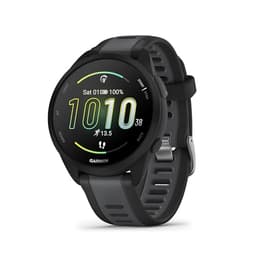
Forerunner 165
Garmin Forerunner 165
Buy this if: Runners and new runners who want accurate built-in GPS, pace and training guidance on a light watch without paying for lifestyle extras.
Strengths
- Lighter, running-first design that's easy to wear on long runs
- Vivid AMOLED touchscreen at Garmin's mid-tier price
- Strong running metrics and training plans with no subscription
- Up to 11-day smartwatch battery, up to 19 hours with GPS
Trade-offs
- No ECG app or the Venu's wider health sensor set
- Base model has no onboard music storage; that needs the 165 Music edition
- No on-wrist speaker for calls or a voice assistant
- Lacks the advanced multisport tools of pricier Forerunners
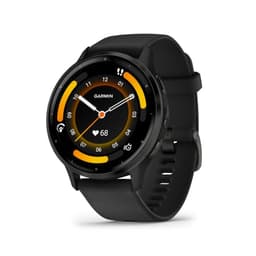
Venu 3
Garmin Venu 3
Buy this if: People who want a do-everything lifestyle smartwatch with a big screen, on-wrist calls and deep health, sleep and recovery tracking.
Strengths
- Larger, brighter AMOLED with a full smartwatch feel
- On-wrist speaker and mic for calls and a voice assistant
- FDA-cleared ECG app plus detailed sleep and recovery data
- Up to 14-day smartwatch battery, longer than the 165
Trade-offs
- Premium price for a lifestyle smartwatch
- No onboard offline maps like pricier Garmin models
- Heavier and bulkier than a running-focused watch
- More watch than a dedicated runner needs
Which one fits how you’ll use it
The honest split is running versus everything else. If your week revolves around runs and the occasional race, the Forerunner 165 is built for that: it’s lighter, its menus put pace and training front and center, and you’re not paying for features you won’t open. If you want one watch for workouts, notifications, calls and sleep, the Venu 3 leans into that lifestyle role with a bigger screen and a broader sensor set. For a wider field of both styles, see our best fitness smartwatches and best fitness trackers.
Heart rate, ECG and health tracking
Both use wrist-based optical heart rate, which is convenient but not lab-grade — independent testing shows accuracy can slip during high-intensity intervals and with some skin tones and wrist positions, so treat the numbers as guidance rather than gospel. The Venu 3 adds an FDA-cleared ECG app and a deeper stack of health, sleep and recovery metrics; the Forerunner 165 keeps to wrist HR and Pulse Ox. If heart and sleep data is the reason you’re buying, that gap matters — and it’s worth choosing a watch by the metrics you’ll actually use rather than the longest feature list.
Subscriptions and cost
Neither watch hides core data behind a paywall. Garmin’s base Connect app stays free, and the newer Garmin Connect+ tier is optional — you can use either watch fully without it. The real cost difference is the hardware: the Venu 3 sits in Garmin’s premium band while the 165 is mid-tier. If you’re weighing Garmin against another ecosystem, our Apple Watch vs Garmin comparison covers that trade-off.
Wellness guidance, not medical advice. Pulse & Plate is written by a fitness enthusiast, not a doctor. Wearable heart-rate, SpO2, ECG and sleep readings are for general wellness, not diagnosis. For a heart concern, a symptom, or before starting a new exercise program, talk to a qualified professional.
Frequently asked questions
Is the Garmin Forerunner 165 or Venu 3 better for running?
For running, the Forerunner 165 is the better fit. It's a running-first watch with built-in GPS, pace and cadence metrics, structured training plans and race guidance, all on a lighter body. The Venu 3 tracks runs well and shares Garmin's GPS, but it's built as an all-day lifestyle smartwatch rather than a dedicated running tool, and it costs more.
Does the Venu 3 have an ECG and the Forerunner 165 doesn't?
Yes. The Venu 3 includes an FDA-cleared ECG app in the US along with Pulse Ox and detailed sleep and recovery tracking. The Forerunner 165 uses wrist optical heart rate and Pulse Ox but does not have an ECG app. If on-wrist heart-rhythm checks matter to you, that is a clear point for the Venu 3. It is not a substitute for medical care, so discuss any heart concerns with a clinician.
Which Garmin has better battery life, the Forerunner 165 or Venu 3?
The Venu 3 rates slightly longer, at up to 14 days in smartwatch mode versus up to 11 days for the Forerunner 165, which also lists up to 19 hours in GPS mode. Real battery life depends on GPS use, the always-on display, and how many sensors and notifications you run. Both go multiple days between charges, which is one of Garmin's advantages over one-day smartwatches.
Do I need a subscription to use either watch?
No. Garmin's base Connect app is free on both watches, and the paid Garmin Connect+ tier is optional. Existing Connect features and your data stay free, so you can use the Forerunner 165 or Venu 3 fully without a monthly fee. The main cost difference between them is the hardware price, not a subscription.
Sources
- Cleveland Clinic — Fitness Trackers: Benefits and What To Look For — Cleveland Clinic on tracker accuracy and choosing by the metrics you care about (accessed July 19, 2026)
- Accuracy of Optical Heart Rate Sensing in Wearable Fitness Trackers (NIH/PMC) — Validation study of wrist optical HR accuracy across activities and ages (accessed July 19, 2026)
- Garmin — Garmin Connect+ announcement — Optional paid tier; “all existing features and data in Garmin Connect will remain free” (accessed July 20, 2026)
Keep reading
Best Fitness Smartwatches
Leaning lifestyle? See how the Venu 3 stacks up against other full-featured smartwatches.
See the picksBest Fitness Trackers
Want something simpler and cheaper than either watch? Compare lighter trackers here.
Compare trackersApple Watch vs Garmin
Weighing Garmin against the other big ecosystem? The trade-offs on battery, health and apps.
Read the comparisonFitness Wearables
How watches, rings and trackers fit together, and which metrics are actually worth chasing.
Explore wearables