Chest Strap vs Wrist Heart Rate
One reads the electrical signal that fires your heart; the other infers a pulse from light through your skin. When that difference matters, and when your watch is genuinely enough.
This is the most common question people ask once they start caring about heart rate: do I need a strap, or is the watch I already own fine? The answer depends less on brand than on what you are doing when you look at the number.
The two sensors work in different ways. A chest strap places electrodes against your skin and detects the electrical activity that triggers each beat. A watch shines light into your wrist and infers the pulse from how the reflection changes as blood volume rises and falls. The first is measuring the heartbeat; the second is measuring a downstream consequence of it.
How this is funded: we earn a commission if you buy through our links, at no extra cost to you. It never changes which product we recommend, and we’ll tell you when we’d skip one. Full disclosure.
| Feature | Chest strap | Wrist sensor |
|---|---|---|
| What it measures | Electrical signal of the heartbeat | Light reflected by blood flow |
| Steady-state effort | Excellent | Very good |
| Intervals / sprints | Excellent | Weakest case - lag and drift |
| Lifting | Excellent | Poor - wrist flexion and grip interfere |
| Cold weather | Unaffected | Degrades with reduced blood flow |
| 24/7 and sleep data | No - worn per session | Yes - its main advantage |
| Convenience | Extra kit, needs wetting | Already on your wrist |
| Cost | Adds to what you own | Included in the watch |
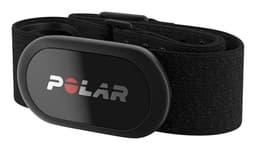
Chest strap
Polar H10 Heart Rate Sensor
Buy this if: you train by heart rate, do intervals, lift, or ride indoors with an app that reads live data.
Strengths
- Electrode sensing detects the heartbeat itself rather than inferring it
- Responds fast when effort changes - no smoothing lag on intervals
- Broadcasts to a watch, a phone and a machine at once (2 x Bluetooth, ANT+, 5 kHz)
- Records to internal memory when nothing is listening
Trade-offs
- You have to remember to wear it, and wet the electrodes first
- Straps are consumables - a worn strap is the usual cause of dropouts
- No steps, sleep or notifications - it does one job
Price as of October 13, 2026. #ad How we’re funded
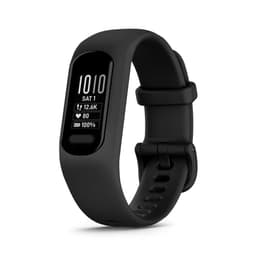
Wrist sensor
Garmin vivosmart 5
Buy this if: you want continuous all-day and overnight data with nothing extra to put on.
Strengths
- Always on - 24/7 heart rate, resting trends and sleep with no extra kit
- Fine at steady effort: walks, easy runs, long rides
- Doubles as tracker, watch and notification device
- Nothing to wet, tighten or replace before a session
Trade-offs
- Optical readings drift during hard intervals and grip-heavy lifting
- Cold hands, a loose band and wrist tendon movement all degrade the signal
- Smoothing algorithms lag sharp changes in effort by seconds
Where wrist sensors actually struggle
It is worth being specific, because “wrist heart rate is inaccurate” is too blunt to be useful. Optical sensing degrades in four recognizable situations:
- Rapid changes in effort. Algorithms smooth the signal to reject noise, and smoothing costs responsiveness. In a 30-second sprint, the peak can arrive after the effort ended.
- Grip-heavy work. Rowing, pull-ups, kettlebell swings and heavy carries move the tendons directly under the sensor and pull the watch away from the skin.
- Cold. Peripheral blood flow drops, and with it the signal the sensor depends on. Winter running is a classic false-low.
- Fit.A loose band, a watch worn on the wrist bone, or a sensor over a tattoo all cost signal quality. Wearing the watch a finger’s width higher up the arm and one notch tighter fixes a surprising share of complaints.
Published work on optical wrist sensing reports the same pattern: strong agreement with a reference during steady activity, and wider disagreement as intensity varies. That is a limitation of the method, not of any one brand.
The failure that fools people: cadence lock
Occasionally a wrist sensor latches onto your arm-swing or pedal cadence rather than your pulse and reports a beautifully stable number that is completely wrong — often suspiciously close to your steps per minute. It looks more convincing than noisy data, which is exactly why it is dangerous for anyone training by zones. A chest strap does not have this failure mode, because it is not inferring anything from rhythm.
What a strap does not give you
A strap is a session tool. It does not count steps, track sleep, estimate recovery or buzz when someone calls. All-day resting heart rate, overnight trends and long-run variability come from the wrist — or a smart ring, which is arguably the better form factor for exactly that job. Most people who train seriously end up with both: the watch or ring lives on you, and the strap goes on when the workout demands it.
The middle option: an arm band
An optical armband is worn on the upper arm, where there is more muscle, less tendon movement and better blood flow. It is still optical, so it still lags a strap on sharp transitions, but it removes most of the wrist’s problems without a band across your ribs. For lifters, and for anyone who has tried a chest strap and hated it, it is the pragmatic answer — see the arm band pick in our heart rate monitor roundup.
Getting the best from whichever you use
For a strap: wet the electrodes, tighten it more than feels natural, position it just below the chest muscles, and replace the strap itself every year or two. For a watch: wear it a finger’s width above the wrist bone, snug enough that it does not slide, and give it a few seconds to settle before judging a reading at the start of a set.
And keep the purpose in view. Heart rate is a training input, not a health verdict. The American Heart Association publishes target zones by age that are a reasonable frame for effort, and Mayo Clinic’s guidance on measuring intensity is a useful sanity check when your device and your lungs disagree. Neither device is a diagnostic tool: persistent symptoms belong with a doctor, not with a data export. Our wider tracker accuracy guide applies the same lens to steps, sleep and calories.
Wellness guidance, not medical advice. Pulse & Plate is written by a fitness enthusiast, not a doctor. Wearable heart-rate, SpO2, ECG and sleep readings are for general wellness, not diagnosis. For a heart concern, a symptom, or before starting a new exercise program, talk to a qualified professional.
Frequently asked questions
Do I need a chest strap if my watch tracks heart rate?
Only if the number is steering the session. For steady runs, walks and daily trends, a wrist sensor is fine. For intervals, zone training, indoor cycling apps and lifting — where optical readings lag and drift — a strap is the cheapest real upgrade to your data.
How much more accurate is a chest strap?
At steady effort the two are usually close. The gap opens during high-intensity and variable work, where wrist sensors lag or lock onto the wrong rhythm entirely. Think of it as the same accuracy at easy paces and a different league during intervals.
Why does my watch show the wrong heart rate when lifting?
Grip and wrist flexion move tendons directly under the optical sensor and break contact with the skin, so the reading either drifts or freezes. Wearing the watch higher up the forearm helps a little; a chest strap or an arm band solves it.
Can a chest strap replace my fitness tracker?
No. A strap only works during a session and only reports heart rate — no steps, sleep, resting trends or notifications. It is a companion to a tracker, not a substitute for one.
Is an arm band as good as a chest strap?
Close, and better than a wrist reading. The upper arm has more muscle and less tendon movement, so an optical armband holds up far better under load. It still lags a chest strap on sharp interval transitions, but it is much easier to live with.
Sources
- Accuracy of Optical Heart Rate Sensing in Wearable Fitness Trackers (NIH/PMC) — Validation study of wrist optical HR accuracy across activities and ages (accessed July 19, 2026)
- American Heart Association — Target Heart Rates Chart — AHA on maximum heart rate (~220 minus age) and 50–85% target zones (accessed July 19, 2026)
- Mayo Clinic — Exercise intensity: How to measure it — Mayo Clinic on light/moderate/vigorous heart-rate zones and how to measure them (accessed July 19, 2026)
- Cleveland Clinic — Fitness Trackers: Benefits and What To Look For — Cleveland Clinic on tracker accuracy and choosing by the metrics you care about (accessed July 19, 2026)
Keep reading
Best heart rate monitors
Chest straps and arm bands compared on connectivity, battery and comfort, with live prices.
See the monitor picksBest fitness trackers
The wrist side: which trackers do the 24/7 job best, and which gate data behind a subscription.
See the tracker picksHow accurate are fitness trackers?
Steps, calories, sleep and heart rate ranked by how much trust each one deserves.
Read the accuracy guideBest fitness smartwatches
Watches with the sensors and battery to back up serious training.
See the watch picks