What Thickness Yoga Mat Do You Need?
3 mm, 5 mm or 6 mm changes more than comfort - it changes how stable you are in standing poses. How to pick thickness for your joints, your practice and your floor.
How this is funded: we earn a commission if you buy through our links, at no extra cost to you. It never changes which product we recommend, and we’ll tell you when we’d skip one. Full disclosure.
A mat at each thickness
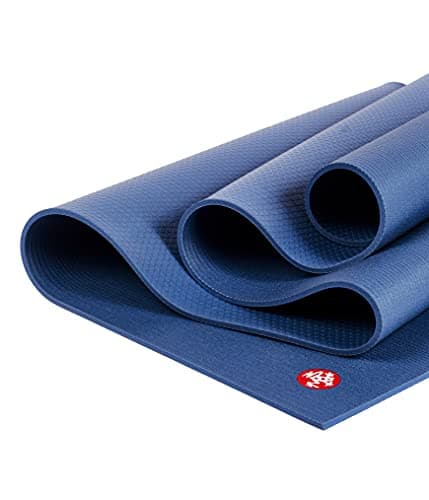
6 mm - maximum cushion
Manduka PRO Yoga Mat
Committed practitioners who want one cushioned, long-lasting mat for years of use.
$143.93 · View on AmazonFull comparisonPrice as of October 12, 2026. #ad How we’re funded
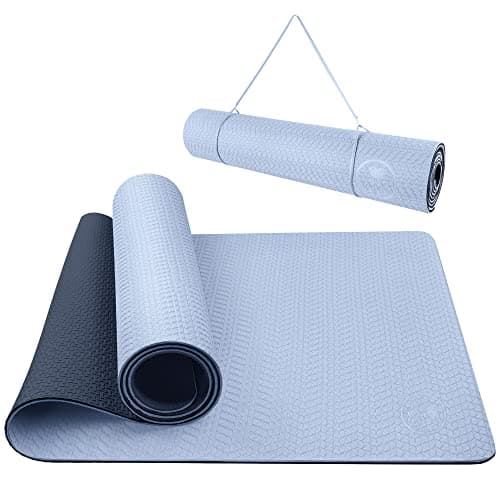
5 mm - the balanced middle
IUGA Eco Friendly Non-Slip Yoga Mat
Taller users and travelers who want grip and a bigger surface without a heavy rubber mat.
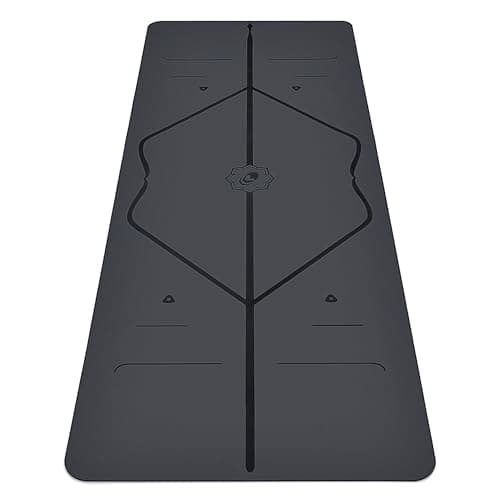
Full comparison4.2 mm - stability and grip
Liforme Yoga Mat
Alignment-focused practitioners who want guide markings and top-tier grip.
$165.00 · View on AmazonFull comparisonPrice as of October 12, 2026. #ad How we’re funded
Yoga mat thickness looks like a comfort setting and behaves like a stability setting. Every millimeter you add is more padding between your knee and the floor — and more give under your foot in a standing pose. Which side of that trade you want depends less on your yoga style than on your joints and your floor.
The short answer: 5–6 mm suits most people. Go thinner if balance work and floor feel matter most to you; go thicker only if a hard floor and sore contact points are your actual problem.
What each thickness is for
3–4 mm: travel and stability
Thin mats put you close to the floor, which is exactly what you want for balance-heavy practice: your foot sits on a stable surface rather than sinking into foam. They roll small and weigh little, so they are the obvious travel choice. The cost is padding — kneeling positions on a wooden or tiled floor stop being pleasant quickly.
The premium end of this band, around 4.2 mm, is where grip-focused mats live. They are thin enough to feel connected to the floor and rely on surface material rather than cushion to make the practice comfortable.
5 mm: the balanced middle
Five millimeters is the sensible default if you cannot decide. There is enough padding that knees and the base of the spine are comfortable in most positions, and not so much that standing poses feel spongy. Most mats at this thickness also land in the middle on weight, which matters if the mat gets carried anywhere.
6 mm: cushion and general fitness use
Six millimeters is the standard “comfortable” thickness and what a lot of studio-quality mats use. It is the right pick for anyone with knee, hip or back sensitivity, for practice on a hard floor, and for general home fitness — stretching, core work, ab rollouts, dumbbell floor presses — where a mat is doing padding duty as much as yoga duty. The trade-off is weight: a dense 6 mm mat can run over 7 lb, which you notice on a walk to a class.
8 mm and above: not really yoga mats
Thicker “exercise mats” are made for floor exercise, not for practice. Standing poses on one feel genuinely unstable. If you want that much padding for kneeling work, the better answer is a normal mat plus a folded towel or a knee pad at the contact point.
Thickness is not the only decision
Material decides grip and life
Grip comes from the surface, not the thickness. Closed-cell PVC wipes clean and lasts for years but can get slick with sweat; natural rubber and polyurethane grip better, especially when damp, and wear faster. Rubber mats also contain natural latex, which matters if anyone in the household has an allergy. Weight tracks material more than thickness: a dense PVC mat is heavy at any thickness.
Length and width
Standard mats are 68 to 72 in long and 24 in wide. If you are taller than about 5 ft 10 in, a 68 in mat means your head or heels end up on the floor when you lie down — look for 71 in or longer. A 26 in width is noticeably more forgiving in wide-legged and transitional poses, at the cost of a bulkier roll.
Floor underneath
The mat is only half the equation. On carpet, a thinner mat feels fine because the carpet supplies cushion — and a thick mat on carpet can feel unstable. On concrete, tile or hardwood, the mat is doing all of the work and thickness earns its place. Judge thickness against your actual floor, not against a review shot in a studio.
Matching thickness to what you do
- Balance-heavy or flow practice→ 3–5 mm, prioritizing grip.
- Restorative, floor and stretching work→ 5–6 mm for the contact points.
- Sensitive knees, hips or spine→ 6 mm, or 5 mm with a folded towel where you kneel.
- General home fitness (core work, ab rollouts, dumbbell floor work) → 6 mm, and a wider mat if you have room.
- Travel→ 3–4 mm, weight over comfort.
The honest bottom line
If you are buying your first mat, get 5 or 6 mm from a brand with a real grip reputation and stop thinking about it. Thickness is easy to over-research and nearly impossible to get badly wrong within that band. The mats that get abandoned are the ones that slip, not the ones that are a millimeter off ideal — which is why our yoga mat roundup ranks on grip and durability first. If you want the flexibility and balance work that a mat supports to actually count toward your week, note that federal guidance treats balance training as its own recommendation for older adults, alongside aerobic and strengthening activity.
One last point about where thickness sits in the hierarchy: in a heated room it is the wrong spec to lead with. Grip is decided by whether the top surface is open-cell or closed-cell, and a 6 mm closed-cell mat can be slicker under a wet palm than a 4 mm polyurethane one. We rank the field on exactly that in best yoga mats for hot yoga and sweaty hands, and put the two opposite answers side by side in JadeYoga Harmony vs Manduka PRO.
Frequently asked questions
What thickness yoga mat is best?
For most people, 5 to 6 mm — enough padding for knees and spine without feeling unstable in standing poses. Go thinner (3 to 4 mm) if balance and floor feel matter most, and thicker only if a hard floor and sensitive joints are the main problem.
Is a 6mm yoga mat too thick?
Not for general practice, stretching or floor work — 6 mm is the standard 'comfortable' thickness and what most studio-quality mats use. It only becomes a problem in balance-heavy practice, where the extra give under one foot makes standing poses feel less stable.
What thickness mat do I need for bad knees?
6 mm, or a 5 mm mat plus a folded towel under the knees for kneeling positions. Thickness helps at the specific contact points — knees, elbows, the base of the spine — which is exactly where a hard floor causes trouble. Padding a couple of positions is often better than making the whole mat thicker.
Does yoga mat thickness affect grip?
Not directly — grip comes from the surface material and how it responds to moisture. But a thick, soft mat can feel less secure in standing poses because your foot sinks in slightly, which people often experience as slipping when it is really instability.
How long should a yoga mat be?
Standard mats run 68 to 72 inches. If you are taller than about 5 ft 10 in, a 68 in mat leaves your head or feet on the floor in lying poses — look for 71 to 74 in versions. Width matters too: 24 in is standard, 26 in is noticeably roomier for wide-legged poses.
Sources
- CDC — Older Adult Activity: An Overview — CDC guidance for adults 65+, including balance and strength activity (accessed July 19, 2026)
- U.S. HHS / ODPHP — Physical Activity Guidelines for Americans (2nd ed.) — Federal guideline: 150–300 min/week moderate aerobic + muscle strengthening 2+ days (accessed July 19, 2026)
Keep reading
Best Yoga Mats for Beginners
Why 5 to 6 mm is the beginner answer, and the four other specs a first mat is decided on.
See the picksBest yoga mats
Our picks across thicknesses and materials, compared on grip, weight and durability.
See the mat picksManduka Pro vs Liforme
6 mm cushion against 4.2 mm grip and alignment markers - the classic premium mat decision.
Compare the twoBest recovery tools
What goes on the mat: rollers, balls and percussion devices for after training.
See the recovery picksEquipment for small apartments
Where a mat fits in a home setup that has to pack away between sessions.
Read the apartment guide