How to choose an ab roller
Wheel width is stability
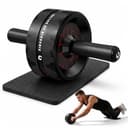
A single narrow wheel wanders sideways as you fatigue, which turns a core exercise into a balance problem. Wider tread, or two wheels set apart, keeps the roller tracking straight so the abs decide when the set ends. The wheels here run from 3.2 in (Vinsguir, dual) to 4.3 in (EnterSports), and both are noticeably steadier than the thin wheels bundled into cheap multi-item sets.
Spring assistance: help or hindrance
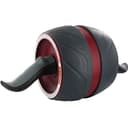
A built-in spring resists the rollout and gives some of that energy back on the return. That is help exactly where most people fail — the concentric pull back to the knees — and it is the reason the Ab Carver Pro has outlasted a decade of competitors. Purists will point out that the spring makes the movement slightly easier and therefore slightly less useful at the top end. Both things are true: buy the spring if it is the difference between doing rollouts and not.
Knee pads and floors
Kneeling on a hard floor for 30 reps hurts long before your abs do. Some rollers include a pad (Vinsguir, EnterSports, Tixahi), some do not (the Ab Carver Pro listing does not publish one). A folded towel or a yoga mat solves it either way, but check what is in the box before assuming.
The extras in kits
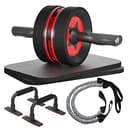
“6-in-1” kits bundle bands, push-up handles and pads. The bands are usually too light to matter next to a real band set, but the push-up handles are genuinely useful: place them where your rollout should stop and they become a physical limit rather than an intention. For a beginner, that is a safety feature.
How to actually use one without hurting your back
The rollout is a core-bracing exercise disguised as an arm movement. Two rules cover nearly all of the risk:
- Keep the ribs down and the hips tucked.The failure mode is the lower back arching as you extend. If that happens, you have gone past your current range — stop there.
- Only roll as far as you can come back from. A six-inch rollout done well beats a full extension you collapse out of.
The sensible progression is: kneeling rollouts to a wall (set the wheel a foot from a wall so it physically stops), then to a marked distance you increase weekly, then a full kneeling rollout, then standing rollouts — which are an advanced movement most people never need. If your lower back is the thing that complains, shorten the range and slow down before you conclude the exercise is not for you.
Where the ab roller fits
Core training is a supporting act, not the main event. Federal guidance is muscle-strengthening work for all major muscle groups at least twice a week, and the abs are one group among several — two or three sets of rollouts twice a week is plenty alongside dumbbell and kettlebell work that already loads the trunk hard. It is also worth saying plainly, because a lot of ab roller marketing does not: no core exercise removes fat from the area you are training. Visible abs come from overall body composition, which is a calorie and consistency question, not a wheel question.
Who should skip it
If you have an existing lower back problem, or a shoulder that dislikes overhead positions, the rollout puts you in both of those positions at once under load. Dead bugs, planks and carries build the same bracing capacity with far less risk. The roller is cheap enough to buy anyway and shelve if it does not suit you, but it is not a required purchase — nothing here is.