Are Expensive Yoga Mats Worth It?
Sometimes, and the deciding number is one nobody calculates: cost per year of use. What a premium mat actually buys you, what it does not, and the two cases where it buys nothing at all.
How this is funded: we earn a commission if you buy through our links, at no extra cost to you. It never changes which product we recommend, and we’ll tell you when we’d skip one. Full disclosure.
The three mats this argument comes down to
The premium case: a lifetime guarantee
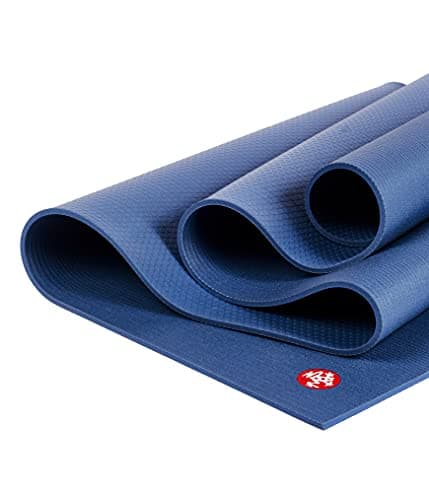
Manduka PRO Yoga Mat
Committed practitioners who want one cushioned, long-lasting mat for years of use.
$141.00 · View on AmazonFull comparisonPrice as of October 21, 2026. #ad How we’re funded
The premium case: grip that works wet
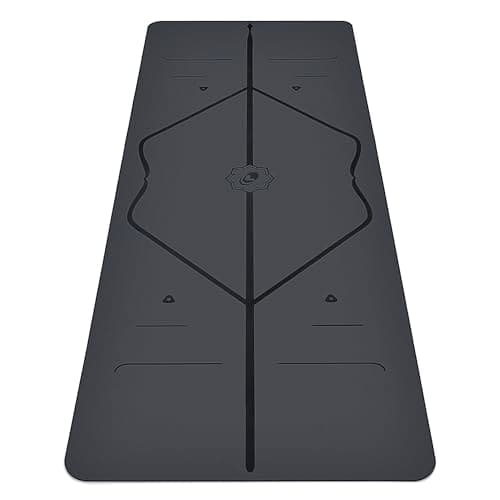
Liforme Yoga Mat
Alignment-focused practitioners who want guide markings and top-tier grip.
$165.00 · View on AmazonFull comparisonPrice as of October 21, 2026. #ad How we’re funded
The cheap case: good enough to start
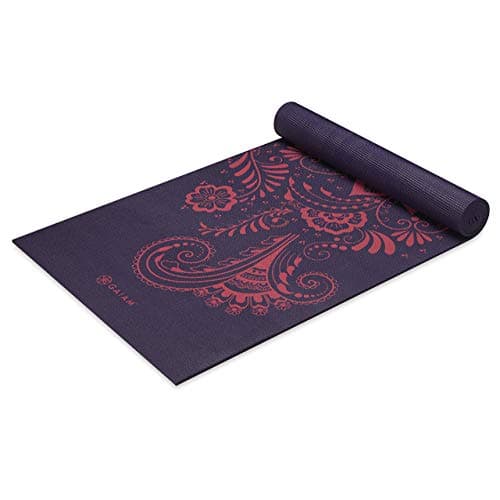
Gaiam Premium 6mm Yoga Mat
Beginners and casual practice who want comfortable padding cheaply.
Full comparison
An expensive mat is worth it if you practise regularly, if you sweat, or if you intend to own one mat for years — and it is a waste otherwise. The number that settles it is not the price on the button, it is cost per year of use, and when you run that sum the answer stops being a matter of opinion. A mat you keep for eight years costs a fraction per year of a mat you replace every eighteen months, even when the sticker price is four times higher.
The rest of this page is about how to run that sum honestly, and about the two situations where a premium mat buys you nothing at all.
Do the sum: cost per year, not cost
Take the current price of the mat you are considering — the live figures are on the buttons above, with the date they were read — and divide by the number of years you realistically expect to keep it. That is the whole method, and it reframes the decision immediately.
The reason it works is that mats fail on a schedule set by material and use, not by price. A soft PVC mat used four times a week compresses, loses grip and starts flaking within a couple of years. A dense PVC mat under the same load is the kind of object people keep for the better part of a decade — which is exactly why Manduka is willing to publish a lifetime guarantee on the PRO, and why almost nobody else publishes a guarantee term at all.
That asymmetry is the single most useful thing in this comparison. Of the five mats we track, Manduka is the only one whose maker publishes a guarantee. Not because the others are badly made, but because a guarantee is a cost a maker only takes on when it expects the product to survive — which makes a published guarantee the closest thing to a lifespan figure available in a category where nobody publishes lifespans.
Run the sum twice: once assuming you keep practising, once assuming you stop in three months. The second number is the one that stops people buying a premium mat first, and it should.
What the premium actually buys
1. A guarantee, in writing
Manduka publishes a lifetime guarantee on the PRO. That is the clearest single justification for a premium price in this category, because it converts an unverifiable durability claim into a commitment you can hold the maker to. It is also the reason the PRO is the standard answer to “which mat do I buy if I only want to buy one”.
2. A named certificate instead of a vague claim
“Eco-friendly” and “non-toxic” are marketing terms with no regulated meaning, and they appear on cheap and expensive mats alike. What a premium maker can afford is third-party verification with a number attached: Manduka publishes STANDARD 100 by OEKO-TEX certificate 12.HUS.17706 (Hohenstein), plus that the mat is latex-free PVC crafted in Germany. JadeYoga publishes natural tapped rubber, no PVC, EVA or synthetic rubber, made in the United States.
Those are checkable facts rather than adjectives, and on a surface your face is six inches from for an hour that is worth something. We go through which mats publish what in best eco-friendly yoga mats — including the awkward finding that the only mat with third-party verification is the PVC one.
3. A surface engineered to grip when wet
This is where the money most visibly goes, and it is narrower than “better grip”. Liforme publishes a three-layer build: a natural rubber base, an ultra-thin eco-polyurethane top, and between them a patented CleanGrip barrier layer — a non-absorbent sheet that stops sweat reaching the rubber. JadeYoga’s open-cell natural rubber takes the opposite approach and grips because it absorbs.
Either is a real engineering answer to a real problem, and a cheap mat has neither. Our hot yoga roundup ranks mats on exactly this.
4. Size, which is not a luxury
The wider and longer mats here are also the expensive ones — Liforme at 72.8 x 26.8 in, Manduka at 71 x 26 in, against the 68 x 24 in standard. If you are tall that is not a premium feature, it is the mat fitting, and it is covered properly in best yoga mats for tall people.
The two cases where it buys nothing
Case one: you are new to this
The thing that surprises people: the two most expensive mats here are the two that need something extra on day one. Manduka publishes that the PRO’s closed-cell surface “may feel slick if you’re prone to sweat” and recommends pairing it with a towel. Liforme’s ultra-thin PU top needs care to keep its grip. Meanwhile Manduka explicitly rejects the folk fix circulating online — “We don’t recommend the salt method or other treatments, and no special preparation is required.”
A first mat has one job: work properly the first time you unroll it. The cheapest mat we track does that, which is why it wins our beginners roundup and loses almost everywhere else. Buy cheap, practise for a month, and let the practice tell you which premium mat you need — you will know far more about your own sweat, knees and carrying habits than any article can tell you in advance.
Case two: you want cushioning, not quality
If the complaint is “my knees hurt”, price is the wrong lever. Thickness and density decide cushioning, and the cheapest mat we track publishes the same 6 mm as the most expensive one. The real difference is that dense foam holds its shape where soft foam compresses — so a cheap thick mat often feels plusher at first and bottoms out sooner.
For knees specifically, a folded blanket under the kneecap fixes more than any upgrade, costs nothing, and does not make the mat less stable for standing poses. Our thickness guide explains the trade between cushioning and stability, which is the trade people are actually making when they buy a thicker mat.
How to tell when a mat is genuinely finished
Three signals, the same on every material, and none of them is age:
- It slips when clean and dry. Not when sweaty — when clean and dry. That is a material problem and cleaning will not fix it.
- It has gone soft. If your hands or knees feel the floor through it where they did not before, the foam has compressed and will not come back.
- The surface is flaking or peeling. On a layered mat this means the top layer has failed, and the grip layer is the one doing the work.
Everything short of those three is maintenance, and maintenance is where a premium mat either earns its money or loses it. The routine differs by material in ways that matter — JadeYoga publishes that its mats “should not be exposed to sunlight” because UV degrades natural rubber — and we set out the per-material routine in how to clean a yoga mat. Cleaning a closed-cell mat the way you clean an open-cell one is a faster route to replacing it than any amount of practice.
The verdict
Buy the expensive mat if you already practise several times a week, if you sweat enough that grip is a live problem, if you are tall enough that the standard size does not fit, or if you want a published guarantee behind the purchase. On cost per year of use, a premium mat that lasts is usually the cheaper object.
Buy the cheap mat if you are starting out, if your practice is twice a week on a carpeted floor, or if you are not yet sure this is a habit. And if the thing you actually want is cushioning, buy a blanket rather than a brand.
Frequently asked questions
Are expensive yoga mats worth it?
They are worth it if you practise regularly, sweat, or expect to keep a mat for years - and not worth it otherwise. The honest test is cost per year of use rather than sticker price. A premium mat buys three specific things: a published guarantee (Manduka states a lifetime guarantee on the PRO), a named third-party certificate instead of a vague claim (STANDARD 100 by OEKO-TEX, 12.HUS.17706, Hohenstein), and a surface engineered to grip when wet. If none of those three matters to you, a cheap mat is the better buy.
Why are yoga mats so expensive?
Three cost drivers you can actually verify. Material and manufacture: Manduka publishes that the PRO is PVC crafted in Germany, and JadeYoga that its mats are natural tapped rubber made in the United States. Engineering: Liforme publishes a three-layer build with a patented CleanGrip barrier between the rubber base and the eco-polyurethane top. And liability: a lifetime guarantee is a real cost to the maker, which is why almost nobody publishes one. What you are not paying for is testing by a reviewer - including us.
How long does a yoga mat last?
No maker on this page publishes an expected lifespan, so we are not going to invent one - what they publish instead is a guarantee, and that is the figure worth reading. Manduka publishes a lifetime guarantee on the PRO; none of the other four mats we track publishes a guarantee term at all. The practical signals that a mat is finished are the same on every material: it slips when clean and dry, it has gone soft underfoot, or the surface is flaking.
Is a cheap yoga mat bad for your knees?
Not because it is cheap - thickness and density decide that, and both of the 6 mm mats we track are at opposite ends of the price range. The Gaiam Premium publishes 6 mm, the same as the Manduka PRO. The difference is that dense foam holds its shape while soft foam compresses, so a cheap 6 mm mat often feels plusher at first and bottoms out sooner. For knee comfort specifically, a folded blanket under the knees fixes more than a price upgrade does.
Is an expensive mat worth it for a beginner?
Usually no, and there is a specific reason that runs against intuition: two of the most expensive mats are the ones that need something extra on day one. Manduka publishes that the PRO's closed-cell surface 'may feel slick if you're prone to sweat' and recommends pairing it with a towel, and Liforme's ultra-thin top needs care to keep its grip. A cheap mat that works immediately is a better first mat - see our beginners roundup for the ranking that puts day-one readiness first.
Do expensive yoga mats grip better?
The premium mats grip better when wet, which is a narrower claim than 'grip better'. Liforme publishes a patented CleanGrip barrier layer that stops sweat reaching the rubber base, and JadeYoga's open-cell natural rubber grips damp. But Manduka - also premium - publishes the opposite caution about its own closed-cell PRO, that it may feel slick if you sweat. So price does not predict wet grip. Surface construction does, and the makers publish it.
Should I buy a cheap mat first and upgrade later?
It is the strategy we would recommend to most people, for one reason that has nothing to do with money: you do not yet know what you want. A month of practice tells you whether you sweat enough to need a wet-grip surface, whether your knees want cushioning, and whether you carry the mat anywhere - the three questions that decide which premium mat is right. A cheap mat is a diagnostic tool, and if you stop practising you have lost very little.
Sources
- Manduka — PRO Yoga Mat 6mm — Manduka's own product page, and the most useful admission any mat maker makes: 'A hygienic, closed-cell surface keeps sweat, moisture, and bacteria out of your mat', and then, under Use & Care, 'Because the PRO's closed-cell surface does not absorb moisture, the mat may feel slick if you're prone to sweat. We recommend pairing it with an Equa or Yogitoes hand' towel. Manduka also rejects the folk break-in method outright - 'We don't recommend the salt method or other treatments, and no special preparation is required' - and publishes Standard 71 in x 26 in, 7.5 lb (3.4 kg), PVC crafted in Germany, latex-free, certified STANDARD 100 by OEKO-TEX (12.HUS.17706 | Hohenstein), with a lifetime guarantee (accessed October 5, 2026)
- JadeYoga — Harmony Mat — JadeYoga publishes 3/16 in thick, 24 in wide, 68 in and 74 in lengths, about 5 lb, natural rubber tapped from rubber trees, and 'no PVC, EVA or other synthetic rubber', made in the United States. Two cautions are the maker's own: the mats 'are not intended for use outdoors and should not be exposed to sunlight', and although 'Jade mats are 99% latex free... there may be trace amounts of latex proteins in the mats so we recommend persons with latex allergies avoid contact'. The page also carries JadeYoga's claim to have been 'Named Best Mat for Grip by Yoga Journal for 2024' - a third-party award, reported here as the maker's claim and not as a test of ours (accessed October 5, 2026)
- Liforme — CleanGrip Technology — Liforme's own description of the three-layer build that decides how its mat behaves wet: 'a stable, sustainably sourced natural rubber base, providing strength and cushioning', an 'ultra-thin top layer... crafted from our proprietary eco-polyurethane', and between them 'our patented CleanGrip barrier layer. A non-absorbent' sheet that stops sweat reaching the rubber. Liforme's published specification for the Original mat is 185 cm x 68 cm, approx. 4.2 mm thick, approx. 2.5 kg (accessed October 5, 2026)
Keep reading
Best Yoga Mats
The whole field ranked on grip, thickness and material, budget to buy-it-for-life.
See all the picksManduka PRO vs Liforme
The two premium mats head to head - the clearest illustration of what the money buys.
Read the comparisonBest Yoga Mats for Beginners
Ranked on which mats work on day one, which is where the premium mats lose.
See the picksHow to Clean a Yoga Mat
The routine that decides whether any mat reaches its second year, by material.
Read the guideBest Yoga Mats for Tall People
If your mat is too short, no amount of material quality fixes it. Published dimensions compared.
See the picks