Pulse & Plate

Best Eco-Friendly Yoga Mats

Almost every mat is sold as eco-friendly. Five ranked on what the maker will actually put in writing - the material, the certification number, the country of manufacture - and on the mat you will not replace in two years.

By Stephen V.Last updated How we research

The JadeYoga Harmonyis the pick if “eco-friendly” means the material itself: natural rubber tapped from rubber trees, with JadeYoga publishing “no PVC, EVA or other synthetic rubber” and manufacture in the United States. The Liformeis the pick if grip is non-negotiable — an eco-polyurethane top over a sustainably sourced natural rubber base, with alignment markings. The Manduka PRO is the pick on the measure that often matters most: it is PVC, but it is STANDARD 100 by OEKO-TEX certified with a published certificate number and carries a lifetime guarantee, and a mat you never replace has a real claim to being the greenest one. IUGA and Gaiam are the budget routes, and this page is honest about what their listings do and do not establish.

Here is the problem this page is built to solve. “Eco-friendly” is not a regulated term on a yoga mat. It appears in the product nameof one of the mats below, on the packaging of nearly every mat sold, and it means whatever the seller wants it to mean — sometimes a genuinely plant-derived material, sometimes a recycled carton, sometimes nothing checkable at all. There is no certification required to use it.

So we ranked on three things a buyer can verify instead. What the material actually is, in the maker’s own words rather than a marketing adjective. Whether a third party has tested it— which in this category means a STANDARD 100 by OEKO-TEX certificate for harmful substances, and exactly one mat here publishes its certificate number. And how long the mat lasts, because the environmental cost of a mat is dominated by how many of them you buy over a decade.

Two honest notes before the picks. First, the greenest mat is the one you already own; nothing on this page beats not buying. Second, there is a real trade-off between natural materials and durability in this category, and it runs the opposite way to most people’s assumptions — the plant-derived mats here are the ones their own makers describe as less durable, and the long-life mat is the PVC one. Every figure below is the maker’s published specification on the dated visit linked under each write-up. We own none of these mats and have tested none of them.

How this is funded: we earn a commission if you buy through our links, at no extra cost to you. It never changes which product we recommend, and we’ll tell you when we’d skip one. Full disclosure.

Picks at a glance

Ranked on published specs, footprint and buyer fit. Select a row to jump to the full write-up. We have not tested these ourselves — here is exactly what we do instead.

#ProductBest forPrice
1
JadeYoga Harmony Yoga Mat

JadeYoga Harmony Yoga Mat

Natural-rubber grip that holds up in a sweaty flow, from a brand that plants a tree for every mat.

Best natural material
$114.95 · View on Amazon

Price as of October 13, 2026. #ad How we’re funded

2
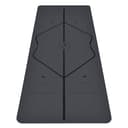
Liforme Yoga Mat

Liforme Yoga Mat

Printed alignment guides plus a genuinely grippy eco surface - a teaching-friendly mat at a premium price.

Best eco mat for grip
$165.00 · View on Amazon

Price as of October 13, 2026. #ad How we’re funded

3
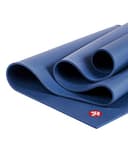
Manduka PRO Yoga Mat

Manduka PRO Yoga Mat

The buy-it-for-life mat: dense 6 mm cushioning and a near-indestructible build, at a price to match.

Best certified and longest-lasting
$143.95 · View on Amazon

Price as of October 13, 2026. #ad How we’re funded

4
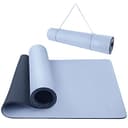
IUGA Eco Friendly Non-Slip Yoga Mat

IUGA Eco Friendly Non-Slip Yoga Mat

A grippy, lightweight mat with a longer, wider surface - a lot of mat for a mid-range price.

Best mid-range size
$34.99 · View on Amazon

$44.9922% off

Price as of October 13, 2026. #ad How we’re funded

5
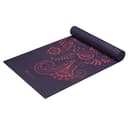
Gaiam Premium 6mm Yoga Mat

Gaiam Premium 6mm Yoga Mat

The budget favorite: real 6 mm padding and fun prints for a fraction of the premium mats.

Best budget cushioning
$21.90 · View on Amazon

$23.607% off

Price as of October 13, 2026. #ad How we’re funded

What the maker publishes about the material

Row two is the row to read first: a named material is checkable, a marketing adjective is not. Row three is the only third-party verification that exists in this category, and only one mat here publishes a certificate number. 'Not published' is printed where the maker states nothing.

SpecJadeYoga Harmony Yoga MatLiforme Yoga MatManduka PRO Yoga MatIUGA Eco Friendly Non-Slip Yoga MatGaiam Premium 6mm Yoga Mat
Published materialNatural (tree) rubberEco-PU top / natural rubber basePVC, latex-freePolyurethane / rubberLatex-free PVC
Plant-derived?Yes - tapped natural rubberBase yes, top is eco-PUNo - PVCPartly (listing does not break it down)No - PVC
Third-party certificationNot publishedNot publishedSTANDARD 100 by OEKO-TEX (12.HUS.17706)Not publishedNot published
Country of manufactureUnited StatesNot publishedGermanyNot publishedNot published
Contains latex?Trace proteins - maker advises allergy sufferers avoidNatural rubber baseNo - latex-freeRubber element, not specifiedNo - latex-free
Thickness5 mmAbout 4.2 mm6 mm5 mm (varies by model)6 mm
Dimensions68 x 24 in72.8 x 26.8 in71 x 26 in72 x 24 in68 x 24 in
WeightAbout 5.2 lbAbout 5.5 lbAbout 7.5 lbNot publishedAbout 3.3 lb
Published guaranteeNot publishedNot publishedLifetimeNot publishedNot published
Sunlight warning from the makerYes - not for outdoor use or sun exposureNot publishedNot publishedNot publishedNot published

Every figure above is one the maker publishes, read on the dated visit linked under each write-up below. “Not published” means the maker does not state it — we do not fill the gap with an estimate.

The picks in full

#1Best natural material

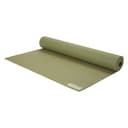
JadeYoga Harmony Yoga Mat

Natural-rubber grip that holds up in a sweaty flow, from a brand that plants a tree for every mat.

Strengths

  • Open-cell natural rubber grips well, even damp
  • 5 mm gives a stable, connected feel
  • Firm, stable 5 mm feel connects you to the floor
  • Made from renewable tapped rubber

Trade-offs

  • Natural rubber has a distinct smell some dislike
  • Contains natural latex (an allergy concern)
  • Heavier and less durable than a closed-cell PVC mat
Thickness5 mm
MaterialNatural (tree) rubber
Dimensions68 x 24 in
WeightAbout 5.2 lb
GripHigh, open-cell
NoteContains natural latex

Specs read from the product listing, on August 7, 2026. “Not published” means the maker does not state that figure.

#2Best eco mat for grip

Liforme Yoga Mat

Printed alignment guides plus a genuinely grippy eco surface - a teaching-friendly mat at a premium price.

Strengths

  • Printed alignment markings help you square up poses
  • Eco-polyurethane top grips very well when sweaty
  • Larger 72.8 in long surface
  • Biodegradable natural-rubber base

Trade-offs

  • Among the most expensive mats here
  • Heavy at about 6.2 lb
  • PU surface needs care to keep its grip
ThicknessAbout 4.2 mm
MaterialEco-PU top / natural-rubber base
Dimensions72.8 x 26.8 in
WeightAbout 5.5 lb
GripVery high when damp
FeaturePrinted alignment guides

Specs read from the product listing, on August 7, 2026. “Not published” means the maker does not state that figure.

#3Best certified and longest-lasting

Manduka PRO Yoga Mat

The buy-it-for-life mat: dense 6 mm cushioning and a near-indestructible build, at a price to match.

Strengths

  • Dense 6 mm cushioning is easy on knees and joints without going soft
  • Extremely durable - the mat people keep for years
  • Closed-cell surface wipes clean and blocks sweat
  • Oeko-Tex certified (tested for harmful substances)

Trade-offs

  • Heavy at about 7.5 lb, so not a travel mat
  • Needs a break-in period before it grips well
  • Premium price
Thickness6 mm
MaterialPVC (Oeko-Tex certified)
Dimensions71 x 26 in
WeightAbout 7.5 lb
SurfaceClosed-cell, easy-wipe
Best forCushion and longevity

Specs read from the product listing, on August 7, 2026. “Not published” means the maker does not state that figure.

#4Best mid-range size

IUGA Eco Friendly Non-Slip Yoga Mat

A grippy, lightweight mat with a longer, wider surface - a lot of mat for a mid-range price.

Strengths

  • Grippy polyurethane-topped surface holds in sweat
  • Longer 72 in length suits taller users
  • Light and easy to roll up and carry
  • Comes with a carry strap

Trade-offs

  • Thinner 5 mm cushioning is firmer on the knees
  • PU tops can wear with heavy daily use
  • Grip needs an occasional wipe-down
Thickness5 mm (varies by model)
MaterialPolyurethane / rubber
Dimensions72 x 24 in
WeightNot published (varies by model)
GripHigh, moisture-wicking
ExtrasCarry strap included

Specs read from the product listing, on August 7, 2026. “Not published” means the maker does not state that figure.

#5Best budget cushioning

Gaiam Premium 6mm Yoga Mat

The budget favorite: real 6 mm padding and fun prints for a fraction of the premium mats.

Strengths

  • 6 mm padding is easy on knees and wrists
  • Light at about 3.3 lb and easy to roll up
  • Wide range of prints
  • Very affordable

Trade-offs

  • Grip fades once you sweat
  • Less durable than a premium PVC or rubber mat
  • Light initial smell off the roll
Thickness6 mm
MaterialLatex-free PVC
Dimensions68 x 24 in
WeightAbout 3.3 lb
GripModerate; weakens when wet
Best forBudget cushioning

Specs read from the product listing, on August 7, 2026. “Not published” means the maker does not state that figure.

How to judge an eco-friendly yoga mat

1. Read the material, not the adjective

There are four materials in this category and they behave completely differently. It is worth knowing which you are buying, because the word on the label will not tell you.

Natural rubberis tapped from living rubber trees, which is a renewable harvest rather than an extraction — the tree is not felled. It is the grippiest material when damp because it is open-cell: the surface has pores that hold moisture instead of letting it pool. The costs are real and JadeYoga publishes them: a distinct smell, trace latex proteins (JadeYoga states its mats are “99% latex free” but recommends people with latex allergies avoid contact), more weight, and less durability than a closed-cell mat.

Polyurethane (PU)is a synthetic top layer, usually laminated over a natural rubber base, and it is the grippiest surface available when wet. Liforme publishes its exact construction — “a stable, sustainably sourced natural rubber base”, an “ultra-thin top layer…crafted from our proprietary eco-polyurethane”, and between them a patented non-absorbent barrier layer. That middle layer is the interesting part: it stops sweat reaching the rubber, which is what keeps a PU mat hygienic where an open-cell mat absorbs.

PVC is the material the whole eco conversation is a reaction to, and it is also the material of the longest-lasting mat on this page. That contradiction is the honest centre of this topic and we deal with it in the next section.

TPE and other blendsare the usual answer when a listing says “eco” without naming anything. They are generally lighter, cheaper and shorter-lived. IUGA’s mat is named “Eco Friendly Non-Slip” and its listing publishes “polyurethane / rubber” without breaking down the proportions — which is more than many, and still not enough to verify a claim. That is why it ranks fourth here rather than being dismissed: the mat is good value and the eco claim is simply not established.

2. Count the mats you will buy over ten years

This is the argument most eco round-ups leave out, and it is the one that puts a PVC mat at the top of a sustainability table. The footprint of a yoga mat is overwhelmingly in its manufacture and its disposal. A mat that lasts a decade has one of each. A mat you replace every two years has five of each.

Manduka publishes a lifetime guaranteeon the PRO, and the mat’s reputation is as the one people keep for years. It is also the only mat here with third-party testing you can look up: Manduka publishes STANDARD 100 by OEKO-TEX certification with the certificate number 12.HUS.17706 (Hohenstein), which means the finished material has been tested for harmful substances to a published standard. None of the other four publishes a certification of any kind.

So there are two defensible positions and this page will not pretend there is one. If your concern is the material— plant-derived, biodegradable, no vinyl chloride in the supply chain — buy the Jade or the Liforme. If your concern is total consumption, buy the Manduka once and stop. What is not defensible is buying a mat whose listing says “eco”, nothing else, and replacing it in eighteen months.

3. Match the material to how you sweat

An eco mat you slip on is a mat you stop using, so the grip question is not separate from the sustainability question. The rule is simple and it follows directly from the material.

Open-cellsurfaces — natural rubber, like the Jade — get grippier as they get damp, because the pores take up the moisture. That is why rubber is the standard answer for vinyasa and warm rooms. Closed-cellsurfaces — like the Manduka PRO — keep moisture out, which is hygienic and wipes clean, and Manduka states the consequence frankly in its own Use & Care notes: “Because the PRO’s closed-cell surface does not absorb moisture, the mat may feel slick if you’re prone to sweat,” and it recommends pairing the mat with a towel. PU tops like the Liforme are the compromise that works wet, with a barrier layer keeping the sweat off the rubber underneath.

If you practise hot yoga, read yoga mats for hot yogainstead of this page — it ranks on exactly this axis and the answer is not the same.

4. Check the care instructions before you buy, not after

Natural materials have real constraints, and the makers publish them. JadeYoga states that its mats “are not intended for use outdoors and should not be exposed to sunlight”— UV degrades natural rubber, so a mat stored on a sunny balcony is a mat with a short life. Manduka, for its part, explicitly rejects the folk break-in method: “We don’t recommend the salt method or other treatments, and no special preparation is required.”

Our guide to cleaning a yoga mat works through the care differences between these materials in full, including why an open-cell mat and a closed-cell mat need genuinely different routines.

What “eco-friendly” does not tell you

Four claims to treat as marketing until a maker substantiates them. “Natural” is not a specification — natural rubber is, and the two are not the same word. “Biodegradable” rarely comes with conditions attached, and a material that biodegrades in an industrial composter does not biodegrade in a landfill. “Non-toxic” has no definition in this context; the testable version of it is an OEKO-TEX certificate, which one mat here has and four do not. “Recycled packaging” is about the box, not the mat.

What is worth paying for is a named material, a published country of manufacture, a certificate number and a guarantee. Across these five mats, JadeYoga publishes the first two, Manduka publishes all four, and the rest publish fewer. That is the finding, and it is the reason the ranking looks the way it does.

If you are choosing a first mat rather than a greener one, our yoga mats for beginners page ranks on which mats work out of the box, and yoga mat thickness covers the spec that decides comfort. The full field, without the material filter, is in our best yoga mats roundup.
Frequently asked questions

What is the most eco-friendly yoga mat material?

Natural rubber tapped from rubber trees is the most straightforwardly renewable: the tree is not felled, and JadeYoga publishes that its Harmony mat contains 'no PVC, EVA or other synthetic rubber' and is made in the United States. The complication is durability - JadeYoga itself lists the mat as less durable than a closed-cell PVC mat, and a mat replaced three times has three manufacturing footprints. If total consumption is your measure rather than material origin, a lifetime-guaranteed mat has a serious case.

Is PVC yoga mat bad for the environment?

PVC is the material the eco conversation in this category is a reaction to, and it is not plant-derived or biodegradable. The honest counterweight is longevity: the Manduka PRO is PVC, carries a published lifetime guarantee, and is the mat people keep for years, which means one manufacture and one disposal instead of several. It is also the only mat here with third-party testing you can look up - STANDARD 100 by OEKO-TEX certificate 12.HUS.17706 (Hohenstein), tested for harmful substances.

What does OEKO-TEX certification mean on a yoga mat?

STANDARD 100 by OEKO-TEX means the finished material has been tested by an accredited institute against a published list of harmful substances, and the certificate carries a traceable number. It is the only third-party verification that exists in this category, and of the five mats here exactly one publishes it: Manduka, as certificate 12.HUS.17706 through Hohenstein. It is a substance-safety certification, not an environmental-impact one - it tells you what is not in the mat, not how the mat was made.

Are eco-friendly yoga mats less grippy?

No - if anything the opposite, and for a physical reason. Natural rubber is open-cell, so its surface pores take up moisture and the mat gets grippier as you sweat, which is why rubber is the standard answer for vinyasa. The slick-when-wet mat here is the closed-cell PVC one, and Manduka says so itself: because the PRO's surface does not absorb moisture, it 'may feel slick if you're prone to sweat', and Manduka recommends pairing it with a towel.

Can I use a natural rubber yoga mat if I have a latex allergy?

JadeYoga's own guidance is to avoid it. The maker states that Jade mats 'are 99% latex free' but that 'there may be trace amounts of latex proteins in the mats so we recommend persons with latex allergies avoid contact'. Liforme's mat has a natural rubber base and the same consideration applies. The latex-free options here are the PVC mats - Manduka publishes latex-free, as does Gaiam. If you have a diagnosed latex allergy, treat this as a question for your clinician rather than for a review.

Why does JadeYoga say not to leave the mat in the sun?

Because UV degrades natural rubber. JadeYoga publishes that its mats 'are not intended for use outdoors and should not be exposed to sunlight', which is a genuine constraint on a plant-derived mat rather than a disclaimer: a rubber mat stored on a sunny balcony or rolled up by a south-facing window will dry out and crack years earlier than one kept in a cupboard. It is the same failure mode that ends the life of a latex resistance band.

Is 'eco-friendly' on a yoga mat label regulated?

No. It is not a defined or certified term, it appears in the product name of mats whose materials are not fully disclosed, and nothing stops a seller using it. The claims worth paying for are the checkable ones: a named material rather than an adjective, a published country of manufacture, a third-party certificate number, and a guarantee. 'Biodegradable', 'natural' and 'non-toxic' are not specifications; 'natural tapped rubber' and 'STANDARD 100 by OEKO-TEX 12.HUS.17706' are.

Which eco yoga mat lasts longest?

On published guarantees, the Manduka PRO - it is the only mat of the five with a stated lifetime guarantee, and it is the heaviest at about 7.5 lb, which is part of why. The natural-material mats are the ones whose own makers flag durability: JadeYoga lists 'heavier and less durable than a closed-cell PVC mat' among the Harmony's trade-offs, and Liforme's PU top needs care to keep its grip. We have not run a longevity test on any of them and will not claim one.

Sources

  • JadeYoga — Harmony Mat — JadeYoga publishes 3/16 in thick, 24 in wide, 68 in and 74 in lengths, about 5 lb, natural rubber tapped from rubber trees, and 'no PVC, EVA or other synthetic rubber', made in the United States. Two cautions are the maker's own: the mats 'are not intended for use outdoors and should not be exposed to sunlight', and although 'Jade mats are 99% latex free... there may be trace amounts of latex proteins in the mats so we recommend persons with latex allergies avoid contact'. The page also carries JadeYoga's claim to have been 'Named Best Mat for Grip by Yoga Journal for 2024' - a third-party award, reported here as the maker's claim and not as a test of ours (accessed October 5, 2026)
  • Manduka — PRO Yoga Mat 6mm — Manduka's own product page, and the most useful admission any mat maker makes: 'A hygienic, closed-cell surface keeps sweat, moisture, and bacteria out of your mat', and then, under Use & Care, 'Because the PRO's closed-cell surface does not absorb moisture, the mat may feel slick if you're prone to sweat. We recommend pairing it with an Equa or Yogitoes hand' towel. Manduka also rejects the folk break-in method outright - 'We don't recommend the salt method or other treatments, and no special preparation is required' - and publishes Standard 71 in x 26 in, 7.5 lb (3.4 kg), PVC crafted in Germany, latex-free, certified STANDARD 100 by OEKO-TEX (12.HUS.17706 | Hohenstein), with a lifetime guarantee (accessed October 5, 2026)
  • Liforme — CleanGrip Technology — Liforme's own description of the three-layer build that decides how its mat behaves wet: 'a stable, sustainably sourced natural rubber base, providing strength and cushioning', an 'ultra-thin top layer... crafted from our proprietary eco-polyurethane', and between them 'our patented CleanGrip barrier layer. A non-absorbent' sheet that stops sweat reaching the rubber. Liforme's published specification for the Original mat is 185 cm x 68 cm, approx. 4.2 mm thick, approx. 2.5 kg (accessed October 5, 2026)

Keep reading