How to choose a spin bike
Three specs decide what the ride feels like, and the listings bury all three under photographs of someone sprinting in a loft.
1. Flywheel weight is the feel of the bike
A spin bike’s flywheel is a lump of steel the pedals drive, and its mass is what carries the pedal stroke through the dead spots at the top and bottom. A heavy flywheel keeps turning between your pushes, which is what people mean when they say a bike feels plantedor like a road bike. A light one changes speed with every stroke, which feels choppier — especially out of the saddle.
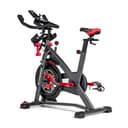
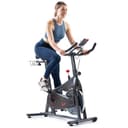
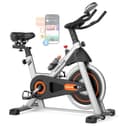
The published spread here is nearly two to one: 40 lb on the Schwinn IC4, 35 lb on the YOSUDA and 22 lbon the Sunny Vega. Sunny is upfront about what that means — the Vega is aimed at steady everyday riding rather than out-of-the-saddle sprinting, and the lighter flywheel is the reason. If your sessions are intervals and standing climbs, buy the heaviest flywheel you can. If they are 40 quiet minutes while something plays on a tablet, 22 lb is genuinely enough and you are paying for mass you never use.
2. Magnetic or friction? This is a maintenance question, not a performance one
Both mechanisms work. They fail differently, and that is the decision. A magnetic system moves magnets closer to the flywheel without touching it: nothing rubs, so nothing wears out, and it is near-silent. The IC4 goes further and gives you 100 micro-adjustable levels with a numeric readout, which is the only way to repeat a session honestly — “level 34” means the same thing next Tuesday.
A friction brake, which is what the YOSUDA uses, presses a felt pad onto the flywheel. It is cheap, it gives a lot of resistance for the money, and it is a consumable: the pad wears down, it eventually squeaks, and you replace it. YOSUDA says so on the listing, and we would rather you read it here than discover it in month eight. A knob also has no numbers, so you cannot repeat a workout precisely. If a quiet room is the priority rather than the price, our quietest cardio machines guide explains what actually travels through a floor.
3. Check the fit range before anything else, especially if two people will ride
A spin bike is the one piece of cardio equipment that has to fit you the way a bicycle does: saddle height, saddle fore-aft and handlebar height all have to land in a range your legs agree with, or your knees will tell you within a fortnight.
And exactly one maker on this page publishes the numbers to check that with. Sunny states the Vega fits a 29 to 39.8 in inseam and riders from 5 ft 2 in to 6 ft 9 in, on 2-way handlebars and a 4-way seat post. Neither Schwinn nor YOSUDA publishes a rider-height or inseam range for these bikes, which is a real gap if you are notably tall or short. Two free checks before you buy anything here: measure your inseam, and measure the floor space plus a foot in front of the bars for a tablet or a fan.
4. Then the subscription question
Only one of these three bikes can cost you money every month, and it is the most expensive one — which is the opposite of how it looks. The IC4 has no screen: it streams its metrics over Bluetooth to Peloton, Zwift or Explore the World on your own tablet, and those apps have their own subscriptions. That is a feature if you already pay for one of them and a cost if you do not. The Sunny Vega’s SunnyFit app is free, with trainer-led workouts and scenic rides included. The YOSUDA has no app at all, just an LCD reading time, speed, distance, calories and an odometer — nothing to pay for and nothing to connect. All three of these bikes also appear on best Peloton alternatives, ranked there by which Peloton problem they solve rather than by the ride.
Over three years the free-app bike can easily be the cheaper bike. We apply the same arithmetic to rowers, where the paywalls are far more aggressive, in rowing machines with screens.
Who should skip a spin bike
Two clear cases. If getting on and off the machine is the hard part — bad hips, bad balance, a knee that does not like a deep bend — a spin bike is the wrong shape, because you mount it like a bicycle and lean onto your hands. A recumbent bike puts you in a chair instead, and we rank the field for that in best exercise machines for seniors and upright vs recumbent bike.
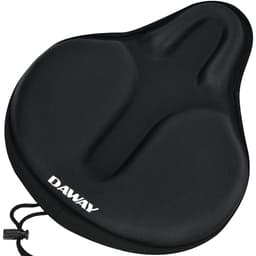
And if you want your whole body working rather than your legs, the bike is the wrong machine entirely — a rower drives through legs, back and arms in one stroke, and rowing machine vs exercise bike lays out the real trade. One honest note on all three bikes here: a spin saddle is narrow and firm by design, and most people find the first two weeks uncomfortable regardless of which bike they bought. That is a saddle problem, not a bike problem, and there is a cheap fix in the accessory below.
What we would buy
The Schwinn IC4if you are going to ride hard: it has the heaviest flywheel, the only numbered resistance, the highest published capacity and clipless pedal compatibility, and the missing screen is the reason it is not locked to one company’s app. The Sunny Vega if two or more people of different heights will share it, or if you want a free app rather than another monthly line item. The YOSUDAif the budget is the brief — accept the felt pad as a part you will one day replace, and it is a lot of flywheel for the money.