Work out which Peloton problem you have
People arrive at this page for one of two reasons, and the answer is completely different depending on which. Sort yourself first.
Problem 1: the hardware price
You want the classes. You do not want to pay $1,695 for the bike they run on. This is the easier problem, because Peloton has already solved it for you: App+ is published as carrying unlimited cardio equipment classes “for any exercise bike, treadmill, or rower”. Buy a bike that holds a tablet and pairs over Bluetooth, keep paying for content, and the only thing you have given up is the integrated screen and the automatic metric pickup.
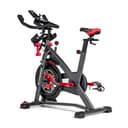
That is the Schwinn IC4, and it is not a coincidence — it is an app-agnostic bike by design. 40 lb of flywheel is the heaviest here and makes the stroke feel planted when you stand up; 100 micro-adjustable magnetic levels with a metric readout mean a resistance number you can repeat next week; dual-sided SPD and toe-cage pedals mean cycling shoes are optional rather than another purchase. Honest cons: there is no built-in screen, so you supply a tablet and you supply the subscription, and the onboard console on its own shows very little. If the integrated screen was the part you loved, this is the wrong page and you should buy the Peloton.
Problem 2: the $49.99 every month
You are done with the recurring bill. Then the Schwinn solves nothing, because the Schwinn with no subscription is a bike with a bare console. What you want is a machine whose own app is free, and there are two on this page.
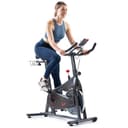
The Sunny Health & Fitness Vega Smart Bikeis the direct answer: quiet magnetic resistance on a belt drive, and the free SunnyFit app for trainer-led workouts, scenic rides and progress tracking with no membership attached. It also publishes the one spec nobody else here does — a 29 to 39.8 in inseam range covering riders from 5 ft 2 in to 6 ft 9 in, which is the figure that decides whether two people of different heights can share one bike. Honest cons: the 22 lb flywheel is half the Schwinn’s, so the stroke feels lighter and less planted out of the saddle, and Sunny publishes neither a maximum user weight nor a console spec for this bike. Treat both gaps as part of the price.
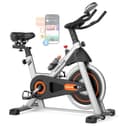
The YOSUDAis the other no-bill answer and the budget pick, by removing the question entirely: there is no app, so there is nothing to subscribe to. A 35 lb flywheel, a 270 lb published capacity, caged pedals with straps and an LCD that counts time, speed, distance, calories and odometer. Honest cons: this flagship uses friction resistance— a felt pad that wears and eventually needs replacing, where a magnet does not — and there is no connectivity at all, so no app of any brand will ever read this bike. If you want a cheap bike that takes classes, this is the wrong pick and the IC4 is the right one.
If it was not the Bike you wanted
Peloton sells a Tread and a Row as well, and the same two problems apply with different hardware.
Instead of a Peloton Tread
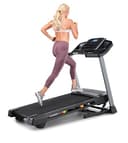
The NordicTrack EXP 7iis the closest shape: a 7-inch HD touchscreen with trainer-controlled automatic incline through iFIT, a full 20 × 55 in deck and a 300 lb capacity on a SpaceSaver folding frame with FlexSelect cushioning. If what you liked about Peloton was an instructor changing the machine under your feet, this reproduces it.
But read the con, because it is the same con you are leaving: the best features sit behind a paid iFIT membership. This is a subscription-shaped answer to a subscription-shaped complaint, and it only makes sense if your problem was problem 1, not problem 2. There is also no decline, and the screen is smaller than NordicTrack’s pricier models. If the monthly fee is the thing you are escaping, go to best treadmills and buy a machine whose console works on its own, or read NordicTrack vs Horizon treadmill, which is exactly that trade-off held side by side.
Instead of a Peloton Row
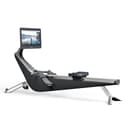
The Hydrowis the premium-tier answer and the most expensive machine on this page: near-silent electromagnetic resistance with computer-controlled drag, a 22-inch pivoting HD touchscreen that turns to face the room for cross-training content, and a 375 lb capacity — the highest here. Honest cons, and they are substantial: the classes require a Hydrow membership, so again this is a swap and not an exit; the frame is 86 in long; and upright storage needs an add-on kit, which means the storage solution is a separate purchase. If you want to row without a membership at all, best rowing machines ranks the field on the machine rather than the content, and Concept2 alternatives is the page for people solving the mirror-image version of this problem.
What none of these five gives you
Three things, stated plainly, so nothing here is a surprise after the box arrives.
The integrated screen on a bike.Neither the Schwinn, the Sunny nor the YOSUDA has one. On the IC4 you are propping a tablet on a shelf, and your cadence, resistance and output do not flow into the class automatically the way they do on a Peloton — that hardware-to-content handshake is the thing you are actually buying from Peloton, and it is the thing that does not survive the move.
The leaderboard and the roster. SunnyFit and iFIT have libraries; neither has the instructor following or the competitive layer people stay with Peloton for. If a leaderboard is what gets you on the bike at 6am, be honest about that before you switch, because motivation is a feature.
Full disclosure on the cheap machines. Sunny publishes no maximum user weight and no monitor spec for the Vega. YOSUDA publishes no footprint. Peloton, for all the price, publishes its numbers. That is a real trade and it is part of what the lower price buys.
What we would buy
The Schwinn IC4if you are keeping the classes and dropping the hardware bill — it is the only machine here that takes Peloton’s own app as a guest, and the 40 lb flywheel is the best ride on this page. The Sunny Vegaif you are done paying monthly and more than one person rides, for the free app and the published 29 to 39.8 in inseam range. The YOSUDA if the number on the price tag is the whole brief and you can live with a wearing friction pad. The NordicTrack EXP 7i only if your problem was the bike and not the subscription, and you want a tread. The Hydrow if you want to row and the screen was the point.
Prices on this page are live from our price layer with the date they were read, so you can check the gap between any of these and Peloton’s published $1,695 yourself rather than take our word for it. Peloton’s $49.99/mo is quoted from Peloton’s own footnote; it is not a figure we estimated.