Upright vs Recumbent Exercise Bike
Posture, back support and joint impact set these two bike styles apart. Which suits seniors and bad backs, and which suits a hard, cycling-style ride.
The difference between an upright and a recumbent bike is where your body sits and how hard you can push from there. On an upright bike — here the Schwinn IC4, a proper indoor cycle — you lean forward over the bars in a road-bike posture, your core and upper body stay involved, and you can stand out of the saddle to spike the intensity. On a recumbent — the Schwinn 290 — you sit back in a supportive seat with the pedals out in front, the frame steps through so it is easy to get on and off, and the whole ride is gentle on the joints and the lower back.
Neither style is better in the abstract; they suit different bodies and goals. If you have back issues, joint pain, or you simply want comfortable, sustainable seated cardio, the recumbent is the kinder choice. If you want the feel of cycling, the option to do intervals and stand, and the highest intensity for the effort, the upright wins. Both options below show a live price so you can match the bike to how you actually plan to ride.
How this is funded: we earn a commission if you buy through our links, at no extra cost to you. It never changes which product we recommend, and we’ll tell you when we’d skip one. Full disclosure.
| Feature | Upright / indoor cycle | Recumbent |
|---|---|---|
| Posture | Forward lean, road-bike style | Reclined, seated with back support |
| Back support | None (saddle only) | Full seat back, step-through frame |
| Resistance | Magnetic, 100 micro-levels | Magnetic (ECB), 25 levels |
| Programs | None onboard; uses apps | 13 preset programs |
| Joint impact | Low, with more core and upper-body work | Very low, minimal joint stress |
| Intensity | Higher - stand and sprint | Steady seated cardio |
| Max user weight | 330 lb | 300 lb |
| Best for | Cycling feel and intervals | Seniors, back issues, comfort |
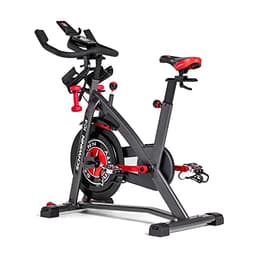
Upright / indoor cycle
Schwinn IC4 Indoor Cycling Bike
Buy this if: Riders who want a cycling feel, interval intensity and the option to stand out of the saddle.
Strengths
- Upright cycling posture keeps the core and upper body engaged
- 100 micro-adjustable magnetic levels for sprints and climbs
- Standing intervals let you reach higher intensity
- Pairs over Bluetooth with Peloton, Zwift and other apps
Trade-offs
- Forward, saddle-based position can strain the lower back and wrists
- Less comfortable for long, gentle sessions
- Not ideal for users with back pain or limited mobility
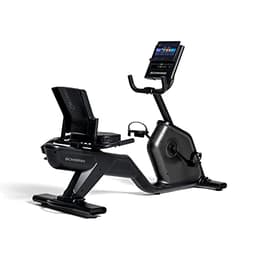
Recumbent
Schwinn 290 Recumbent Bike
Buy this if: Seniors, anyone with back issues or joint pain, and riders who want comfortable seated cardio.
Strengths
- Reclined seat with full back support
- Step-through frame is easy to get on and off
- 25 resistance levels and 13 preset workout programs
- Very low joint impact for gentle, sustained cardio
Trade-offs
- Large footprint that does not fold
- The seated position caps how hard you can push
- Console can feel cluttered and assembly is involved
Price as of September 21, 2026. #ad How we’re funded
Posture and back support
Everything about these bikes follows from how you sit. The upright IC4 puts you forward over the bars, weight through your hands and a saddle, in the posture of an outdoor cyclist — efficient and engaging, but demanding on the lower back and wrists over long rides. The recumbent 270 reclines you into a supportive seat with a backrest, pedals ahead of you and a step-through frame you can settle into without swinging a leg over. For anyone with back pain, balance concerns, or joints that flare up, that supported position is the whole point.
Intensity and calories
Calories burned come down to effort, and the upright makes it easier to reach high effort. You can stand, sprint and treat the IC4 like a spin-class bike, with 100 micro-adjustable resistance levels to fine-tune climbs and intervals. The recumbent keeps you seated, which naturally limits the top-end intensity but makes steady, sustainable sessions comfortable — and its 25 levels plus 13 preset programs give you plenty to work with. A hard recumbent session still counts fully toward the federal activity guidelines; the upright simply lets you get there in less time if you push.
Who each one suits
The clean split: back issues, joint pain, recovery, and older riders lean recumbent, where comfort and support keep you coming back; riders chasing a cycling feel, intervals and intensity lean upright. If you are shopping for an older adult or someone easing back into exercise, our best fitness equipment for seniors guide goes deeper, and the best exercise bikes roundup compares specific models of both styles. On the hardware side, Schwinn publishes a clear warranty on the upright IC4 — 10 years on the frame, 3 years on parts and electronics, 1 year on labor, with a 330 lb user limit — a useful sign of how long the maker expects the bike to last.
Wellness guidance, not medical advice. Pulse & Plate is written by a fitness enthusiast, not a doctor. Wearable heart-rate, SpO2, ECG and sleep readings are for general wellness, not diagnosis. For a heart concern, a symptom, or before starting a new exercise program, talk to a qualified professional.
Frequently asked questions
Is an upright or recumbent bike better for seniors?
For most seniors, a recumbent bike is the better fit. Its reclined seat with a backrest supports the lower back, the step-through frame is easy to get on and off, and the seated position is very low impact on the knees and hips. An upright bike can work for active, healthy older riders who want more intensity, but the recumbent is the safer, more comfortable default.
Which burns more calories, an upright or recumbent bike?
Calories depend mostly on how hard and how long you ride, not the bike style itself. That said, an upright indoor cycle makes it easier to reach high intensity because you can stand, sprint and do intervals, so many riders burn more per minute on it. A recumbent favors longer, steady sessions, which can add up to a strong calorie total over time.
Is a recumbent bike better for back pain?
Generally yes. The recumbent's reclined seat and full backrest support the spine and take pressure off the lower back, unlike the forward-leaning posture of an upright bike. Many people with back pain find they can ride comfortably on a recumbent when an upright would aggravate the issue. As with any exercise for an injury, check with your doctor or physical therapist first.
Can you get a good workout on a recumbent bike?
Absolutely. A recumbent bike delivers genuine cardiovascular exercise; the Schwinn 290, for example, offers 25 resistance levels and 13 preset programs to keep sessions challenging. You will find it harder to reach sprint-level intensity than on an upright, but for steady-state cardio, fat loss and heart health, a recumbent is a very effective, joint-friendly option.
Sources
- American Heart Association — Recommendations for Physical Activity in Adults — AHA's 150 min/week moderate aerobic + 2 days strength recommendation (accessed July 19, 2026)
- U.S. HHS / ODPHP — Physical Activity Guidelines for Americans (2nd ed.) — Federal guideline: 150–300 min/week moderate aerobic + muscle strengthening 2+ days (accessed July 19, 2026)
- Schwinn Fitness — IC4 Indoor Cycling Bike (published warranty) — 10-year frame, 3-year mechanical parts and electronics, 1-year labor; 330 lb max user weight (accessed July 20, 2026)
- Schwinn Fitness - 290 Recumbent Bike (published specifications and warranty) — 25 magnetic resistance levels, 13 workout programs, 330 lb max user weight, 66.4 x 28 x 47 in assembled, 107.6 lb, 7 in LCD, Bluetooth heart rate, JRNY and Zwift compatible with separate subscriptions, 10-year frame warranty (accessed September 4, 2026)
Keep reading
Best Exercise Bikes
Upright, indoor-cycle and recumbent models compared on comfort, resistance and price.
See the picksBest Fitness Equipment for Seniors
Low-impact, supportive machines for older adults, including recumbent bikes.
Read the guideCardio Equipment
How exercise bikes fit alongside treadmills and rowers for home cardio.
Explore cardioHow to Build a Home Gym
Where a bike fits in a complete setup, and what to pair it with.
Read the guideSchwinn IC4 vs Echelon EX-5
Settled on an upright cycle? These are the two most people end up choosing between.
Compare the bikes