How to choose resistance bands
“Resistance bands” covers three different tools. Match the type to the job first; resistance level and safety come next.
Tubes, loops or pull-up bands
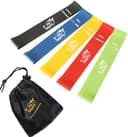
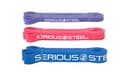
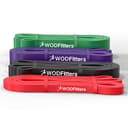
Clip-on tube sets with handles are the most versatile for pressing, rowing and curls, and they stack to add resistance. Flat therapy loops are for warm-ups, mobility and glute work — light by design. Long continuous pull-up bands assist chin-ups and anchor for heavy resisted work. Many people end up owning a tube set plus a pack of loops, since they solve different problems. The two loop types are the pair most often confused, because they are sold under one name and cannot do each other’s job — best loop resistance bands ranks five sets by loop length first, then by whether the maker states the resistance in pounds at all. The tube half of the category gets the same treatment in best resistance tube bands — four sets and single tubes ranked on whether the resistance is published per tube, and at what amount of stretch.
Safety and durability
This is the spec people skip. A band that snaps under tension can recoil hard, so an inner anti-snap cord (as on the Bodylastics tubes) is a real advantage. Inspect bands for nicks before loading them, keep them out of direct sun, and replace any that show cracking. Layered-latex loops tend to outlast glued or molded ones.
Where bands fall short
Bands add resistance that increases as they stretch, which is great for some lifts and awkward for others, and even heavy sets are light compared with a loaded barbell for building maximal strength. Treat them as a portable, joint-friendly complement rather than a full replacement for weights. For the heavier end, see adjustable dumbbells or a power rack.
Bands are often bought as an alternative to weights rather than alongside them, and that is a different question: resistance bands vs dumbbells compares how each loads a movement and where bands genuinely fall short.