How to replace a Theragun without being disappointed
Three specs decide it, and only one of them appears in most product photography.
1. Amplitude is the feel. Match it or accept a different sensation.
Amplitude is how far the head travels per stroke, and it is the single spec that makes a Theragun feel like a Theragun. The Prime publishes 16 mm; the cheaper Relief publishes 10 mm. That is the real ladder inside Therabody’s own line, and it is the ladder your alternative has to climb.
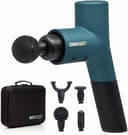
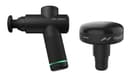
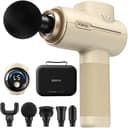
Of the alternatives, the Ekrin B37 publishes 12 mm, which sits between the two Theraguns and above the Relief. RENPHO publishes 10 mm, matching the Relief exactly at a far lower price — which is the strongest single argument on this page for buying the cheap gun. Hyperice does not publish an amplitude figure for the Hypervolt Go 2 at all, which is worth knowing: it compensates with speed, reaching 3,200 PPM, and a fast short stroke is a buzz rather than a thump. Not worse, genuinely different. If the Theragun ladder itself is the decision you are making, Theragun Relief vs Prime is the page for it.
2. Stall force is how hard you can press before the motor quits
This is the spec nobody mentions until they are disappointed. Stall force is the pressure at which the head stops moving. On a calf or a quad you will push harder than you think, and a gun that stalls under that pressure is doing nothing but vibrating against you.
Here the published numbers are stark. Therabody states up to 30 lb of no-stall force for the Prime and 20 lb for the Relief. Ekrin publishes 56 lb for the B37, which is nearly double the Prime and the reason it is our top alternative. Neither RENPHO nor Hyperice publishes a stall-force figure for the devices here. Treat that silence as a risk if you are a heavier or stronger person working on big muscle groups, and read it as a non-issue if you want a gun for a tight neck and shoulders.
3. Battery is where the cheaper guns actually win
Therabody publishes up to 120 minutes for both the Prime and the Relief. Ekrin advertises up to 8 hoursfor the B37 and reports roughly 5–6 hours in testing, and Hyperice publishes up to 3 hoursfor the Go 2. RENPHO publishes a 2,500 mAh cell rather than a runtime, which varies by speed.
That is a clean win for the alternatives and a practical one: a gun you have to remember to charge is a gun that lives in a drawer. The Hypervolt Go 2 is also the travel pick here for a second reason — 1.5 lb against 2.2 lb for both the Prime and the B37, which is the difference between a device that goes in hand luggage and one that does not. The whole category is ranked on these specs in best massage guns, and Theragun vs Hypervolt takes the two brand philosophies head to head.
The cheapest real alternative has no motor
Two of our five picks are foam rollers, and this is not a cop-out. A percussion gun and a roller are two ways of applying pressure to soft tissue, and the roller is the one with the longer track record: most of the published work on self-myofascial release and short-term range-of-motion gains was done with rollers, not guns.
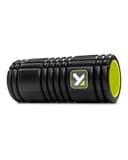
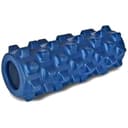
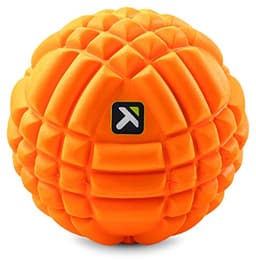
The TriggerPoint GRIDis the pick for most people: 13 in long, 5.5 in across, a multi-density EVA surface over a hard hollow core, and a published 500 lb weight capacity— which is the figure that tells you it will not go soft in a year. The RumbleRolleris the deep-tissue answer: high-profile molded bumps that dig in the way a gun head does, in lengths from 13 to 31 in. Note that RumbleRoller publishes neither a durometer rating nor a weight capacity, so the firmness claim is a description rather than a number.
What a roller costs you is effort and reach: you have to get on the floor, and there are places — a shoulder, a forearm, your own upper back — where a gun reaches and a roller cannot. That is the honest trade, and we work through it properly in massage gun vs foam roller. If you want the technique rather than the hardware, how to use a foam roller and how to use a massage gun are both worth ten minutes before you spend anything.
What you give up by leaving Theragun
Three things, stated fairly. The 16 mm amplitude of the Prime is not available anywhere else on this page, and if that long thumping stroke is what you liked, nothing here reproduces it. The triangular handleis a real ergonomic design rather than a style choice — it gives you three grips and lets you reach your own back, which a pistol-grip gun makes harder. And Therabody is a large company with a published warranty, which is worth something against a smaller brand.
What you are not giving up is results, as far as anybody can show. No maker on this page publishes evidence that one amplitude figure recovers muscle better than another, and we are not going to invent any. Percussion and rolling are both best understood as short-term comfort and range-of-motion tools, and the thing that actually drives recovery is sleep, food and sensible training load. Our recovery tools roundup puts the whole category in that context, and vibrating vs standard foam roller applies the same scepticism to the roller category.
What we would buy
The Ekrin B37if you want a genuine Theragun replacement: 12 mm of amplitude, a published 56 lb stall force, five speeds to 3,200 RPM and hours of battery rather than minutes. The Hypervolt Go 2if it has to fit in a bag, at 1.5 lb with three speeds and up to 3 hours. The RENPHOif the price is the whole brief — it matches the Relief’s published amplitude with more speeds, and the missing stall-force figure is the risk you are accepting. And the TriggerPoint GRID if you would rather not own another thing with a battery, which is a more sensible position than this category usually admits.