Massage Gun vs Foam Roller
Two of the most popular recovery tools, side by side, so you can see where each one wins and decide whether you need one, the other, or both.
Massage guns and foam rollers get lumped together as “recovery gear,” but they solve different problems. A foam roller uses your own body weight to work broad muscle groups — quads, back, calves — for almost no money and no battery. A massage gun delivers fast, focused percussion that hits a specific tight spot a roller simply glides over.
So the real question is rarely which is “better” but which one you should buy first, and whether you eventually want both. If you are choosing on price and broad coverage, the roller wins. If you want pinpoint relief you can use one-handed at a desk, the gun wins. Below is the short answer, a side-by-side matrix, and a plain “buy this if” call for each.
How this is funded: we earn a commission if you buy through our links, at no extra cost to you. It never changes which product we recommend, and we’ll tell you when we’d skip one. Full disclosure.
| Feature | Massage gun | Foam roller |
|---|---|---|
| Cost | Higher (electronic device) | Low (simple foam) |
| Coverage area | Small head, spot by spot | Large surface, whole muscles |
| Targeting knots | Excellent, pinpoint | Fair, broad pressure |
| Portability | Grab-and-go, gym bag or desk | Bulky, needs floor space |
| Ease of use | One hand, no setup | Uses body weight, floor position |
| Best for | Targeted, on-the-spot relief | Cheap broad recovery and warm-ups |
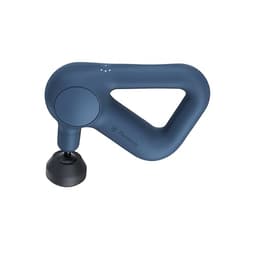
Massage gun
Therabody Theragun Relief
Buy this if: You want quick, targeted relief on a specific tight spot, or a tool you can use one-handed without getting down on the floor.
Strengths
- Pinpoints a single knot far better than broad rolling
- Works one-handed, at a desk or trackside
- Adjustable intensity through speeds and swappable heads
- Takes almost no floor space or setup
Trade-offs
- Costs more than a foam roller
- Needs charging and has a motor and moving parts to fail
- Cheaper guns lack the depth for dense muscle
Price as of October 22, 2026. #ad How we’re funded
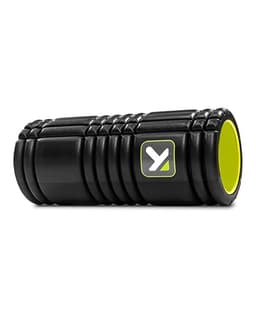
Foam roller
TriggerPoint GRID Foam Roller
Buy this if: You want the most recovery per dollar and broad coverage of big muscle groups like quads, back and calves.
Strengths
- Very inexpensive and essentially indestructible
- Covers large muscle areas quickly
- No battery, no motor, nothing to break
- Doubles as a mobility and warm-up tool
Trade-offs
- Awkward to target one small knot precisely
- Needs floor space and getting down onto it
- Pressure comes from body weight, so it is harder to fine-tune
How to use them together
The best routine usually uses both for what each is good at. Start a session with a foam roller to warm up large muscle groups — quads, hamstrings, back, calves — spending 30–60 seconds per area to get blood moving before you train. Save the massage gun for afterward, or for a specific spot that stays tight, where its pinpoint percussion can work a knot the roller rolls straight over.
Neither tool replaces the training itself. Recovery gear helps you stay consistent, but the results still come from regular activity and muscle-strengthening work. If you are still deciding what to buy first, our foam roller picks and massage gun picks break down the options at every budget.
Frequently asked questions
Is a massage gun or foam roller better?
Neither is universally better; they do different jobs. A foam roller is cheaper and covers large muscle groups quickly, while a massage gun targets a single knot with focused percussion. Most people who use both reach for the roller to warm up broadly and the gun for a specific stubborn spot.
Which should I buy first?
For most people, the foam roller. It is inexpensive, durable, needs no charging, and covers the most muscle for the money, so it delivers the most recovery per dollar out of the gate. Add a massage gun later if you find you want pinpoint relief on specific tight spots.
Can a massage gun replace a foam roller?
Not really. A gun's small head is built for targeting one spot, so covering large areas like the whole back or both quads is slow and tiring compared with rolling. They complement each other more than they substitute, which is why many people keep both.
Do I actually need both?
No, plenty of people do fine with just one. If you mostly want broad warm-up and recovery on a budget, a foam roller alone is enough. If your main issue is pinpointing tight knots, a massage gun alone works. Owning both simply lets you match the tool to the moment.
Sources
- U.S. HHS / ODPHP — Physical Activity Guidelines for Americans (2nd ed.) — Federal guideline: 150–300 min/week moderate aerobic + muscle strengthening 2+ days (accessed July 19, 2026)
- CDC — Adult Activity: An Overview — CDC on muscle-strengthening 2+ days/week, 8–12 reps, all major muscle groups (accessed July 19, 2026)
Keep reading
How to use a foam roller
Technique, timing and the two areas to avoid - if the roller is the tool you land on.
Read the how-toBest Massage Guns
If the gun wins for you, here are the five we'd buy, from budget to full deep-tissue depth.
See the massage gunsBest Foam Rollers
If you're starting with the roller, these are the firm, beginner and textured picks to know.
See the foam rollersRecovery & Accessories
The full recovery hub, with every tool that helps you bounce back and stay consistent.
Browse recovery