Pulse & Plate

Best Foam Rollers

The rollers worth owning, sorted by firmness, length and texture, so you can match the pressure to your experience without paying for features you won't use.

By Stephen V.Last updated How we research

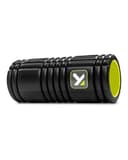
The roller to buy first is the TriggerPoint GRID. Its rigid hollow core stays firm for years instead of packing flat like a cheap solid cylinder, and the multi-density surface delivers a moderate, varied pressure that suits almost everyone. It is the safe default: firm enough to do real work, not so aggressive that it scares off a beginner in the first week.

From there it is about matching firmness and texture to experience. If you only want to spend a little, a plain Amazon Basics high-density cylinder does the core job and comes in whatever length you need. New to rolling? The medium-density 321 STRONG is far more forgiving. Chasing stubborn knots? The bumpy RumbleRoller digs in like a set of thumbs, and the vibrating Hyperice Vyperlayers on a genuine (if pricey) warm-up upgrade. You do not need the expensive options — a firm roller and ten honest minutes is most of the benefit. Below are five picks, then how a roller stacks up against a massage gun if you are weighing the two.

How this is funded: we earn a commission if you buy through our links, at no extra cost to you. It never changes which product we recommend, and we’ll tell you when we’d skip one. Full disclosure.

Picks at a glance

Ranked on published specs, footprint and buyer fit. Select a row to jump to the full write-up. We have not tested these ourselves — here is exactly what we do instead.

#ProductBest forPrice
1
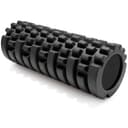
TriggerPoint GRID Foam Roller

TriggerPoint GRID Foam Roller

The default first roller for good reason: a rigid hollow core wrapped in multi-density foam that holds its shape for years and offers a moderate, varied surface.

Best overall
$29.99 · View on Amazon

$39.9925% off

Price as of July 20, 2026. #ad How we’re funded

2
Amazon Basics High-Density Foam Roller

Amazon Basics High-Density Foam Roller

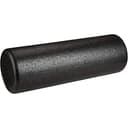
A firm, smooth, no-frills cylinder that's honestly all many people need: it's cheap, it's durable, and it comes in whatever length you want.

Best budget
$12.99 · View on Amazon

Price as of July 20, 2026. #ad How we’re funded

3
321 STRONG Foam Roller

321 STRONG Foam Roller

A textured budget roller that splits the difference: medium density and a solid core make it approachable for beginners while still doing real trigger-point work.

Best for beginners
$25.91 · View on Amazon

$27.787% off

Price as of July 20, 2026. #ad How we’re funded

4
Hyperice Vyper 3 Vibrating Roller

Hyperice Vyper 3 Vibrating Roller

Adds three speeds of strong vibration to a firm roller, which is a real (if pricey) upgrade for warm-ups; just know the vibration is a nice-to-have, not a must-have.

Best vibrating
$305.00 · View on Amazon

$318.004% off

Price as of July 20, 2026. #ad How we’re funded

5
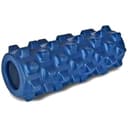
RumbleRoller Textured Foam Roller

RumbleRoller Textured Foam Roller

The aggressive specialist: tall, firm-but-flexible bumps dig into knots far deeper than a standard roller, which is exactly why beginners should approach it with caution.

Best for deep tissue
$49.95 · View on Amazon

Price as of July 20, 2026. #ad How we’re funded

The picks in full

#1Best overall

TriggerPoint GRID Foam Roller

The default first roller for good reason: a rigid hollow core wrapped in multi-density foam that holds its shape for years and offers a moderate, varied surface.

Strengths

  • Hollow rigid core keeps its firmness and shape
  • Multi-density GRID pattern varies the pressure
  • Rated to 500 lb, so it holds up to standing work

Trade-offs

  • Costs more than a plain foam cylinder
  • 13 in length is short for some full-body positions
Length13 in
Diameter5.5 in
SurfaceMulti-density EVA (GRID pattern)
CoreHard hollow core
Weight capacity500 lb
Weight1.32 lb

Specs read from the product listing, on July 19, 2026. “Not published” means the maker does not state that figure.

#2Best budget

Amazon Basics High-Density Foam Roller

A firm, smooth, no-frills cylinder that's honestly all many people need: it's cheap, it's durable, and it comes in whatever length you want.

Strengths

  • One of the cheapest solid options
  • Firm molded foam that keeps its shape
  • Sold in four lengths for different uses

Trade-offs

  • Smooth surface can't target knots like a textured roller
  • The high-density firmness feels harsh to newcomers
Length options12 / 18 / 24 / 36 in
Diameter6 in
SurfaceSmooth (no texture)
MaterialMolded polypropylene (high density)
Density ratingNot published
Weight capacityNot published

Specs read from the product listing, on July 19, 2026. “Not published” means the maker does not state that figure.

#3Best for beginners

321 STRONG Foam Roller

A textured budget roller that splits the difference: medium density and a solid core make it approachable for beginners while still doing real trigger-point work.

Strengths

  • Affordable for a textured, multi-zone roller
  • Medium density is forgiving for new users
  • Solid EPP core won't crack like some hollow rollers

Trade-offs

  • Medium density feels too soft for dense, experienced muscles
  • Texture is milder than aggressive rollers like the GRID or RumbleRoller
Length12.75 in
Diameter5.25 in
DensityMedium
SurfaceEVA triple-grid 3D zones
CoreSolid EPP foam
Weight capacity500 lb

Specs read from the product listing, on July 19, 2026. “Not published” means the maker does not state that figure.

#4Best vibrating

Hyperice Vyper 3 Vibrating Roller

Adds three speeds of strong vibration to a firm roller, which is a real (if pricey) upgrade for warm-ups; just know the vibration is a nice-to-have, not a must-have.

Strengths

  • Three genuinely powerful vibration settings
  • Firm EPP body that also works as a plain roller
  • Bluetooth app for automated speed control

Trade-offs

  • Expensive next to a standard foam roller
  • Heavier (2.7 lb) with only ~2 hr of battery
Vibration speeds3
Motor34W
Battery~2 hr
Length13 in
Diameter5.4 in
Weight2.7 lb

Worth knowing. Connects to the Hyperice app over Bluetooth so the vibration speed can be set from the app rather than cycled by hand.

Specs read from the product listing, on July 19, 2026. “Not published” means the maker does not state that figure.

#5Best for deep tissue

RumbleRoller Textured Foam Roller

The aggressive specialist: tall, firm-but-flexible bumps dig into knots far deeper than a standard roller, which is exactly why beginners should approach it with caution.

Strengths

  • Firm flexible bumps reach knots like thumbs
  • Available in compact, mid, and full lengths
  • Very durable proprietary foam construction

Trade-offs

  • Too intense for most beginners
  • The bumps can feel uncomfortable on bony or sensitive areas
Length options13 / 22 / 31 in
Diameter options5 / 5.5 / 6 in
FirmnessOriginal (firm but flexible bumps)
SurfaceHigh-profile molded bumps
Durometer / densityNot published
Weight capacityNot published

Worth knowing. The bumps are engineered firmer than the surrounding foam so they knead and deflect around bone instead of flattening out.

Specs read from the product listing, on July 19, 2026. “Not published” means the maker does not state that figure.

How to choose a foam roller

Foam rollers look interchangeable, but three things change how one feels under your body weight — and whether you will actually keep using it.

Density and firmness

Firmness decides how intense the roll is. Softer, low-density rollers flex under you and are gentle enough for a first week; high-density and rigid-core rollers push back harder and reach deeper into tight tissue. Beginners and lighter users usually want medium density; experienced users and denser muscles want firm. Quick test: press your thumb into the foam — if it barely gives, it will feel intense on a sore muscle.

Length

A long roller (about 36 in / 90 cm) spans your whole back and lets you lie along your spine, which is the most stable, beginner-friendly position. Shorter rollers (12–18 in) are more portable and better for working one limb at a time, but they wobble more during back work. If you only buy one, the longer roller is the more versatile choice for home use.

Texture

Smooth rollers spread pressure evenly and are the most comfortable; textured rollers with ridges or bumps concentrate pressure to mimic a thumb pressing into a knot. Texture is not “better,” just more targeted — and more intense. Start smooth or lightly textured, and only graduate to an aggressive bumpy roller once your tissue is used to the pressure.

Whatever you pick, rolling is a warm-up and recovery aid around your training, not the training itself — guidelines still point to regular aerobic work and muscle-strengthening as the foundation. For pinpoint relief on one specific knot, a massage gun reaches spots a roller glides straight over.
Frequently asked questions

Does foam rolling actually work?

For loosening tight muscles and improving short-term range of motion before a workout, most people find rolling genuinely helps, and it is a cheap, low-risk way to warm up and wind down. It will not lengthen muscles permanently or replace training, but as a mobility and recovery habit around your sessions it earns its small price.

How firm should my foam roller be?

If you are new to rolling or on the lighter side, start with a medium-density or moderately firm roller like the TriggerPoint GRID or 321 STRONG. Firmer, rigid-core rollers reach deeper but can feel harsh at first. You can always add pressure by shifting more body weight onto the roller, so it is better to start softer than to buy something too intense to use.

How long and how often should I foam roll?

Spend roughly 30 to 60 seconds per muscle group, rolling slowly and pausing on tender spots for a few breaths. Daily is fine, and many people roll briefly before training to warm up and after to ease soreness. Keep it off bones and joints, and avoid grinding hard on one painful point.

Should I get a foam roller or a massage gun first?

For most people the foam roller is the smarter first buy: it is cheaper, covers large muscle groups quickly, and never needs charging. A massage gun is the better tool for pinpointing one stubborn knot. If your budget only stretches to one, start with a firm roller, then add a gun later. Our comparison walks through where each one wins.

Sources

Keep reading