Vibrating vs Standard Foam Roller
A vibrating roller adds three speeds of buzz to a firm cylinder — but is it worth ten times the price of a proven standard roller? What the vibration actually does, and who should pay for it.
A standard foam roller is one of the best-value pieces of gear you can own: a firm cylinder you press your body weight into to work stiff muscles, for well under thirty dollars. A vibrating roller adds a rechargeable motor and several speeds of vibration on top of that, which can help muscles relax and make rolling more tolerable — for roughly ten times the price. Here we put the well-known TriggerPoint GRID (standard) against the Hyperice Vyper 3 (vibrating) to answer whether the buzz is worth it.
The honest headline: vibration is a genuine but optional upgrade. For most people, a good standard roller does the core job completely. The vibrating version earns its price for a narrower group — athletes and anyone who finds firm rolling too intense to relax into. Both options below show a live price.
How this is funded: we earn a commission if you buy through our links, at no extra cost to you. It never changes which product we recommend, and we’ll tell you when we’d skip one. Full disclosure.
| Feature | Standard (TriggerPoint GRID) | Vibrating (Hyperice Vyper 3) |
|---|---|---|
| Vibration | None | 3 speeds (34W motor) |
| Power | None needed | Rechargeable (~2 hr battery) |
| Length | 13 in | 13 in |
| Diameter | 5.5 in | 5.4 in |
| Weight | 1.32 lb | 2.7 lb |
| Core / surface | Hard hollow core, multi-density EVA | Firm EPP body |
| App | None | Bluetooth speed control |
| Best for | Everyday rolling, value | Warm-ups, athletes, buzz therapy |
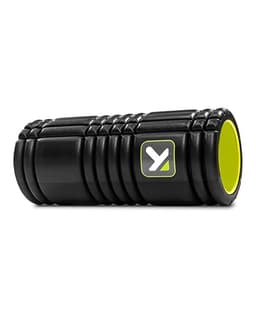
Standard (TriggerPoint GRID)
TriggerPoint GRID Foam Roller
Buy this if: Almost anyone who wants one durable, do-it-all roller that holds its shape for years without a battery to charge.
Strengths
- Hollow rigid core keeps its firmness and shape
- Multi-density GRID surface varies the pressure
- Rated to 500 lb and only 1.32 lb to carry
- A fraction of the price of a vibrating roller
Trade-offs
- No vibration to help muscles relax
- 13 in length is short for some full-body positions
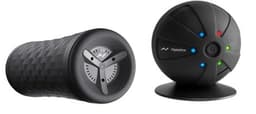
Vibrating (Hyperice Vyper 3)
Hyperice Vyper 3 Vibrating Roller
Buy this if: Athletes who want vibration therapy layered onto rolling, or anyone who finds firm rolling too intense to relax into.
Strengths
- Three genuinely powerful vibration settings
- Firm EPP body doubles as a plain roller
- Bluetooth app for automated speed control
Trade-offs
- Around ten times the price of a standard roller
- Heavier at 2.7 lb with only ~2 hr of battery
- Needs charging; the vibration is an extra, not essential
What does the vibration actually add?
Rolling works by applying sustained pressure to muscle and connective tissue, which can ease tightness and improve how a muscle moves. Vibration layers a rapid oscillation on top of that pressure. The practical effect people report is that the buzz makes the muscle relax and makes firm rolling feel more tolerable, so you can spend longer on a tender spot. It’s a comfort-and-compliance upgrade more than a fundamentally different treatment: the same TriggerPoint-style pressure is doing the underlying work.
Price, weight and upkeep
This is where the standard roller pulls decisively ahead for most buyers. The GRID is light (1.32 lb), needs no charging, and costs a small fraction of the Vyper. The Vyper is heavier (2.7 lb), holds only around two hours of battery, and has to be charged before a session — a minor chore, but a chore a plain roller never asks of you. If a roller is going to live in a bag or get thrown in a car, the simplicity of the standard one is a feature.
Who the vibrating roller is actually for
Two groups get real value from vibration. The first is athletes using it as part of a warm-up, where the extra stimulation can help prime muscles before training. The second is people who find a firm roller so uncomfortable that they avoid rolling altogether — the vibration can make the same pressure bearable, which means they actually do it. If you’re in neither group, you’re paying a large premium for a feature you won’t miss. For beginners especially, a gentler standard roller is usually the smarter start; our foam roller roundup covers softer and textured options too.
The verdict in one line
Buy the standard roller first. It does the job, lasts for years, and costs almost nothing. Add vibration only if you have a specific reason — and if you want targeted, pinpoint relief instead of broad rolling, a massage gun is a better use of that upgrade money than a vibrating roller. Our massage gun vs foam roller guide weighs those two upgrade paths against each other.
Frequently asked questions
Is a vibrating foam roller worth it?
For most people, no — a standard roller does the core job for a fraction of the price. A vibrating roller is worth it for a narrower group: athletes who want vibration in a warm-up, and people who find firm rolling so uncomfortable that the buzz is what lets them actually do it. If neither applies, put the extra money toward a massage gun instead.
What does vibration do on a foam roller?
The vibration adds a rapid oscillation on top of the pressure you already apply by rolling. In practice it tends to help the muscle relax and makes firm rolling more tolerable, so you can spend longer on tender spots. It does not replace the pressure — the same rolling action is doing the underlying work.
Do vibrating rollers need charging?
Yes. A vibrating roller like the Hyperice Vyper has a rechargeable battery — around two hours per charge — so you need to keep it topped up. A standard roller needs no power at all, which is part of why it is so much cheaper and more convenient to travel with.
Which foam roller is best for beginners?
A standard roller, and ideally one that is not too aggressive. Firm and textured rollers can be intense for new users; a medium-density smooth or lightly textured roller is more forgiving. Vibration is an advanced nice-to-have, not a beginner feature, so there is no need to spend up on it when starting out.
Sources
- American Heart Association — Recommendations for Physical Activity in Adults — AHA's 150 min/week moderate aerobic + 2 days strength recommendation (accessed July 19, 2026)
- U.S. HHS / ODPHP — Physical Activity Guidelines for Americans (2nd ed.) — Federal guideline: 150–300 min/week moderate aerobic + muscle strengthening 2+ days (accessed July 19, 2026)
Keep reading
Best Foam Rollers
Smooth, textured and vibrating rollers compared on density, length and who each firmness suits.
See the picksMassage Gun vs Foam Roller
The other upgrade decision — pinpoint percussion vs broad rolling.
Read the guideBest Massage Guns
For targeted relief a roller can't reach, percussion guns compared honestly.
See massage gunsRecovery & Accessories
How rollers fit alongside massage guns and mats in a complete recovery kit.
Explore recovery