Rowing Machine vs Treadmill
A full-body, low-impact pull against the most familiar cardio machine there is. Calories, joints, muscles worked and floor space — which one earns its place in your home.
A rowing machine and a treadmill both deliver excellent cardio at home, but they train you in almost opposite ways. A rower — here the Concept2 RowErg, the widely cited home standard — is a seated, full-body pull that works your legs, back, arms and core with almost no impact on the joints. A treadmill — the reliable Horizon T101 — is weight-bearing walking and running that’s intuitive, familiar, and the most direct way to train for anything on your feet.
Neither is better in the abstract; they suit different bodies and goals. If your knees, hips or back complain, or you want to work your whole body in one motion, the rower is the kinder, more complete machine. If you love to walk or run, want to train for a 5K, or just want the machine you’ll instinctively step onto, the treadmill wins. Both options below show a live price.
How this is funded: we earn a commission if you buy through our links, at no extra cost to you. It never changes which product we recommend, and we’ll tell you when we’d skip one. Full disclosure.
| Feature | Rowing machine | Treadmill |
|---|---|---|
| Motion | Seated full-body pull | Walking / running |
| Muscles worked | Legs, back, arms, core | Mainly legs |
| Joint impact | Very low (seated, no pounding) | Higher (weight-bearing) |
| Resistance / drive | Air, spiral damper 1-10 | 2.5 CHP motor, 0-10% incline |
| Monitor | PM5 (Bluetooth, ANT+) | LCD console, Bluetooth speakers |
| Footprint | 96 x 24 in (needs ~9 x 4 ft) | 20 x 55 in deck, folds up |
| Max user weight | 500 lb | 300 lb |
| Subscription | None | None required |
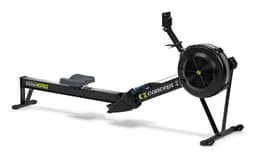
Rowing machine
Concept2 RowErg (Model D)
Buy this if: People who want low-impact, full-body cardio that works legs, back and arms in one motion — and best-in-class data.
Strengths
- Works most of the body in a single low-impact motion
- Legendary durability and the widely used PM5 monitor
- 500 lb capacity and separates into two pieces for storage
Trade-offs
- Air resistance is louder than a treadmill motor
- Rowing technique takes a little practice to do well
- Needs a long ~9 x 4 ft clear space to use
Price as of September 20, 2026. #ad How we’re funded
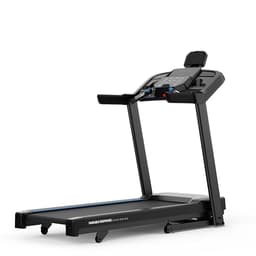
Treadmill
Horizon Fitness T101 Treadmill
Buy this if: Walkers and runners who want a familiar, weight-bearing machine with real powered incline and no subscription.
Strengths
- Intuitive walking and running with a genuine 2.5 CHP motor
- 0-10% powered incline adds intensity without more speed
- Hydraulic folding deck reclaims floor space; no membership required
Trade-offs
- Weight-bearing impact is harder on the joints than rowing
- 55-inch belt is short for taller runners at faster paces
- Works mainly the legs rather than the whole body
Price as of September 20, 2026. #ad How we’re funded
Joint impact: the rower is the gentler machine
The clearest difference is impact. Running is weight-bearing: every stride lands your body weight through the ankles, knees and hips, which builds bone and leg strength but can aggravate sore joints. Rowing is seated and smooth — there’s no landing at all, so it’s a common choice for anyone with knee, hip or back sensitivity who still wants to work hard. Walking on the treadmill closes much of that gap (it’s low-impact too), so if you mainly plan to walk, the joint argument matters less than if you plan to run.
Calories and muscles worked
Calorie burn comes down to effort more than machine, and both can push you hard. The difference is where the work lands. Rowing recruits legs, back, arms and core in every stroke, so a hard row is a full-body conditioning session; running is a powerful calorie burner but concentrates the work in the legs and cardiovascular system. If you want cardio that also builds and maintains upper-body and back muscle, the rower does two jobs at once. Either way, both machines make it easy to meet the federal activity guidelines of 150–300 minutes of moderate aerobic activity a week.
Space, noise and practicality
A treadmill has a fixed footprint but the Horizon folds up hydraulically to reclaim floor space between sessions. A rower needs a long clear lane to use — roughly nine feet — but the Concept2 separates into two pieces and stands on end for storage. On noise, the treadmill’s motor is a steady hum, while the rower’s air flywheel makes a rhythmic whoosh that’s louder on the pull; if quiet matters (apartments, sleeping kids), that’s worth weighing, and a magnetic roweris the quieter alternative. Neither machine here forces a subscription — Horizon states its equipment needs no membership to operate, and the Concept2 is entirely self-contained.
Which should you buy?
Buy the machine that matches how you want to move. Choose the rower for low-impact, whole-body conditioning and superb training data; choose the treadmill if you love walking or running, are training for an event on your feet, or simply want the most familiar machine in the house. If you can’t decide, ask which one you’d step onto without thinking — the best cardio machine is the one you’ll actually use. See the full field in our best rowing machines and best treadmills roundups.
Wellness guidance, not medical advice. Pulse & Plate is written by a fitness enthusiast, not a doctor. Wearable heart-rate, SpO2, ECG and sleep readings are for general wellness, not diagnosis. For a heart concern, a symptom, or before starting a new exercise program, talk to a qualified professional.
Frequently asked questions
Is a rowing machine or treadmill better for weight loss?
Both can drive significant calorie burn; the deciding factor is effort and consistency, not the machine. A rower works more muscle per stroke and is gentler on the joints, which helps some people train longer. A treadmill is a powerful calorie burner and very intuitive. The best choice for weight loss is whichever one you will use hard, several times a week.
Is rowing easier on the joints than running?
Yes. Rowing is seated and non-impact, so there is no pounding through the knees, hips and ankles. Running is weight-bearing and higher impact, which builds bone and leg strength but can aggravate sensitive joints. Walking on a treadmill is also low-impact, so the gap narrows if you mainly plan to walk rather than run.
Does a rowing machine work more muscles than a treadmill?
Yes. A rowing stroke recruits the legs, back, arms and core together, so it trains far more of the body than running, which concentrates the work in the legs and cardiovascular system. If you want cardio that also maintains upper-body and back muscle, a rower does two jobs in one motion.
Which takes up less space, a rower or a treadmill?
It depends on how you store them. A treadmill has a compact footprint and many, including the Horizon T101, fold up between uses. A rower needs a long clear lane to use — around nine feet — but models like the Concept2 separate into two pieces and stand on end for storage. Measure both your workout space and your storage space before deciding.
Sources
- American Heart Association — Recommendations for Physical Activity in Adults — AHA's 150 min/week moderate aerobic + 2 days strength recommendation (accessed July 19, 2026)
- U.S. HHS / ODPHP — Physical Activity Guidelines for Americans (2nd ed.) — Federal guideline: 150–300 min/week moderate aerobic + muscle strengthening 2+ days (accessed July 19, 2026)
- Concept2 — RowErg warranty — Five years on frame parts, two years on moving parts and the monitor (accessed July 20, 2026)
- Horizon Fitness — Connected tech — “Horizon Fitness does not require any subscription services to operate your fitness equipment” (accessed July 20, 2026)
Keep reading
Best Rowing Machines
Air, magnetic and water rowers compared on resistance feel, footprint and monitor.
See the picksBest Treadmills for Home
Folding and walking-pad treadmills compared on motor power, deck size and incline.
See the picksRowing Machine vs Exercise Bike
The other full-body-vs-legs cardio matchup, compared honestly.
Compare theseRowing Machine vs Elliptical
If it is your joints rather than your goals driving this, the elliptical is the other zero-impact option.
Compare theseRowing Machine vs Assault Bike
Same self-scaling air resistance as the rower, half the floor length, and a very different session.
Compare theseTreadmill vs Exercise Bike
Calories, joints, space and cost for the two most common cardio machines.
Read the comparison