Jump Rope for Weight Loss: What It Does and Does Not Do
A rope is the cheapest way to reach vigorous intensity in your own living room. It is also the piece of cardio equipment most often oversold. What a rope genuinely changes, and which one to buy for it.
How this is funded: we earn a commission if you buy through our links, at no extra cost to you. It never changes which product we recommend, and we’ll tell you when we’d skip one. Full disclosure.
Ropes that suit long sessions rather than speed work
Best rope for building sessions
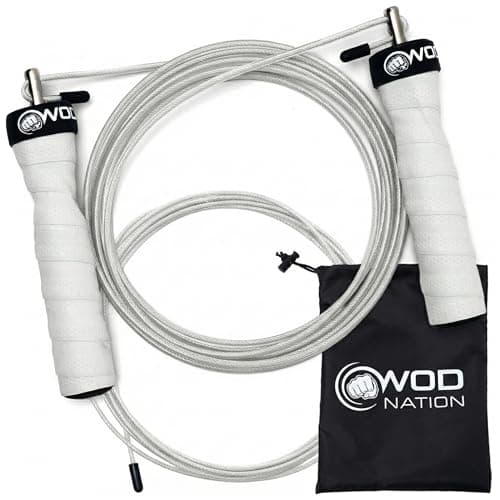
WOD Nation Attack Speed Jump Rope
Anyone learning double-unders or doing fast cardio intervals who wants a no-fuss speed rope.
$17.99 · View on AmazonFull comparisonPrice as of October 12, 2026. #ad How we’re funded
Cheapest way to start
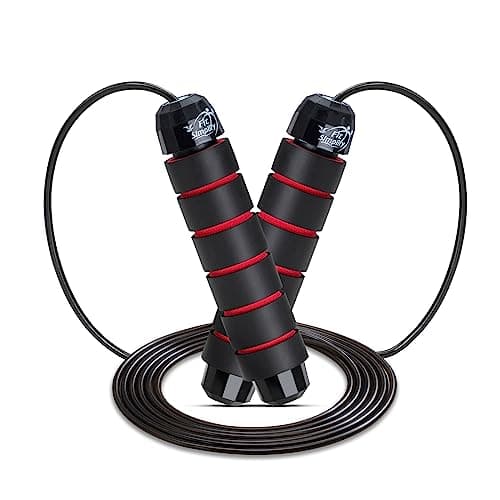
Fit Simplify Skipping Rope with Ball Bearings
Beginners and general fitness users who want a cheap, comfortable everyday rope.
$8.95 · View on AmazonFull comparisonPrice as of October 12, 2026. #ad How we’re funded
Best for low ceilings and shared floors
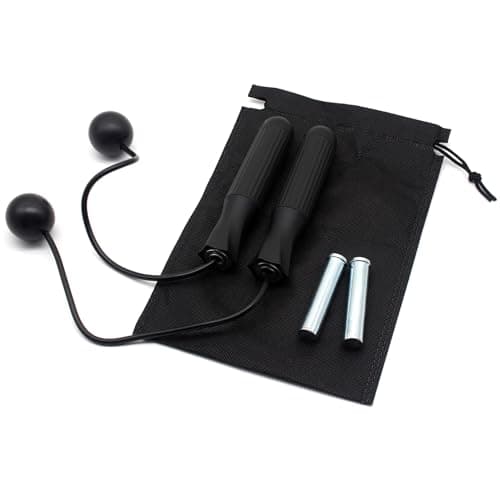
Benvo Weighted Cordless Jump Rope
Apartment and low-ceiling workouts, or beginners who keep tripping on a real cable.
$12.99 · View on AmazonFull comparisonPrice as of October 12, 2026. #ad How we’re funded
A jump rope costs less than a month of most gym memberships, fits in a coat pocket, needs about six feet of floor and no weather. Those four facts are why it keeps appearing on weight-loss lists, and they are genuinely the strongest case for it. What follows that case in most articles — a calorie figure, a comparison to running, a promise about belly fat — is where the honesty usually goes.
So here is the claim this page will defend and nothing beyond it: a rope is the cheapest and smallest-footprint way to accumulate vigorous-intensity minutes, and vigorous minutes are the ones the physical activity guidelines value at double. That is a real advantage. It is not the same as a weight-loss device, and the difference matters if you are deciding what to buy.
What the guidelines actually say, and why a rope fits them
The federal Physical Activity Guidelines for Americans ask adults for 150 to 300 minutes a week of moderate-intensity aerobic activity, plus muscle-strengthening work on two or more days. The part that matters for a rope is the conversion: the guidelines treat one minute of vigorous activity as equivalent to two minutes of moderate, so 75 to 150 minutes of vigorous activity satisfies the same recommendation. The American Heart Association frames the same target the same way.
Sustained rope jumping is vigorous for almost everybody, and you can verify that for yourself without a heart-rate monitor. Mayo Clinic’s description of the talk test is the practical version: at moderate intensity you can talk but not sing; at vigorous intensity you cannot say more than a few words without pausing for breath. Thirty seconds into a set of continuous jumps, most people are in the second category.
That is the whole mechanical advantage of a rope, stated precisely. Not that it burns more than other things — that it reaches the intensity band that counts double, immediately, in a space the size of a doormat, with equipment that costs under twenty dollars. If your barrier to cardio is time, weather, travel or money, a rope removes all four at once.
What a rope does not do
It does not create a calorie deficit.No equipment does. Exercise changes one side of an equation that has two sides, and a rope is a tool for spending energy and for improving cardiorespiratory fitness — which is worth having independent of what the scale says.
It does not target fat in a particular place.“Jump rope for belly fat” is one of the highest-volume searches in this category and the premise is wrong: you do not choose where fat comes off, and no movement pattern changes that.
It is not low-impact.This is the most practically important caveat and the one that stops most people in week two. Both feet leave the ground and both feet land together, repeatedly, which loads the calves, shins, ankles and knees harder than walking or cycling and harder per minute than running. If you are carrying significant weight, or you have a knee, ankle or back condition, that is a genuine reason to start with something else — a rowing machine is seated and non-impact, and our equipment for bad knees guide covers the alternatives. We are a fitness publisher and not clinicians; talk to a professional before starting if any of that applies.
It is not easy to do for thirty minutes. Beginners imagine the obstacle will be their lungs. It is almost always their calves and their timing. Which is why the build-up below looks slower than you expect.
How to build up without wrecking your shins
The first two weeks should feel almost trivially easy in cardiovascular terms, because you are training tissue tolerance rather than fitness. A structure that works:
Weeks 1–2. 30 seconds of jumping, 60 seconds of rest, eight to ten rounds. That is around 15 minutes total with four or five minutes of actual jumping. Two or three sessions a week with a day between them.
Weeks 3–4. Extend the work interval rather than adding rounds: 45 seconds on, 60 off, then 60 on, 60 off. The goal is one unbroken three-minute set before you worry about total volume.
After that.Mix long easy sets with short hard ones, and start counting toward the 75–150 vigorous minutes a week the guidelines describe. Expect calf and shin soreness early; expect it to stop.
Four details that prevent most injuries. Jump low— an inch of clearance is all the rope needs, and height is what loads the landing. Land on the balls of your feet with soft knees, not flat-footed. Pick your surface: wood, rubber mat or a sprung floor, not concrete, tile or a garage slab. And get the rope length right, because a rope that is too short forces you to jump higher and tuck your knees, which is both the main reason beginners trip and an extra impact load on every rep. Crossrope’s own sizing guidance is useful here: if you are between sizes and new to the rope, “go longer. More clearance gives you more forgiveness while you develop your timing.” Our rope sizing guide has the full height-to-length chart.
Which rope to buy for this specifically
The rope that suits weight-loss sessions is not the rope that suits double-unders, and the difference is worth understanding before you buy.
For building sustained sessions:a light rope with good bearings. The WOD Nation ships two cables — a 2.2 mm speed cable and a thicker 3.3 mm endurance cable — on four-bearing handles with a tool-free fold-over adjustment, which is the whole set of features you want: the thicker cable is more forgiving to time, the bearings keep the turn smooth through a long set, and you can set the length in seconds. It is also cheap.
For the lowest-cost start: the Fit Simplify rope has ball-bearing handles and foam grips for under ten dollars. Its listing publishes neither cable length nor cable material, which we say plainly, and at this price the honest trade is that you are buying on brand reputation rather than a spec sheet.
For low ceilings or a shared floor:a cordless rope with weighted handles. The Benvo has removable weights of about 180 g per handle and no cable to clear, which eliminates both the ceiling constraint and the slap of a cable on a hard floor. The cost is real and we will not hide it: without a rope there is no timing challenge, which is most of what makes jumping a skill. As a way to accumulate vigorous minutes in a flat with an eight-foot ceiling, it works.
What not to buy yet:a heavy weighted rope. It adds genuine arm and shoulder work and it is easier to feel through the rotation, but it slows the turn and makes long continuous sets much harder to sustain — which is the opposite of what you want when minutes are the goal. Our weighted vs speed jump rope comparison sets out when the trade is worth making.
The thing a rope cannot replace
The aerobic half of the recommendation is only half. Both the CDC and the federal guidelines ask for muscle-strengthening activity on two or more days a week, covering all the major muscle groups, and a rope does none of that — your calves aside, it is not a strength stimulus.
The cheapest way to add the missing half is a set of resistance bands, which cost about the same as the rope and store in the same drawer, or a pull-up bar in a doorway you already have. A rope plus bands is a complete programme that costs under fifty dollars and occupies no floor space, which is a genuinely unusual thing to be able to say about home fitness equipment.
And if impact is the problem rather than the budget, the honest substitution is a seated machine. Our fitness equipment for weight loss guide compares the whole field on the only criterion that matters over a year: which machine you will still be using in month six.
Wellness guidance, not medical advice. Pulse & Plate is written by a fitness enthusiast, not a doctor. Wearable heart-rate, SpO2, ECG and sleep readings are for general wellness, not diagnosis. For a heart concern, a symptom, or before starting a new exercise program, talk to a qualified professional.
Frequently asked questions
Does jumping rope help you lose weight?
It can contribute, in one specific way: a rope is an unusually efficient route to vigorous-intensity minutes, and the federal guideline counts one minute of vigorous activity as two minutes of moderate. So 75 to 150 minutes of vigorous activity a week satisfies the same recommendation as 150 to 300 minutes of moderate. What a rope does not do is create a calorie deficit on its own - no equipment does. Treat it as the cheapest, smallest-footprint way to accumulate hard minutes, not as a weight-loss device.
How long should I jump rope to lose weight?
Start far shorter than you expect. Jumping rope is genuinely high-impact and the limiting factor in week one is calf and shin tolerance rather than cardiovascular fitness. A workable build is 30 seconds on, 60 seconds off, for eight to ten rounds - about 15 minutes total with four or five minutes of actual jumping - two or three times a week, extending the work interval before you extend the number of rounds. The federal target to work towards is 75 to 150 minutes of vigorous activity per week.
Is a jump rope better than running for weight loss?
Neither is better; they fail in different places. A rope needs about six feet of space and no weather, costs under twenty dollars and reaches vigorous intensity in seconds. Running is easier to sustain for 30 unbroken minutes because the impact is distributed across a stride rather than landing on both feet at once, and it does not demand coordination. For most people the honest answer is that the rope wins on access and the run wins on duration - our jump rope vs running comparison works through the trade properly.
Will jumping rope hurt my knees or shins?
It is a high-impact activity and shin and calf soreness in the first two weeks is the norm rather than a warning sign. What is avoidable is the overuse version of it, and three things prevent most of it: build the volume up slowly, jump on a forgiving surface rather than concrete or tile, and keep the jumps low - an inch of clearance is enough for the rope to pass. If you have a knee, ankle or back condition, or a significant amount of weight to lose, talk to a clinician first and look at a lower-impact option.
Should I use a weighted rope for weight loss?
Only if you are already comfortable jumping. A weighted rope adds arm and shoulder work and is easier to feel and time, which some beginners prefer, but it slows the rotation and makes long continuous sets harder to sustain. For accumulating vigorous minutes - which is the mechanism that matters here - a light speed rope you can turn for three unbroken minutes beats a heavy rope you can turn for forty seconds. Our weighted vs speed jump rope comparison covers the choice in detail.
Can I jump rope in an apartment?
Often yes, with two adjustments. Ceiling height is the first constraint - you need roughly your standing height plus a foot of clearance for the rope to pass overhead, and a cordless rope with weighted handles removes that requirement entirely. The second is the floor below you: landing on the balls of your feet with soft knees, on a mat rather than bare timber, is the difference between a workout and a neighbour complaint. A cordless rope solves both problems at the cost of the timing challenge.
How many calories does jumping rope burn?
We do not publish a figure, because any number that is specific enough to be useful is also wrong for you. Energy expenditure depends on your bodyweight, your jumping speed, your efficiency and how much of the session is actually spent jumping rather than resting, and the estimates that circulate online assume continuous jumping for the whole duration, which almost nobody does. The more useful measure is intensity: by the talk test, sustained rope jumping is vigorous activity, and vigorous minutes count double towards the federal guideline.
Is jumping rope enough exercise on its own?
For the aerobic half of the recommendation, it can be. For the whole recommendation, no - the federal guideline and the CDC both ask for muscle-strengthening activity on two or more days a week, working all the major muscle groups, and a rope does not do that. The cheapest way to add it is a set of resistance bands or a pull-up bar. The AHA frames the same thing as 150 minutes of moderate aerobic activity plus two days of strength work.
Sources
- U.S. HHS / ODPHP — Physical Activity Guidelines for Americans (2nd ed.) — Federal guideline: 150–300 min/week moderate aerobic + muscle strengthening 2+ days (accessed July 19, 2026)
- CDC — Adult Activity: An Overview — CDC on muscle-strengthening 2+ days/week, 8–12 reps, all major muscle groups (accessed July 19, 2026)
- American Heart Association — Recommendations for Physical Activity in Adults — AHA's 150 min/week moderate aerobic + 2 days strength recommendation (accessed July 19, 2026)
- Mayo Clinic — Exercise intensity: How to measure it — Mayo Clinic on light/moderate/vigorous heart-rate zones and how to measure them (accessed July 19, 2026)
- Crossrope — What Size Jump Rope Do I Need? — The maker's own height-to-length chart (XX-Small up to 4 ft 6 in = 7 ft 0 in rope; X-Small 4 ft 6.5 in-5 ft 0.5 in = 7 ft 6 in; Small 5 ft 1 in-5 ft 5 in = 8 ft 0 in; Medium 5 ft 5.5 in-5 ft 10 in = 8 ft 6 in; Large 5 ft 10.5 in-6 ft 1.5 in = 9 ft 0 in; X-Large 6 ft 2 in and above = 9 ft 6 in), plus the rules that decide the rest: if you are between sizes and new to the rope, 'go longer. More clearance gives you more forgiveness while you develop your timing'; for an adjustable speed rope, 'start slightly longer, then trim until the handles reach roughly your armpits while standing on the middle of the rope'; freestyle/PVC ropes are 'usually longer than speed ropes' and beaded ropes 'often on the longer end', because the extra length carries the bead weight through the rotation; and weighted ropes use fixed lengths because 'a heavier rope needs a precise, secure fit' (accessed October 5, 2026)
Keep reading
Best Jump Ropes
Speed, weighted and cordless ropes ranked on cable, bearings and what each listing publishes.
See all the picksBest Jump Ropes for Beginners
The ropes that are easiest to learn on - and why a bare speed cable is not one of them.
See the picksJump Rope vs Running
Access and intensity against duration and simplicity, worked through honestly.
Read the comparisonWhat Size Jump Rope Do I Need?
The maker's own height-to-length chart, and why a too-short rope is the most common reason people quit.
Read the guideBest Fitness Equipment for Weight Loss
Where a rope sits against treadmills, rowers and bikes when the goal is sustainable minutes.
Read the guide