Weighted vs Speed Jump Rope
A heavier rope builds arm and shoulder endurance and is easier to time; a speed rope whips fast for double-unders. Which rope suits your goal — and which should be your first.
A jump rope is the cheapest serious cardio tool there is, but the two main styles train you differently. A weighted rope— here the Crossrope Get Lean set with 1/4 lb and 1/2 lb cables — is heavier in the hand, so it loads your arms and shoulders and is easier to feel and time. A speed rope— the WOD Nation with a thin alloy cable and ball-bearing handles — whips around fast, which is what you want for double-unders and quick footwork.
The decision is about your goal. Want upper-body endurance and a rope that’s easier to learn on? Go weighted. Want raw speed for double-unders and fast interval cardio? Go speed. And if you just want one affordable, do-it-all first rope, that leans a certain way too. Both options below show a live price.
How this is funded: we earn a commission if you buy through our links, at no extra cost to you. It never changes which product we recommend, and we’ll tell you when we’d skip one. Full disclosure.
| Feature | Weighted rope | Speed rope |
|---|---|---|
| Rope weight | Weighted (1/4 & 1/2 lb cables) | Light speed cable |
| Best skill | Endurance, upper-body work | Double-unders, fast footwork |
| Ease of timing | Easier (you feel the rope) | Harder (whip-thin, very fast) |
| Cable | Coated braided steel (swappable) | Alloy steel, 2.2 mm and 3.3 mm |
| Sizing | Six fixed sizes (7-9.5 ft) | Fold-over 11 ft |
| Speed potential | Slower (heavier) | Fast |
| Price tier | Premium | Budget |
| Best for | Arm/shoulder work, learning | Speed, first rope, value |
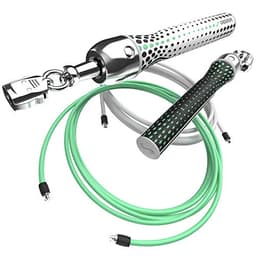
Weighted rope
Crossrope Get Lean Weighted Rope Set
Buy this if: People who want the extra upper-body work of a heavier rope and don't mind swapping cables (or paying for the system).
Strengths
- 1/4 lb and 1/2 lb cables load the arms and shoulders
- Heavier rope is easier to feel and time than a thin speed cable
- Fast-clip system swaps cables in seconds; six sizes to fit
Trade-offs
- Much pricier than a simple speed rope
- Heavier cables are slower for true double-under speed work
- You buy into the Crossrope system for extra cables
Price as of September 20, 2026. #ad How we’re funded
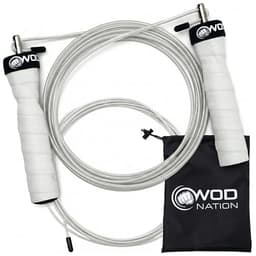
Speed rope
WOD Nation Attack Speed Jump Rope
Buy this if: Anyone learning double-unders or doing fast interval cardio who wants a no-fuss, inexpensive rope.
Strengths
- Thin 2.2 mm alloy cable spins fast enough for double-unders
- 11 ft cable folds over to any height, no tools and nothing to cut
- Four bearings per rope keep the turn smooth; very affordable
Trade-offs
- Thin cable stings on a missed rep
- Even the thicker 3.3 mm cable adds little upper-body work
Price as of September 20, 2026. #ad How we’re funded
What the extra weight actually does
The weight in a weighted rope isn’t about making cardio harder in a general sense — it’s about loading the arms and shoulders. A heavier cable pulls against your grip and upper body on every turn, so a session builds real shoulder and forearm endurance a whip-thin speed rope never touches. It also has a subtler benefit: because you can feel the rope moving, the timing is easier to learn, which is why beginners often find a lightly weighted rope less frustrating than a fast speed cable that seems to disappear.
Why speed ropes rule for double-unders
Flip to skill work and the speed rope wins. Its thin alloy cable and ball-bearing handles let it turn fast enough to pass under your feet twice per jump — the double-under that’s a staple of CrossFit and boxing conditioning. A weighted rope is simply too slow for that at any real volume. If your goal is quick footwork, high-rep intervals, or learning double-unders, light and fast is exactly what you want, and the WOD Nation does it for a fraction of the weighted set’s price.
Price, sizing and the system question
There’s a big gap in cost and in how you size them. The speed rope is inexpensive and folds over to your exact height, with a thicker second cable in the box. The Crossrope set is a premium system: it ships in six fixed sizes and uses a fast-clip mechanism so you can swap between the 1/4 lb and 1/2 lb cables (and buy heavier ones later) without re-sizing. That modularity is genuinely nice if you’ll use it, but it means buying into an ecosystem, and you pay up front for the privilege.
Which should you buy?
For most people’s first rope, the speed rope is the smarter, cheaper start — it covers everyday cardio and skill work, and you can always add a weighted rope later. Go straight to weighted if your specific goal is upper-body endurance, you want a rope that’s easier to time, or you like the idea of a loadable system. Jumping rope is a genuinely effective way to hit vigorous-intensity minutes; the best rope is the one you’ll pick up. If you train in an apartment with a low ceiling, note that a cordless weighted rope solves the space problem differently. For where cardio fits a full setup, see how to build a home gym.
Wellness guidance, not medical advice. Pulse & Plate is written by a fitness enthusiast, not a doctor. Wearable heart-rate, SpO2, ECG and sleep readings are for general wellness, not diagnosis. For a heart concern, a symptom, or before starting a new exercise program, talk to a qualified professional.
Frequently asked questions
Is a weighted or speed jump rope better?
It depends on your goal. A weighted rope loads your arms and shoulders and is easier to feel and time, which suits endurance work and learners. A speed rope is light and fast, ideal for double-unders and quick interval cardio. For most first-time buyers, a speed rope is the cheaper, more versatile start; add a weighted rope if you specifically want upper-body work.
Are weighted jump ropes good for beginners?
A lightly weighted rope can actually be easier for beginners because you can feel it turning, which makes the timing easier to learn than a whip-thin speed cable. The trade-off is price and speed: weighted ropes cost more and are too slow for double-unders. Many beginners do well starting with an inexpensive speed rope and focusing on the basic bounce first.
Can you do double-unders with a weighted rope?
It is much harder. Double-unders require the rope to pass under your feet twice per jump, which needs a fast, light cable and low-friction handles — exactly what a speed rope provides. A weighted rope is too slow to sustain double-unders at any real volume, so choose a speed rope if that skill is your goal.
Do weighted ropes burn more calories?
Not dramatically. The added weight mainly loads the arms and shoulders rather than sharply raising calorie burn, which is driven more by how hard and how long you jump. Both rope types deliver strong vigorous-intensity cardio; pick based on whether you want upper-body work (weighted) or speed and skill (speed rope), not on calorie claims.
Sources
- American Heart Association — Recommendations for Physical Activity in Adults — AHA's 150 min/week moderate aerobic + 2 days strength recommendation (accessed July 19, 2026)
- U.S. HHS / ODPHP — Physical Activity Guidelines for Americans (2nd ed.) — Federal guideline: 150–300 min/week moderate aerobic + muscle strengthening 2+ days (accessed July 19, 2026)
- Mayo Clinic — Exercise intensity: How to measure it — Mayo Clinic on light/moderate/vigorous heart-rate zones and how to measure them (accessed July 19, 2026)
Keep reading
Best Jump Ropes
Speed, weighted and cordless ropes compared on sizing, handles and where each one fits.
See the picksTreadmill vs Exercise Bike
If a rope isn't enough cardio, the two big machines compared.
Read the comparisonBest Equipment for Small Apartments
A jump rope is a small-space cardio staple — the rest of a compact kit.
Read the guideCardio Equipment
How jump ropes fit alongside treadmills, bikes and rowers.
Explore cardio