Pulse & Plate

Best Jump Ropes for Beginners

A beginner's rope is judged on the misses, not the good reps. Five ropes ranked on what the published cable actually is, how the length gets set, and whether you need ceiling height at all.

By Stephen V.Last updated How we research

How this is funded: we earn a commission if you buy through our links, at no extra cost to you. It never changes which product we recommend, and we’ll tell you when we’d skip one. Full disclosure.

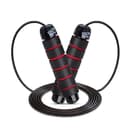
Buy the cheapest rope on this page. For a complete beginner the right pick is the XYLsports Jump Rope, a cut-to-size 5 mm PVC cable that costs less than lunch — and the reason is the part most roundups skip. A beginner’s first few weeks are mostly misses, and the rope you learn on is the rope that hits your shins a few hundred times. The 5 mm PVC cable here is the thickest and softest of the five; the 2.2 mm alloy-steel cable on the excellent WOD Nation rope is the thinnest, and WOD Nation’s own listing is blunt that a thin speed cable stings on a missed rep. Both facts are published. Only one of them is in your interest on day one.

That is the axis this page ranks on, and it is deliberately not the axis our main jump rope roundup uses. That page ranks the whole field on turn speed, bearings and cable quality, and its top pick is the WOD Nation — correctly, because it is the better rope. This page asks a narrower question: which of these do you want in your hand while you are still bad at this? That reorders the list almost completely, and it brings in one option the main roundup treats as a niche choice. If you live under an 8 ft ceiling or on a floor someone else sleeps under, the Benvo cordless rope removes the cable entirely, which removes both the miss and the ceiling from the problem.

Three things decide the ranking below, all of them published rather than tested. What the cable is — material and thickness, where the maker states it. How the length is set — cut-to-size, fold-over, or a fixed length you choose at purchase, because a rope that is too long for you drags and a rope that is too short clips your feet. And what the handle does — bearings make the turn smooth and fast, which is wonderful at week eight and irrelevant at week one. We own none of these ropes and have tested none of them; every figure below is read from the maker’s listing on the dated visit linked under each write-up.

Picks at a glance

Ranked on published specs, footprint and buyer fit. Select a row to jump to the full write-up. We have not tested these ourselves — here is exactly what we do instead.

#ProductBest forPrice
1
XYLsports Jump Rope

XYLsports Jump Rope

A dirt-cheap PVC rope that is fine for learning the basic bounce before you commit to a nicer one.

Best first rope
$8.99 · View on Amazon

Price as of October 13, 2026. #ad How we’re funded

2
Fit Simplify Skipping Rope with Ball Bearings

Fit Simplify Skipping Rope with Ball Bearings

A ball-bearing rope with soft foam grips for under ten dollars - the cheapest bearing-equipped rope here, from the brand behind our loop bands, though the listing publishes very little about the cable.

Best cheap bearing rope
$8.95 · View on Amazon

Price as of October 13, 2026. #ad How we’re funded

3
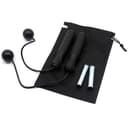
Benvo Weighted Cordless Jump Rope

Benvo Weighted Cordless Jump Rope

A cordless, weighted-ball rope for jumping indoors where a real cable would hit the ceiling or the furniture.

Best for low ceilings
$12.99 · View on Amazon

Price as of October 13, 2026. #ad How we’re funded

4
WOD Nation Attack Speed Jump Rope

WOD Nation Attack Speed Jump Rope

The default speed rope for double-unders and fast footwork: light, adjustable without tools and cheap enough to be a first rope.

Best rope to grow into
$17.99 · View on Amazon

Price as of October 13, 2026. #ad How we’re funded

5
Crossrope Get Lean Weighted Rope Set

Crossrope Get Lean Weighted Rope Set

A weighted-rope system that builds arm and shoulder endurance a speed rope cannot - if you will pay for the tech.

Best if you want a heavier rope
$129.00 · View on Amazon

Price as of October 13, 2026. #ad How we’re funded

Cable, length and handles side by side

Cable thickness is the row to read first on a beginner's rope, and it is the row no other jump rope page on this site prints. Two of the five makers do not publish a cable spec at all, which is said out loud rather than filled in.

SpecXYLsports Jump RopeFit Simplify Skipping Rope with Ball BearingsBenvo Weighted Cordless Jump RopeWOD Nation Attack Speed Jump RopeCrossrope Get Lean Weighted Rope Set
TypeBeginner PVCAll-purposeCordless / weightedSpeed ropeWeighted rope set
Cable5 mm PVCNot publishedNo cable (weighted balls)Alloy steel - 2.2 mm speed, 3.3 mm enduranceCoated braided steel
Cable lengthCut-to-sizeNot published (adjustable)Adjustable11 ft7 ft 0 in to 9 ft 6 in (six fixed sizes)
How the length is setCut to length with scissorsAdjustable (method not published)AdjustableFold-over, no toolsChosen at purchase by height
BearingsNone (basic swivel)Ball-bearingNot published4-bearing system (2 in the handles, 2 at the tips)Not published (fast-clip handles)
HandlesFoamSilicone or soft rubber, EVA foam grip (listing)WeightedAlloy steelErgonomic, fast-clip
In the boxNot publishedNot publishedRemovable weights, about 180 gTwo cables plus a travel bag1/4 lb and 1/2 lb cables

Every figure above is one the maker publishes, read on the dated visit linked under each write-up below. “Not published” means the maker does not state it — we do not fill the gap with an estimate.

The picks in full

#1Best first rope

XYLsports Jump Rope

A dirt-cheap PVC rope that is fine for learning the basic bounce before you commit to a nicer one.

Strengths

  • Costs only a few dollars
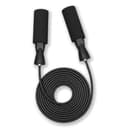
  • Thicker PVC cable is durable and forgiving
  • Foam handles are comfortable
  • Cuts to length easily

Trade-offs

  • No bearings, so the turn is basic and slower
  • Not built for fast double-unders
  • Plain plastic-and-foam handles
TypeBeginner
Cable5 mm PVC
HandlesFoam
LengthCut-to-size
BearingsNone (basic swivel)
Best useLearning the basics

Specs read from the product listing, on August 7, 2026. “Not published” means the maker does not state that figure.

#2Best cheap bearing rope

Fit Simplify Skipping Rope with Ball Bearings

A ball-bearing rope with soft foam grips for under ten dollars - the cheapest bearing-equipped rope here, from the brand behind our loop bands, though the listing publishes very little about the cable.

Strengths

  • Ball-bearing handles for a smooth turn at a budget price
  • Soft rubber handles with EVA foam grips
  • Adjustable length
  • Costs under ten dollars

Trade-offs

  • The listing does not publish the cable length or cable material
  • Not a bare speed cable, so it will not turn as fast as the WOD Nation for double-unders
  • Sparse listing means you are buying on the brand's reputation rather than a spec sheet
TypeAll-purpose
CableNot published
Cable lengthNot published (adjustable)
HandlesSilicone or soft rubber, EVA foam grip (listing)
BearingsBall-bearing
Item weight0.14 kg (listing)
Best useEveryday cardio

Specs read from the product listing, on September 20, 2026. “Not published” means the maker does not state that figure.

#3Best for low ceilings

Benvo Weighted Cordless Jump Rope

A cordless, weighted-ball rope for jumping indoors where a real cable would hit the ceiling or the furniture.

Strengths

  • Cordless weighted balls let you jump in low-ceiling rooms
  • Removable weights add a little arm work
  • Compact enough to toss in a bag or drawer
  • Very cheap

Trade-offs

  • Cordless mode removes the timing challenge of a real rope
  • Weighted balls can fly off if not screwed in fully
  • Basic build overall
TypeCordless / weighted
HandlesWeighted
WeightsRemovable, ~180 g
ModesCordless (weighted balls)
MaterialsAlloy steel, PP, rubber
Cable lengthAdjustable

Specs read from the product listing, on August 7, 2026. “Not published” means the maker does not state that figure.

#4Best rope to grow into

WOD Nation Attack Speed Jump Rope

The default speed rope for double-unders and fast footwork: light, adjustable without tools and cheap enough to be a first rope.

Strengths

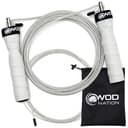
  • 2.2 mm alloy-steel cable spins fast enough for double-unders
  • Fold-over adjustment sets the length in seconds, with no tools and nothing to cut
  • Four bearings — two in the handles, two at the cable tips — keep the turn smooth
  • A thicker 3.3 mm cable and a travel bag are in the box

Trade-offs

  • Thin speed cable stings on a missed rep
  • Even the 3.3 mm cable is far lighter than a true weighted rope
TypeSpeed rope
CablesAlloy steel — 2.2 mm speed, 3.3 mm endurance
Cable length11 ft
AdjustmentFold-over, no tools
HandlesAlloy steel
Bearings4-bearing system (2 in the handles, 2 at the tips)
In the boxTwo cables plus a travel bag

Specs read from the product listing, on August 21, 2026. “Not published” means the maker does not state that figure.

#5Best if you want a heavier rope

Crossrope Get Lean Weighted Rope Set

A weighted-rope system that builds arm and shoulder endurance a speed rope cannot - if you will pay for the tech.

Strengths

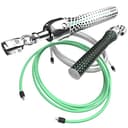
  • Interchangeable 1/4 lb and 1/2 lb cables load the arms and shoulders
  • Fast-clip system swaps cables in seconds
  • Six sizes from 7 ft to 9 ft 6 in fit most heights
  • A heavier rope is easier to feel and time than a whip-thin speed cable

Trade-offs

  • Much pricier than a simple speed rope
  • Heavier cables are slower for true double-under speed work
  • You buy into the Crossrope system for extra cables
TypeWeighted rope set
Cables included1/4 lb and 1/2 lb
CableCoated braided steel
Sizes7 ft 0 in to 9 ft 6 in (six)
HandlesErgonomic, fast-clip
Swap systemInterchangeable clip-on cables

Specs read from the product listing, on August 7, 2026. “Not published” means the maker does not state that figure.

How to choose a first jump rope

Cable thickness is the beginner spec

Every other spec on a jump rope matters more later. Cable thickness matters now, because the learning curve is made of misses and the cable is what lands on your calves. A 5 mm PVC cable spreads that contact over a wide, soft surface. A 2.2 mm steel cable concentrates it. You do not need a study to see which is kinder, and you do not need to take our word for it either: WOD Nation lists “thin speed cable stings on a missed rep” as a drawback of its own rope and ships a thicker 3.3 mm cable in the same box precisely so you can swap down.

This is also why two of the ropes here are harder to assess than the others. Fit Simplify does not publish a cable material or a cable length for its ball-bearing rope, and the Benvo has no cable at all. The first is a genuine gap — you are buying on the brand’s reputation rather than a spec sheet — and we print it as “Not published” rather than guessing at a figure that would make the table look tidier.

Set the length before you blame your technique

A rope that is too long drags on the floor and arrives late. A rope that is too short catches your toes on the way under. Both feel exactly like being bad at jumping rope, which is why so many people quit in the first week. Crossrope publishes the clearest rule for an adjustable rope: stand on the middle of the cable and trim it until the handle tops reach roughly your armpits. For its own fixed-length weighted ropes the maker publishes a height chart instead — 8 ft 0 in for 5 ft 1 in to 5 ft 5 in, 8 ft 6 in for 5 ft 5.5 in to 5 ft 10 in, and so on up to 9 ft 6 in for anyone 6 ft 2 in and over. We have put the whole chart, and the rules for the other rope types, in our jump rope size guide.

One line from Crossrope deserves repeating on this page specifically: if you are between sizes and new to the rope, go longer, because “more clearance gives you more forgiveness while you develop your timing.” A cut-to-size PVC rope is forgiving for the same reason in reverse — you can take an inch off next week, but you cannot put one back.

Measure your ceiling before you buy anything

A jump rope needs vertical room above your head that most people never think to check, and a standard US basement or a room with a fan in the middle of it can rule the whole exercise out. This is the one case where the cordless rope stops being a gimmick and becomes the correct purchase. The Benvo replaces the cable with two weighted balls on short cords, so nothing passes over your head and nothing hits the light fitting. Crossrope offers a ropeless set for the same reason and says so on its own sizing page: a low ceiling is a sizing problem with no rope-length answer.

Be honest with yourself about what you give up. Without a cable there is nothing to trip on, which means the timing skill the exercise is actually built on never gets trained. If you want the cordless rope because of a ceiling, buy it. If you want it because you keep missing, buy the cheap PVC rope and keep missing for two more weeks.

Weighted ropes are a second rope, not a first one

The Crossrope Get Lean is the most capable product on this page and the one we would steer a beginner away from. Its 1/4 lb and 1/2 lb cables load the arms and shoulders in a way a speed rope cannot, and a heavier cable is genuinely easier to feel and time — a real argument for a beginner. But it is a fixed-length system bought by size, it costs many times what the other four cost, and Crossrope’s own copy explains why the length is fixed: a heavier rope needs a precise, secure fit. That is a lot of commitment for a habit you have not formed yet. Buy it second, if you are still jumping in three months. Our weighted vs speed rope comparison lays out that decision properly.

What to do in the first two weeks

Keep the sessions short and stop before the form goes. The federal physical activity guidelines ask for 150 to 300 minutes of moderate aerobic activity a week, and jumping rope reaches moderate-to-vigorous intensity fast, so short bouts count for more than they feel like they should. Thirty seconds of jumping and thirty seconds of rest, repeated eight times, is a real session and about eight minutes long. Build the number of rounds before you build the length of them: a missed rep at the end of a long round is a technique problem, and a missed rep at the start of round nine is a fatigue problem, which no rope on this page can fix.

Jump on something with a little give if you can — a wood floor over a crawl space, a thin mat, a gym floor. Concrete with no mat is the quickest way to make the calves and shins the reason you stop. If you want the full picture of how this compares with the obvious alternative, we have put the two side by side in jump rope vs running.
Frequently asked questions

What kind of jump rope is best for a complete beginner?

A thick PVC or vinyl cable you can cut to length - on this page that is the XYLsports rope at 5 mm. It is the softest cable here on a missed rep, the length is set with scissors rather than guessed, and it costs a few dollars, which is the right amount to spend before you know whether you will keep going. Steel speed cables are better ropes and worse first ropes.

Do beginners need a weighted jump rope?

No, though a heavier cable is genuinely easier to feel and time, which is a real argument for one. The reasons to wait are practical: the Crossrope Get Lean here is bought as a fixed length by height rather than adjusted at home, it costs many times what a basic rope costs, and Crossrope's own copy explains that a heavier rope needs a precise fit to be used safely. Learn the bounce on a cheap adjustable rope, then decide.

How much ceiling height do I need to jump rope?

More than most people check, which is why we tell you to measure before buying. Neither we nor the makers of these five ropes publish a single minimum figure, so we will not invent one - the practical test is to stand where you plan to jump, reach up, and see how much room is above your fingertips with a fan, light fitting or duct in the way. If the answer is not enough, that is the one situation where a cordless rope like the Benvo is the right purchase rather than a compromise.

Why does my jump rope keep hitting my feet?

Usually length, not technique. Stand on the middle of the cable and pull the handles up: Crossrope's published rule is that the handle tops should reach roughly your armpits. Too short and the rope clips your toes on the way under; too long and it drags and arrives late, which feels identical to mistiming it. Crossrope also advises going one size longer if you are new, because the extra clearance is more forgiving while your timing develops.

Are bearings worth it on a beginner rope?

They make the turn smoother and faster, which matters from the moment you start stringing reps together and barely matters on your first session. If you want them cheaply, the Fit Simplify rope has ball-bearing handles for under ten dollars - with the honest caveat that its listing publishes neither the cable material nor the cable length, so you are buying on reputation. The WOD Nation's four-bearing system is the better mechanism and sits on a thin steel cable that punishes misses.

How long should a beginner jump rope for?

Short rounds, and stop before the form goes. Thirty seconds on and thirty seconds off, eight times through, is roughly eight minutes and a real session - and it counts toward the 150 to 300 weekly minutes of moderate aerobic activity in the federal guidelines, because rope work reaches moderate-to-vigorous intensity quickly. Add rounds before you add length to them.

Is a cheap jump rope good enough?

For learning, it is better than good enough - it is the recommendation. The expensive ropes on this page are better tools for someone who can already do the thing: faster turn, better bearings, a cable that spins true. None of that is the constraint in week one. The constraint is whether you keep picking the rope up, and a ten-dollar rope you can cut to your height protects that better than a cable that stings when you miss.

Sources

  • Crossrope — What Size Jump Rope Do I Need? — The maker's own height-to-length chart (XX-Small up to 4 ft 6 in = 7 ft 0 in rope; X-Small 4 ft 6.5 in-5 ft 0.5 in = 7 ft 6 in; Small 5 ft 1 in-5 ft 5 in = 8 ft 0 in; Medium 5 ft 5.5 in-5 ft 10 in = 8 ft 6 in; Large 5 ft 10.5 in-6 ft 1.5 in = 9 ft 0 in; X-Large 6 ft 2 in and above = 9 ft 6 in), plus the rules that decide the rest: if you are between sizes and new to the rope, 'go longer. More clearance gives you more forgiveness while you develop your timing'; for an adjustable speed rope, 'start slightly longer, then trim until the handles reach roughly your armpits while standing on the middle of the rope'; freestyle/PVC ropes are 'usually longer than speed ropes' and beaded ropes 'often on the longer end', because the extra length carries the bead weight through the rotation; and weighted ropes use fixed lengths because 'a heavier rope needs a precise, secure fit' (accessed October 5, 2026)
  • U.S. HHS / ODPHP — Physical Activity Guidelines for Americans (2nd ed.) — Federal guideline: 150–300 min/week moderate aerobic + muscle strengthening 2+ days (accessed July 19, 2026)
  • CDC — Adult Activity: An Overview — CDC on muscle-strengthening 2+ days/week, 8–12 reps, all major muscle groups (accessed July 19, 2026)
  • Mayo Clinic — Exercise intensity: How to measure it — Mayo Clinic on light/moderate/vigorous heart-rate zones and how to measure them (accessed July 19, 2026)

Keep reading