Pulse & Plate

Best Jump Ropes for Double-Unders

Two rope passes per jump needs a cable that turns fast and a length you can set precisely. Four ropes ranked on cable diameter, bearing count and how the length is adjusted.

By Stephen V.Last updated How we research

For double-unders the rope to buy is the WOD Nation Attack Speed, and it is not close. It publishes the two specifications that decide whether a rope can pass twice under one jump: a 2.2 mm alloy-steel speed cable — thin enough to cut through the air with almost no drag — and a four-bearing system, two in the handles and two at the cable tips, so the cable rotates rather than winding up. It also adjusts by fold-over with no tools and nothing to cut, which matters more than it sounds: for double-unders you will change the length several times before you settle. A thicker 3.3 mm endurance cable and a travel bag come in the box.

The Fit Simplify is the sub-ten-dollar pick if you want ball bearings on a budget, though its listing publishes neither the cable length nor the cable material, so you are buying on the brand rather than a spec sheet. The Crossrope Get Lean is here for a specific reason that looks like a contradiction — it is the worst rope here for fast double-unders and one of the best for learning them, because a heavier cable is easier to feel and time than a whip-thin one. And the XYLsports rope is on this page so we can tell you plainly to use something else: 5 mm of PVC with no bearings is a fine rope for learning the basic bounce and the wrong tool for this.

Double-unders are a timing skill with an equipment prerequisite, and that prerequisite is narrower than the general jump-rope question. Our main jump rope roundup ranks the whole field on sizing, handles and fit; best jump ropes for beginners ranks on what forgives a bad rep. This page ranks on one thing: how fast the cable will go round, twice, before your feet come down. That comes down to cable diameter, bearing count, and whether you can set the length exactly rather than approximately.

Every figure below is the maker’s published specification or the retailer listing, read on the dated visit linked under each write-up. Where a listing publishes nothing — and one of these publishes remarkably little — the table says “Not published” rather than estimating. We own none of these ropes and have tested none of them, and no rope gets you a double-under by itself. Here is exactly what we do instead.

How this is funded: we earn a commission if you buy through our links, at no extra cost to you. It never changes which product we recommend, and we’ll tell you when we’d skip one. Full disclosure.

Picks at a glance

Ranked on published specs, footprint and buyer fit. Select a row to jump to the full write-up. We have not tested these ourselves — here is exactly what we do instead.

#ProductBest forPrice
1
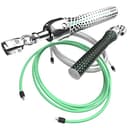
WOD Nation Attack Speed Jump Rope

WOD Nation Attack Speed Jump Rope

The default speed rope for double-unders and fast footwork: light, adjustable without tools and cheap enough to be a first rope.

Best overall for double-unders
$17.99 · View on Amazon

Price as of October 22, 2026. #ad How we’re funded

2
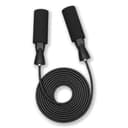
Fit Simplify Skipping Rope with Ball Bearings

Fit Simplify Skipping Rope with Ball Bearings

A ball-bearing rope with soft foam grips for under ten dollars - the cheapest bearing-equipped rope here, from the brand behind our loop bands, though the listing publishes very little about the cable.

Cheapest rope here with real bearings
$8.95 · View on Amazon

Price as of October 22, 2026. #ad How we’re funded

3
Crossrope Get Lean Weighted Rope Set

Crossrope Get Lean Weighted Rope Set

A weighted-rope system that builds arm and shoulder endurance a speed rope cannot - if you will pay for the tech.

Best for learning the timing first
$129.00 · View on Amazon

Price as of October 22, 2026. #ad How we’re funded

4
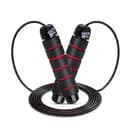
XYLsports Jump Rope

XYLsports Jump Rope

A dirt-cheap PVC rope that is fine for learning the basic bounce before you commit to a nicer one.

Skip this one for double-unders
$8.99 · View on Amazon

Price as of October 22, 2026. #ad How we’re funded

The three specs that decide a double-under

Rows one and two are the whole argument. A thin cable has less air drag and a bearing lets the cable spin independently of the handle - no amount of technique compensates for a thick cable on a bare swivel, and no bearing count helps a 5 mm PVC rope.

SpecWOD Nation Attack Speed Jump RopeFit Simplify Skipping Rope with Ball BearingsCrossrope Get Lean Weighted Rope SetXYLsports Jump Rope
CableAlloy steel - 2.2 mm speed and 3.3 mm enduranceNot publishedCoated braided steel, 1/4 lb and 1/2 lb weighted5 mm PVC
Bearings4-bearing system (2 in the handles, 2 at the tips)Ball-bearingNot published - fast-clip handlesNone (basic swivel)
Published cable length11 ftNot published (adjustable)Six fixed sizes, 7 ft 0 in to 9 ft 6 inCut-to-size
How you set the lengthFold-over, no tools, nothing to cutAdjustable (method not published)Buy the size - fixed length per cableCut it, once, permanently
Second cable in the boxYes - 3.3 mm endurance cable plus a travel bagNoYes - 1/4 lb and 1/2 lbNo
Suited to double-unders?Yes - this is what the 2.2 mm cable is forPartly - bearings yes, bare speed cable noNo for speed, yes for learning the rhythmNo - thick cable, no bearings
What it costs youA thin cable stings on a missed repYou are buying a sparse listing on brand reputationHeavier cables are slower, and you buy into one system for sparesNothing, for a few dollars - it just will not go fast
Published item weightNot published0.14 kg (listing)Not publishedNot published

Every figure above is one the maker publishes, read on the dated visit linked under each write-up below. “Not published” means the maker does not state it — we do not fill the gap with an estimate.

The picks in full

#1Best overall for double-unders

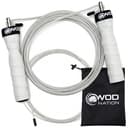
WOD Nation Attack Speed Jump Rope

The default speed rope for double-unders and fast footwork: light, adjustable without tools and cheap enough to be a first rope.

Strengths

  • 2.2 mm alloy-steel cable spins fast enough for double-unders
  • Fold-over adjustment sets the length in seconds, with no tools and nothing to cut
  • Four bearings — two in the handles, two at the cable tips — keep the turn smooth
  • A thicker 3.3 mm cable and a travel bag are in the box

Trade-offs

  • Thin speed cable stings on a missed rep
  • Even the 3.3 mm cable is far lighter than a true weighted rope
TypeSpeed rope
CablesAlloy steel — 2.2 mm speed, 3.3 mm endurance
Cable length11 ft
AdjustmentFold-over, no tools
HandlesAlloy steel
Bearings4-bearing system (2 in the handles, 2 at the tips)
In the boxTwo cables plus a travel bag

Specs read from the product listing, on August 21, 2026. “Not published” means the maker does not state that figure.

#2Cheapest rope here with real bearings

Fit Simplify Skipping Rope with Ball Bearings

A ball-bearing rope with soft foam grips for under ten dollars - the cheapest bearing-equipped rope here, from the brand behind our loop bands, though the listing publishes very little about the cable.

Strengths

  • Ball-bearing handles for a smooth turn at a budget price
  • Soft rubber handles with EVA foam grips
  • Adjustable length
  • Costs under ten dollars

Trade-offs

  • The listing does not publish the cable length or cable material
  • Not a bare speed cable, so it will not turn as fast as the WOD Nation for double-unders
  • Sparse listing means you are buying on the brand's reputation rather than a spec sheet
TypeAll-purpose
CableNot published
Cable lengthNot published (adjustable)
HandlesSilicone or soft rubber, EVA foam grip (listing)
BearingsBall-bearing
Item weight0.14 kg (listing)
Best useEveryday cardio

Specs read from the product listing, on September 20, 2026. “Not published” means the maker does not state that figure.

#3Best for learning the timing first

Crossrope Get Lean Weighted Rope Set

A weighted-rope system that builds arm and shoulder endurance a speed rope cannot - if you will pay for the tech.

Strengths

  • Interchangeable 1/4 lb and 1/2 lb cables load the arms and shoulders
  • Fast-clip system swaps cables in seconds
  • Six sizes from 7 ft to 9 ft 6 in fit most heights
  • A heavier rope is easier to feel and time than a whip-thin speed cable

Trade-offs

  • Much pricier than a simple speed rope
  • Heavier cables are slower for true double-under speed work
  • You buy into the Crossrope system for extra cables
TypeWeighted rope set
Cables included1/4 lb and 1/2 lb
CableCoated braided steel
Sizes7 ft 0 in to 9 ft 6 in (six)
HandlesErgonomic, fast-clip
Swap systemInterchangeable clip-on cables

Specs read from the product listing, on August 7, 2026. “Not published” means the maker does not state that figure.

#4Skip this one for double-unders

XYLsports Jump Rope

A dirt-cheap PVC rope that is fine for learning the basic bounce before you commit to a nicer one.

Strengths

  • Costs only a few dollars
  • Thicker PVC cable is durable and forgiving
  • Foam handles are comfortable
  • Cuts to length easily

Trade-offs

  • No bearings, so the turn is basic and slower
  • Not built for fast double-unders
  • Plain plastic-and-foam handles
TypeBeginner
Cable5 mm PVC
HandlesFoam
LengthCut-to-size
BearingsNone (basic swivel)
Best useLearning the basics

Specs read from the product listing, on August 7, 2026. “Not published” means the maker does not state that figure.

What actually makes a rope double-under capable

1. Cable diameter, because air drag is the limit

A double-under asks the cable to travel its full arc twice while you are off the ground, which is somewhere around a third of a second for most people. The thing working against you is drag, and drag scales with how much cable is pushing through the air.

That is why competition speed cables are thin wire rather than thick plastic, and why the published numbers here matter so much. WOD Nation’s speed cable is 2.2 mm of alloy steel. The XYLsports is 5 mm of PVC — more than twice the diameter in a softer, lighter material that flexes rather than holding its arc. One of those will pass twice; the other will not, no matter how high you jump.

The honest cost of a thin cable is also published, and you should know it before you buy: a 2.2 mm steel cable at speed stings when you miss. Everyone learning double-unders catches a shin, and with a bare speed cable you remember it. WOD Nation includes the thicker 3.3 mm endurance cable in the same box, which is a genuinely sensible way to buy — learn on the thicker cable, switch to the 2.2 mm when the timing arrives.

2. Bearings, because a swivel winds up

The second published spec, and the one most buyers do not know to look for. A cheap rope attaches the cable to the handle with a swivel — a friction joint that lets the cable turn, slowly, while fighting you. A proper speed rope uses ball bearings, so the cable spins freely on its own axis independently of how you hold the handle.

The difference shows up specifically at double-under speed. A swivel rope decelerates through each rotation and the timing becomes unpredictable, which is exactly the thing you are trying to make consistent. WOD Nation publishes a four-bearing system — two in the handles and two at the cable tips — which is the most bearing points of anything here. Fit Simplify publishes ball bearings without saying how many. XYLsports publishes “none”.

3. Length, and why adjustability beats cutting

Rope length is the specification people get wrong, and for double-unders the margin for error is smaller than for singles. Crossrope publishes the clearest sizing rule we have found from any maker: for an adjustable speed rope, “start slightly longer, then trim until the handles reach roughly your armpits while standing on the middle of the rope”. It also publishes a full height chart, from a 7 ft rope for anyone up to 4 ft 6 in to a 9 ft 6 in rope for 6 ft 2 in and above.

And it publishes the rule that matters while you are learning: if you are between sizes and new to the rope, “go longer. More clearance gives you more forgiveness while you develop your timing”. That is maker advice, and it is good advice — a longer rope gives you a bigger window to get your feet out of the way.

Here is the reasoning that follows from it, flagged as ours rather than anybody’s published claim: a longer rope has a longer arc to travel, and travel time is what you are short of in a double-under. So the length that forgives you while learning is slightly longer than the length that is fastest once your timing is reliable. Which means you will want to change the length, probably more than once — and that is the practical case for the fold-over adjustment on the WOD Nation over the cut-to-size XYLsports. You can cut a rope shorter exactly once, and you cannot put it back. Our jump rope sizing guide works through the whole chart.

4. The case for deliberately using the wrong rope

The Crossrope is the interesting pick here, and it is worth understanding why a weighted rope appears on a speed page at all. A heavier cable is easier to feel. You can sense where it is in the arc without looking, which is the single hardest part of learning double-unders — the rhythm is a feel, not a count.

So there is a real argument for learning the double-under rhythm on a 1/4 lb cable at a slower tempo, then moving to a 2.2 mm speed cable once the pattern is automatic. The costs are published and real: Crossrope’s cables are fixed lengths in six sizes rather than adjustable, because as Crossrope puts it, “a heavier rope needs a precise, secure fit”; it is considerably pricier than a speed rope; and heavier cables are genuinely slower for the thing you are ultimately training. We compare the two categories properly in weighted vs speed jump rope.

What the rope will not do

It will not give you double-unders. The ordering of causes here is worth being blunt about, because a lot of money gets spent in the wrong order: double-unders are a timing problem first, a conditioning problem second, and an equipment problem third. A good speed rope removes an obstacle; it does not supply a skill.

Two things do more for your first double-under than any upgrade. The first is jumping only slightly higher, not much higher — the common failure is a big tucked jump that destroys the rhythm, when the actual requirement is a marginally longer hang with faster wrists. The second is turning the rope from the wrists rather than the shoulders, because shoulder rotation cannot cycle twice in the time available.

And volume matters more than people expect: double-unders are a vigorous-intensity activity, and both the federal physical activity guidelines and the AHA frame the weekly target in those terms, so a rope is one of the most time-efficient ways to reach them in a small room. Our jump rope for weight loss page sets out what the dose actually looks like, and jump rope vs running compares it with the obvious alternative.

Who should buy which

Buy the WOD Nation Attack Speed if you want double-unders and are buying one rope: 2.2 mm cable, four bearings, tool-free adjustment and a thicker cable in the box for the learning phase. Buy the Fit Simplify if you want ball bearings for under ten dollars and accept that the listing tells you very little. Buy the Crossrope Get Lean if you would rather learn the rhythm on a weighted cable first and you want the arm and shoulder work that comes with it. Buy the XYLsports only as a cheap backup or a first rope for learning the basic bounce — for double-unders it is the wrong tool and we would rather say so than rank it politely.

One last practical note: where you jump matters as much as what you jump with. A thin steel cable on concrete wears through at the contact point, and a smooth floor with a thin mat on it can slide underfoot. We cover surface choice, and the knee question that goes with it, in is jumping rope bad for your knees.
Frequently asked questions

What is the best jump rope for double-unders?

The WOD Nation Attack Speed, on published specs. It is the only rope here with a bare 2.2 mm alloy-steel speed cable - thin enough that air drag stops being the limiting factor - and a four-bearing system with two bearings in the handles and two at the cable tips, so the cable spins freely rather than winding up against a swivel. It also adjusts by fold-over with no tools, which matters because you will change the length more than once while learning.

What cable thickness is best for double-unders?

Thin. A double-under asks the cable to complete two full arcs while you are off the ground, and the thing working against you is air drag, which scales with how much cable is pushing through the air. WOD Nation publishes 2.2 mm for its speed cable against 5 mm of PVC on the cheapest rope here - more than twice the diameter in a material that flexes rather than holding its arc. The trade-off is that a thin steel cable stings when you miss.

Do I need ball bearings in a jump rope?

For double-unders, yes. A cheap rope joins cable to handle with a friction swivel, which lets the cable turn slowly while fighting you and makes each rotation decelerate unpredictably - the opposite of what a timing skill needs. Ball bearings let the cable spin on its own axis independently of the handle. WOD Nation publishes a four-bearing system, Fit Simplify publishes ball bearings without stating how many, and the XYLsports publishes none.

How long should a jump rope be for double-unders?

Crossrope publishes the clearest rule from any maker: for an adjustable speed rope, start slightly longer and then trim until the handles reach roughly your armpits while standing on the middle of the rope. It also advises that if you are between sizes and new to the rope, go longer, because more clearance gives more forgiveness while your timing develops. Our own reasoning from that: the forgiving length is slightly longer than the fastest length, so expect to shorten the rope as the skill arrives - which is why adjustable beats cut-to-size.

Can you do double-unders with a weighted jump rope?

You can, and there is a real argument for learning on one, but it is not the rope for fast double-unders. A heavier cable is easier to feel through the arc, which is the hardest part of the skill - the rhythm is a feel rather than a count. Crossrope's Get Lean set ships 1/4 lb and 1/2 lb cables for exactly this kind of work. Once the pattern is automatic, move to a thin speed cable, because weighted cables are genuinely slower.

Why can't I do double-unders with my cheap rope?

Usually because of the two specs the listing does not advertise: cable diameter and bearings. A 5 mm PVC cable on a friction swivel cannot complete two arcs in the time your feet are off the ground, and it will not time consistently when you try. That said, the rope is the third cause rather than the first - double-unders are a timing problem first, a conditioning problem second and an equipment problem third. A speed rope removes an obstacle; it does not supply the skill.

Is a cut-to-size rope a problem?

It is a one-way decision, and for this skill that is a real drawback. You will want to change the length as your timing improves - longer while you are learning for the extra clearance, shorter once the rhythm is reliable and arc travel time becomes the limit. A fold-over or screw adjustment lets you do that repeatedly. A cut cable can only get shorter, once.

What surface should I do double-unders on?

A firm, flat, non-slip surface - and not concrete if you can avoid it, because a thin steel cable wears through at the contact point and the surface is unforgiving. A smooth floor with a thin mat on top is worse than a bare floor, because the mat can slide. Rubber gym flooring is ideal. We cover surface choice and the knee question it raises in our guide to whether jumping rope is bad for your knees.

Sources

  • Crossrope — What Size Jump Rope Do I Need? — The maker's own height-to-length chart (XX-Small up to 4 ft 6 in = 7 ft 0 in rope; X-Small 4 ft 6.5 in-5 ft 0.5 in = 7 ft 6 in; Small 5 ft 1 in-5 ft 5 in = 8 ft 0 in; Medium 5 ft 5.5 in-5 ft 10 in = 8 ft 6 in; Large 5 ft 10.5 in-6 ft 1.5 in = 9 ft 0 in; X-Large 6 ft 2 in and above = 9 ft 6 in), plus the rules that decide the rest: if you are between sizes and new to the rope, 'go longer. More clearance gives you more forgiveness while you develop your timing'; for an adjustable speed rope, 'start slightly longer, then trim until the handles reach roughly your armpits while standing on the middle of the rope'; freestyle/PVC ropes are 'usually longer than speed ropes' and beaded ropes 'often on the longer end', because the extra length carries the bead weight through the rotation; and weighted ropes use fixed lengths because 'a heavier rope needs a precise, secure fit' (accessed October 5, 2026)
  • U.S. HHS / ODPHP — Physical Activity Guidelines for Americans (2nd ed.) — Federal guideline: 150–300 min/week moderate aerobic + muscle strengthening 2+ days (accessed July 19, 2026)
  • American Heart Association — Recommendations for Physical Activity in Adults — AHA's 150 min/week moderate aerobic + 2 days strength recommendation (accessed July 19, 2026)
  • CDC — Adult Activity: An Overview — CDC on muscle-strengthening 2+ days/week, 8–12 reps, all major muscle groups (accessed July 19, 2026)

Keep reading