How to replace an H10 without losing what it was for
A heart rate monitor is bought for one reason: a wrist sensor lags, spikes or flatlines exactly when the effort changes fast, because it is reading light through skin while your watch band moves. A strap reads the electrical signal instead. Keep that in mind, because it is the thing you must not trade away, and two questions decide the rest.
1. Will you actually wear it? That decides placement
This is first because an accurate monitor in a drawer reads nothing. If a band across your ribs is tolerable, stay with electrode sensing — that is the HRM-Dual, the TRACKR or the CooSpo, and all three are reading the same kind of signal the H10 does.
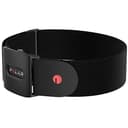
If it is not tolerable, the Polar Verity Sense is the answer, and it is a genuinely clever one: it moves an optical sensor to the upper arm, where there is no wrist tendon movement and no watch band shifting under load, so you get much of the benefit without anything across your chest. It carries two Bluetooth channels plus ANT+, it can record onboard and sync afterwards— the only alternative here that keeps the H10’s no-phone-needed trick — Polar states up to 30 hours per charge, and it clips to swim goggles for pool sessions. Honest cons, and they are real: it is still an optical sensor, so it sits a step below electrode sensing when intervals change fast, and the armband is a consumable that stretches out over time. Buy it because you will wear it, not because it is more accurate than a strap.
2. What does it need to talk to? That decides connectivity
This is where the H10 keeps its crown and where you need to be honest about your own setup. Nothing on this page carries the 5 kHz analog channel, which is what lets an H10 feed older gym cardio equipment and work in water. If that matters to you, there is no alternative here and you should buy the H10.
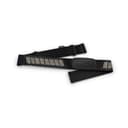
For almost everyone else, ANT+ plus Bluetooth is the whole requirement, and all four alternatives have it. ANT+ handles Garmin devices and most gym equipment; Bluetooth handles phones, tablets and apps. The Garmin HRM-Dual is built around exactly that and nothing else: dual broadcast with no mode switch to remember, a coin cell Garmin rates at up to 3.5 years, and a soft adjustable strap you can put through the wash once the module unclips. Honest cons: no onboard memory is published, so it needs a watch or phone listening or the session is simply not recorded, and the strap is one size— which fits most people and not everyone, where the H10 runs M to XXL.
Two Bluetooth connections at once is the H10’s other quiet advantage, and only the Verity Sense matches it. If you are feeding a watch and a bike computer or a class app simultaneously, check that before you buy, because a single-channel strap means choosing one.
3. Coin cell or rechargeable? The failure modes are opposite
Worth deciding deliberately, because people usually discover their preference the hard way. A coin cell runs for years and then dies without warning, and the fix is a CR2025 you probably do not have. A rechargeable never surprises you if you have a habit, and fails every time you do not.
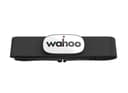
The Wahoo TRACKR is the rechargeable answer and it solves a second problem at the same time: Wahoo publishes 100-plus hours of active use per charge, and the strap has LED indicators for heart-rate detection, battery and connection so you know it paired before your session starts rather than after it is ruined. Anyone who has lost a Zwift or class ride to a strap that silently never connected will understand why that is worth paying for. Honest cons: it introduces a charging habit a 3.5-year coin cell does not need, and it is priced with the premium straps despite being the newest name in the group. Wahoo also does not publish onboard memory or a water rating for it.
The budget option, and what the low price actually costs
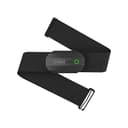
The CooSpo H808Sis the cheapest route to electrode sensing on this page, and the specification is better than the price suggests: dual Bluetooth 4.0 and ANT+ so it pairs with a watch and a bike computer together, stated compatibility with third-party apps and equipment including Strava, Wahoo, Polar Beat and Peloton, an IP67 rating, an LED and an audible tone to confirm it has connected, and a pod of 2.36 × 1.37 × 0.59 in weighing 0.53 oz — light enough to forget you are wearing.
What the low price costs, stated plainly. CooSpo publishes no battery life figure at all, which is an odd thing to leave out and we record it as a gap rather than estimate it. The “±1 BPM” accuracy claim is CooSpo’s own and we have not verified it against a reference ECG, so treat it as a marketing figure rather than a measurement. And like every strap here, the electrode zones must be moistened before use— a dry strap is the single most common reason any chest monitor reads erratically for the first few minutes, and it is the reason a lot of people wrongly conclude their strap is faulty.
What none of these four gives you
Three things, stated plainly, so nothing here is a surprise.
Three-way connectivity.The 5 kHz analog channel is gone on every alternative. If you swim with heart rate, or your gym’s cardio equipment predates Bluetooth pairing, the H10 is not replaceable and you should buy it.
Session memory, except on one. The H10 records multiple hours with nothing else present, which means you can leave the watch and the phone in a locker. Only the Verity Sense publishes the same record-and-sync capability. The HRM-Dual, the TRACKR and the CooSpo all need something listening, and none of them publishes onboard memory.
A strap you never have to think about.Every one of these is a consumable in part. Straps stretch, electrodes wear, armbands loosen, and the fabric — not the pod — is what determines whether your data is clean in two years. Budget for a replacement strap rather than a replacement monitor when readings go bad, which is the cheapest fix in this whole category and almost nobody tries it first.
What a strap is and is not for
One honest limit on the whole category. A chest strap gives you a much better heart-rate number during hard and variable work than a wrist sensor can — that is the entire reason to own one, and it is why zone-based training on a wrist device can be misleading at the top end. What it does not give you is a medical device. None of these monitors diagnoses anything, and a heart-rate reading is a training input, not a clinical one. If you want a cleared wrist ECG feature instead, that is a different product class entirely and it is on best ECG smartwatches. If your heart rate behaves in a way that worries you, talk to a doctor rather than to a strap.
What we would buy
The Garmin HRM-Dual for most people leaving an H10: it reads the same kind of signal, costs less, pairs with everything that matters, and the 3.5-year battery means you set it up once. The Polar Verity Senseif a chest strap is the actual objection — it is the only alternative here that keeps onboard recording and two Bluetooth channels, and an arm-worn sensor you will wear beats a chest strap you will not. The Wahoo TRACKR if you train in apps and want the LEDs to tell you it connected before you start pedaling. The CooSpo H808S if the price is the whole brief, accepting an unpublished battery figure and an unverified accuracy claim. And the H10 itselfif you need the analog channel or the memory — which is the honest conclusion of a page like this, because sometimes the reference product is the reference product for a reason.