Pulse & Plate

Best Fitness Trackers for Walking

Walking asks almost nothing of a tracker except that it is still on your wrist in three weeks and that it can show you a number without you digging out your phone. Five devices ranked on exactly that, and on which of them can map a walk on their own.

By Stephen V.Last updated How we research

The Garmin vivosmart 5 is the fitness tracker to buy for walking for most people. It is slim enough to disappear under a sleeve, Garmin publishes up to 7 days per charge, it is rated to 5 ATMso rain and hand-washing are irrelevant, and — the part that matters over years — Garmin Connect charges nothing for what it records. It suits someone whose exercise is a daily walk rather than a training plan, and who wants the step count, heart rate and sleep data without being sold anything afterwards. Our budget pick is the Xiaomi Smart Band 10, the cheapest device here, which buys the longest battery on the page by a wide margin: Xiaomi publishes up to 21 days, on a 1.72-inch AMOLED screen quoted at 1,500 nits.

There is one question that genuinely splits this page, and it is not accuracy — every device here uses the same class of accelerometer and wrist optical sensor for steps and heart rate. The question is whether the tracker can map a walk without your phone in your pocket. Two can: the Amazfit Active Max has built-in positioning across five satellite systems plus free downloadable maps, and the Apple Watch SE has built-in GPS. The other three use connected GPS or publish none at all, which means your phone draws the route or there is no route.

The second question is how often you want to think about the charger. A walking tracker earns its keep by being worn continuously, and the published figures here range from up to 18 hours on the Apple Watch SE to up to 21 dayson the Xiaomi band — a difference of more than an order of magnitude for devices that count the same steps. If you have abandoned a tracker before, that row is usually why.

We own none of these devices and have tested none of them. Every number below is read from the maker’s published specifications or the listing on the dated visit recorded under each write-up, and “Not published” in the table means the maker does not state it. Prices come from our live price layer with the date they were read.

How this is funded: we earn a commission if you buy through our links, at no extra cost to you. It never changes which product we recommend, and we’ll tell you when we’d skip one. Full disclosure.

Picks at a glance

Ranked on published specs, footprint and buyer fit. Select a row to jump to the full write-up. We have not tested these ourselves — here is exactly what we do instead.

#ProductBest forPrice
1
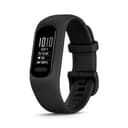
Garmin vivosmart 5

Garmin vivosmart 5

A simple, slim band with Garmin's trusted health metrics and no subscription, but the display is basic monochrome and GPS relies on your phone.

Best overall
$148.90 · View on Amazon

Price as of November 23, 2026. #ad How we’re funded

2
Amazfit Active Max

Amazfit Active Max

Close to a month of battery, real built-in positioning and offline maps for well under $200 — the trade is Amazfit's Zepp software rather than Apple's or Google's.

Best for walks without a phone
$118.99 · View on Amazon

$169.9930% off

Price as of November 23, 2026. #ad How we’re funded

3
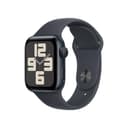
Apple Watch SE (2nd gen)

Apple Watch SE (2nd gen)

The most affordable way into watchOS with real built-in GPS and crash detection, but it drops ECG and blood oxygen and lasts only about a day.

Best for iPhone owners
$246.81 · View on Amazon

Price as of November 23, 2026. #ad How we’re funded

4
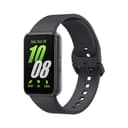
Samsung Galaxy Fit3

Samsung Galaxy Fit3

A big-screen band with close to a fortnight of battery and nothing behind a paywall — as long as you carry an Android phone, because it will not pair with an iPhone.

Best big screen on Android
$62.95 · View on Amazon

Price as of November 23, 2026. #ad How we’re funded

5
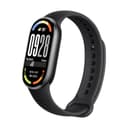
Xiaomi Smart Band 10

Xiaomi Smart Band 10

Three weeks of battery and a genuinely bright AMOLED for the price of a cheap pair of headphones — as long as you can live with Xiaomi's app and no onboard GPS.

Best budget pick
$54.90 · View on Amazon

Price as of November 23, 2026. #ad How we’re funded

What actually matters on a daily walk

Read the top two rows together. Everything on this page counts steps; what separates them is how long it stays on your wrist and whether it needs your phone to draw the route.

SpecGarmin vivosmart 5Amazfit Active MaxApple Watch SE (2nd gen)Samsung Galaxy Fit3Xiaomi Smart Band 10
Published battery lifeUp to 7 daysUp to 25 days (Amazfit)Up to 18 hoursUp to 13 days (208 mAh)Up to 21 days (Xiaomi); about 1 hr to full
Maps a walk without your phoneNo - connected GPS (uses phone)Yes - built-in positioning, five satellite systemsYes - built-in GPSNo - connected GPS (uses phone)Not published - the Band 10 Pro is the GPS model
ScreenMonochrome OLED touchscreen1.5 in AMOLED, quoted at 3,000 nitsRetina display (watchOS)1.6 in AMOLED touchscreen (256 x 402)1.72 in AMOLED, 1,500 nits (Xiaomi)
Heart rate and blood oxygenWrist HR + Pulse Ox (SpO2)Wrist HR (Zepp BioCharge score)Optical HR + high/low HR alerts; no SpO224/7 optical HR; SpO2 spot and overnightHeart rate monitoring (listed)
Rain, sweat and washing up5 ATMNot published50 m swimproof (WR50)5 ATM, IP68Not published
Offline maps and navigationNoneFree terrain and ski maps, turn-by-turn, 4 GB storageApple Maps on wrist (needs iPhone for data)NoneNone
SubscriptionNone - Garmin Connect is freeNoneNoneNone - Samsung Health is freeNone - Xiaomi Fit is metric-only
Phone it demandsiOS or AndroidiOS or AndroidRequires an iPhoneAndroid only - will not pair with an iPhoneXiaomi Fit (metric units only)

Every figure above is one the maker publishes, read on the dated visit linked under each write-up below. “Not published” means the maker does not state it — we do not fill the gap with an estimate.

The picks in full

#1Best overall

Garmin vivosmart 5

A simple, slim band with Garmin's trusted health metrics and no subscription, but the display is basic monochrome and GPS relies on your phone.

Strengths

  • No subscription — full data in the free Garmin Connect app
  • Body Battery, stress and Pulse Ox (SpO2) tracking
  • Comfortable, lightweight and unobtrusive

Trade-offs

  • No built-in GPS — uses connected phone GPS
  • Basic black-and-white OLED display
Battery lifeUp to 7 days
GPSConnected GPS (uses phone)
Heart rateWrist-based HR + Pulse Ox (SpO2)
DisplayMonochrome OLED touchscreen
Water rating5 ATM
SubscriptionNone — Garmin Connect is free

Specs read from the product listing, on July 19, 2026. “Not published” means the maker does not state that figure.

#2Best for walks without a phone

Amazfit Active Max

Close to a month of battery, real built-in positioning and offline maps for well under $200 — the trade is Amazfit's Zepp software rather than Apple's or Google's.

Strengths

  • Amazfit states up to 25 days of battery — weeks rather than days between charges
  • Built-in positioning across five satellite systems, with free downloadable offline maps
  • 4 GB of onboard storage for music and maps, 170+ workout modes and no subscription

Trade-offs

  • Zepp ecosystem has far fewer third-party apps than Apple, Google or Samsung
  • No ECG app is listed, and hands-free message replies need an Android phone
Battery lifeUp to 25 days (Amazfit)
GPSBuilt-in positioning, five satellite systems
Display1.5 in AMOLED, quoted at 3,000 nits
Storage4 GB for music and downloaded maps
NavigationFree downloadable terrain and ski maps, turn-by-turn
Training170+ workout modes, Zepp Coach plans, BioCharge score
CallsBluetooth calling with built-in speaker and mic
Water resistanceNot published
SubscriptionNone

Specs read from the product listing, on September 22, 2026. “Not published” means the maker does not state that figure.

#3Best for iPhone owners

Apple Watch SE (2nd gen)

The most affordable way into watchOS with real built-in GPS and crash detection, but it drops ECG and blood oxygen and lasts only about a day.

Strengths

  • Full watchOS apps with built-in GPS
  • Crash Detection and Fall Detection safety features
  • Fast, familiar performance in the Apple ecosystem

Trade-offs

  • No ECG or blood oxygen sensor
  • About 18-hour battery and iPhone-only
Battery lifeUp to 18 hours
GPSBuilt-in GPS
Heart rateOptical HR + high/low HR alerts
ECG / SpO2Not available on SE
SafetyCrash Detection + Fall Detection
RequirementsRequires iPhone; 50m swimproof (WR50)

Specs read from the product listing, on July 19, 2026. “Not published” means the maker does not state that figure.

#4Best big screen on Android

Samsung Galaxy Fit3

A big-screen band with close to a fortnight of battery and nothing behind a paywall — as long as you carry an Android phone, because it will not pair with an iPhone.

Strengths

  • Up to 13-day battery on a budget
  • Large 1.6-inch AMOLED display
  • Sleep stages, snore detection, hourly stress and 100+ exercise modes, all free in Samsung Health

Trade-offs

  • No built-in GPS — needs your phone for routes
  • Android only — it will not pair with an iPhone
  • No ECG, and blood oxygen is a spot or overnight reading rather than continuous
Battery lifeUp to 13 days (208 mAh)
GPSConnected GPS (uses phone)
Heart rate24/7 optical HR
Blood oxygenSpO2 spot check and overnight
Display1.6 in AMOLED touchscreen (256 x 402)
Water resistance5 ATM, IP68
SubscriptionNone — Samsung Health is free

Specs read from the product listing, on August 21, 2026. “Not published” means the maker does not state that figure.

#5Best budget pick

Xiaomi Smart Band 10

Three weeks of battery and a genuinely bright AMOLED for the price of a cheap pair of headphones — as long as you can live with Xiaomi's app and no onboard GPS.

Strengths

  • Xiaomi states up to 21 days per charge, and about an hour to recharge fully
  • 1.72-inch AMOLED with 2 mm bezels, quoted at 1,500 nits in high-brightness mode
  • Electronic compass for swim direction, plus staged sleep analysis, at a budget price

Trade-offs

  • No built-in GPS on the listing — Xiaomi's GPS model in this family is the separate Band 10 Pro
  • The Xiaomi Fit app is metric-only; showing pounds and feet means bridging it through Google Fit
Battery lifeUp to 21 days (Xiaomi); about 1 hr to full charge
GPSNot published — the separate Band 10 Pro is the GPS model
Heart rateHeart rate monitoring (listed)
SleepSleep stages and sleep-quality analysis
Display1.72 in AMOLED, 1,500 nits high-brightness (Xiaomi)
SoftwareXiaomi HyperOS 2; Xiaomi Fit app (metric units only)
Water resistanceNot published

Specs read from the product listing, on September 22, 2026. “Not published” means the maker does not state that figure.

How to choose a tracker when walking is the workout

Most tracker advice is written for runners, and runners want things walkers do not: cadence, lactate-threshold estimates, structured workouts. Strip those away and three questions are left.

1. Will you still be wearing it in a month?

That is almost entirely a battery question, and the gap on this page is enormous. The Amazfit Active Max publishes up to 25 days, the Xiaomi Smart Band 10 up to 21, the Galaxy Fit3 up to 13, the vivosmart 5 up to 7, and the Apple Watch SE up to 18 hours. A watch that charges nightly is fine if your routine already includes a charger on the nightstand; it is a problem if the walk is at 7 a.m. and the watch is flat. A tracker that is in a drawer counts no steps at all.

2. Do you walk with your phone?

If the answer is “always”, connected GPS is genuinely fine and you can ignore this row — the vivosmart 5 and the Galaxy Fit3 will map the route perfectly well using the phone in your pocket. If the answer is “I would rather not”, you need built-in GPS, and that narrows the page to the Amazfit Active Max and the Apple Watch SE. The Active Max goes further than any other device here: Amazfit publishes 4 GB of storage for music and downloaded maps, free terrain maps and turn-by-turn navigation, which is a hiking feature set at a walking price.

3. Can you read it without stopping?

Screens are not vanity on a walk — glancing at pace or heart rate without breaking stride is most of the day-to-day value. The Xiaomi Band 10 has the biggest at 1.72 inches and the Amazfit Active Max the brightest claim at 3,000 nits. The vivosmart 5 is the opposite choice: a narrow monochrome OLED that is readable in sun and almost invisible under a cuff, which is exactly why it suits people who do not want to look like they are wearing a gadget.

What about step accuracy?

Every device here counts steps from a wrist accelerometer, and all of them will disagree with each other and with a phone in your pocket by a few percent. That is normal and it does not matter, because the useful comparison is your Tuesday against your Monday on the same device, not your band against someone else’s. Where wrist devices do genuinely struggle is pushing a stroller, a shopping cart or holding a handrail — the wrist stops swinging, and so does the count. No tracker on this page solves that, and none of their makers claims to.

The same honesty applies to heart rate. Wrist optical sensing is good at rest and during steady effort, which describes walking almost perfectly — it is hard interval work where it drifts. We lay out what the research actually says on how accurate fitness trackers are.

How many steps should you actually aim for?

Rather than a round number from a 1960s marketing campaign, the useful target is the published activity guidance: adults are advised to accumulate at least 150 minutes of moderate-intensity aerobic activity a week, and brisk walking counts. Most trackers here will show you active minutes alongside steps, and that is the number worth watching. Our equipment for weight loss guide puts the same guidance next to the gear that helps you hit it indoors.

What we would buy

The Garmin vivosmart 5for most walkers: unobtrusive, 7 days, 5 ATM, Pulse Ox, and nothing behind a paywall. The Amazfit Active Maxif you walk away from roads or away from your phone — 25 days, built-in positioning and free offline maps is a combination nothing else here matches at the price. The Apple Watch SE if you have an iPhone and want built-in GPS plus Fall Detection and Crash Detection, and you will charge it daily. The Samsung Galaxy Fit3 if you are on Android and want the big screen and 13 days for very little. And the Xiaomi Smart Band 10 if you want the longest battery and the biggest screen for the lowest price, and can live with a metric-only app and a thin spec sheet.
Frequently asked questions

What is the best fitness tracker for walking?

The Garmin vivosmart 5, on published specifications. It is slim enough to wear all day, Garmin publishes up to 7 days per charge and a 5 ATM water rating, it reports wrist heart rate and Pulse Ox, and Garmin Connect charges nothing for the data. The one thing it will not do is map a walk on its own - it uses connected GPS, so your phone draws the route. If that matters, the Amazfit Active Max has built-in positioning and free offline maps.

Do you need GPS on a fitness tracker for walking?

Only if you want the route without carrying your phone. Steps, distance estimates, active minutes and heart rate all work without GPS on every device here. Built-in GPS gives you an accurate mapped track on its own, and two of these five have it: the Apple Watch SE and the Amazfit Active Max, which also stores free downloadable maps and does turn-by-turn navigation. The vivosmart 5 and Galaxy Fit3 use connected GPS, and Xiaomi publishes no GPS on the Band 10.

Which walking tracker has the longest battery life?

The Amazfit Active Max, at up to 25 days published by Amazfit, followed by the Xiaomi Smart Band 10 at up to 21 days and the Samsung Galaxy Fit3 at up to 13. The Garmin vivosmart 5 publishes up to 7 days. The Apple Watch SE is the outlier at up to 18 hours, which means charging it every day - fine if that already fits your routine, a real obstacle if it does not.

Are fitness trackers accurate for step counting?

Accurate enough for the comparison that matters, which is your own day against your own average. Every device here counts from a wrist accelerometer and they will disagree with each other by a few percent. The genuine weakness is shared by all of them: when your wrist is not swinging - pushing a stroller or a cart, holding a handrail, carrying bags - steps go uncounted, and no tracker on this page claims to fix that.

Is a cheap fitness tracker good enough for walking?

For walking specifically, yes. Walking is the use case where cheap trackers are closest to expensive ones, because it needs steps, all-day heart rate and battery rather than training analytics or satellite accuracy under tree cover. The Xiaomi Smart Band 10 is the cheapest device here and has the longest battery and the biggest screen; what you give up is a published water rating and published GPS.

Will these trackers work with an iPhone?

Most of them, with two exceptions worth knowing before you buy. The Samsung Galaxy Fit3 is Android only and will not pair with an iPhone at all. The Apple Watch SE is the opposite - it requires an iPhone. The Garmin vivosmart 5, Amazfit Active Max and Xiaomi Smart Band 10 pair with either platform, though Xiaomi's app is metric-only, so pounds and miles mean bridging through another app.

How many steps a day should I walk?

Rather than chase a round number, the better target is the published activity guidance: at least 150 minutes a week of moderate-intensity aerobic activity, and brisk walking qualifies. Every tracker on this page reports active or intensity minutes alongside steps, and that figure maps onto the guidance directly. Step counts are still useful as a day-to-day consistency check against your own baseline.

Sources

Keep reading