Treadmill vs Walking Pad
A full treadmill you can run on against a slim pad that slides under a desk. Speed, incline, size and price — which one fits your space and how you actually plan to move.
These look similar — both are motorized belts you walk on — but they solve different problems. A full treadmill like the Horizon T101 is built to walk and runon: a genuine motor, powered incline, a long deck and handrails. A walking pad like the UREVO under-desk treadmill is built to add steps to a sedentary day: slim, quiet, no handrail, and capped at a walking pace so you can use it while you work.
The right pick comes down to one question — do you want to run, or just walk more? If you’ll ever want to jog, do intervals, or add incline, you want the treadmill. If your goal is beating a desk-bound step count and reclaiming floor space, the walking pad is the smarter, cheaper tool. Both options below show a live price.
How this is funded: we earn a commission if you buy through our links, at no extra cost to you. It never changes which product we recommend, and we’ll tell you when we’d skip one. Full disclosure.
| Feature | Full treadmill | Walking pad |
|---|---|---|
| Primary use | Walking and running | Adding steps while working |
| Top speed | 0.5-10 mph | Up to ~4 mph (walking pace) |
| Incline | 0-10% powered | None (flat) |
| Motor | 2.5 CHP | 2.25 HP |
| Deck / belt | 20 x 55 in | Slim; varies by model |
| Handrail | Yes | None |
| Max user weight | 300 lb | 265 lb |
| Storage | Folds up (hydraulic) | Slides under a desk; stores flat |
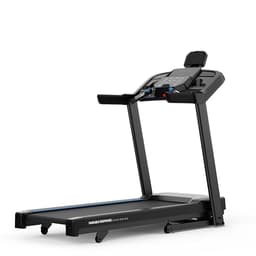
Full treadmill
Horizon Fitness T101 Treadmill
Buy this if: Walkers and runners who want a real machine with powered incline and no subscription.
Strengths
- Genuine 2.5 CHP motor handles walking and running
- 0-10% powered incline and a full 20 x 55 in deck
- Handrails, hydraulic folding, and no membership required
Trade-offs
- Much larger and heavier than a walking pad
- Costs more than an under-desk pad
- Belt is short for very tall runners at high speed
Price as of September 20, 2026. #ad How we’re funded
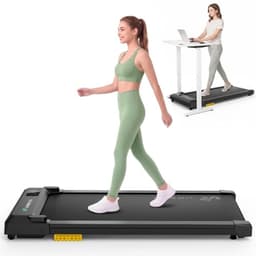
Walking pad
UREVO Under Desk Treadmill Walking Pad
Buy this if: Desk workers who want to add steps during the day rather than run, and need something that stores flat.
Strengths
- Slides under a desk and stores flat against a wall
- Quiet, remote-controlled, and great for step counting while you work
- 265 lb capacity is generous for a compact pad
Trade-offs
- Walking speeds only — no running, no incline, no handrail
- Shorter belt suits walking, not a running stride
- UREVO sells several near-identical pads, so specs vary by model
Can you run on it? The dividing line
The single biggest difference is top speed and what it’s built to handle. The Horizon tops out at 10 mph with a 2.5 CHP motor and a long deck — enough for genuine running and interval work. The UREVO pad caps around a brisk walking pace and has a shorter belt and no handrail, because it’s designed for steady walking, not a running stride. If there’s any chance you’ll want to jog or run, that settles it: a pad simply isn’t built for it, and pushing one to run is how belts and motors wear out early.
Incline, and why it matters
The treadmill adds powered incline (0–10% on the T101), which lets you raise intensity and better simulate outdoor terrain without going faster — a real benefit for walkers who want more of a workout and for anyone easing into running. A walking pad is flat, full stop. For pure step-counting that’s fine, but you lose the single most useful way to make walking harder over time.
Space, noise and where it lives
This is where the pad shines. It’s slim enough to slide under a desk, a sofa or a bed, and it runs quietly with remote-controlled speed — ideal for an apartment or a shared home office. The treadmill is a bigger commitment: it needs a dedicated spot, but the Horizon’s hydraulic deck folds up to reclaim some of that floor space between sessions. If your limiting factor is square footage and quiet, the pad wins; if you’ve got a corner to spare and want a proper machine, the treadmill’s size buys you real capability.
Which should you buy?
Match the machine to the goal. Choose the walking pad to break up a sedentary day, hit a step target, and keep things compact and quiet — it’s a brilliant tool for people who sit for work. Choose the treadmill if you want to actually train: run, intervals, incline, and the option to progress. Either way, regular walking is a genuinely effective way to meet public-health activity targets, so the “lesser” machine is still a great buy if it fits your life. Both types appear in our best treadmillsroundup, and if you’re weighing cardio types more broadly, see treadmill vs exercise bike.
Wellness guidance, not medical advice. Pulse & Plate is written by a fitness enthusiast, not a doctor. Wearable heart-rate, SpO2, ECG and sleep readings are for general wellness, not diagnosis. For a heart concern, a symptom, or before starting a new exercise program, talk to a qualified professional.
Frequently asked questions
Can you run on a walking pad?
Not really — walking pads are built for walking, not running. They cap at a brisk walking pace, use a shorter belt, and have no handrail, so trying to run on one is uncomfortable and wears the motor and belt out faster. If you want to run or do intervals, choose a full treadmill with a higher top speed and a longer deck.
Is a walking pad worth it?
For adding steps during a sedentary day, yes. A walking pad is quiet, slides under a desk or bed, and makes it easy to rack up low-intensity movement while you work — which is genuinely valuable for health. It is not a substitute for a treadmill if you want to run, use incline, or train harder over time.
What is the difference between a treadmill and a walking pad?
A treadmill is a full machine for walking and running, with a stronger motor, powered incline, a long deck and handrails. A walking pad is a slim, flat, under-desk belt limited to walking speeds, designed to add steps and store away compactly. The treadmill does more but takes up more room; the pad is cheaper, quieter and more portable.
Do treadmills or walking pads take up less space?
Walking pads are far more compact — most slide under a desk, sofa or bed. A full treadmill needs a dedicated spot, though many, including the Horizon T101, fold up to reclaim some floor space between uses. If space and storage are your main constraints, a walking pad is the easier fit.
Sources
- American Heart Association — Recommendations for Physical Activity in Adults — AHA's 150 min/week moderate aerobic + 2 days strength recommendation (accessed July 19, 2026)
- U.S. HHS / ODPHP — Physical Activity Guidelines for Americans (2nd ed.) — Federal guideline: 150–300 min/week moderate aerobic + muscle strengthening 2+ days (accessed July 19, 2026)
- CDC — Adult Activity: An Overview — CDC on muscle-strengthening 2+ days/week, 8–12 reps, all major muscle groups (accessed July 19, 2026)
- Horizon Fitness — Connected tech — “Horizon Fitness does not require any subscription services to operate your fitness equipment” (accessed July 20, 2026)
Keep reading
Quietest cardio machines
What travels through the floor to the flat below, and the quiet pick in each category.
Read the noise guideBest Treadmills for Home
Folding and walking-pad treadmills compared on motor power, deck size and incline.
See the picksTreadmill vs Exercise Bike
Calories, joints, space and cost for the two most common cardio machines.
Read the comparisonBest Equipment for Small Apartments
Foldable, quiet, neighbor-friendly picks — where a walking pad fits a tight space.
Read the guideCardio Equipment
How treadmills and pads fit alongside bikes and rowers for home cardio.
Explore cardio